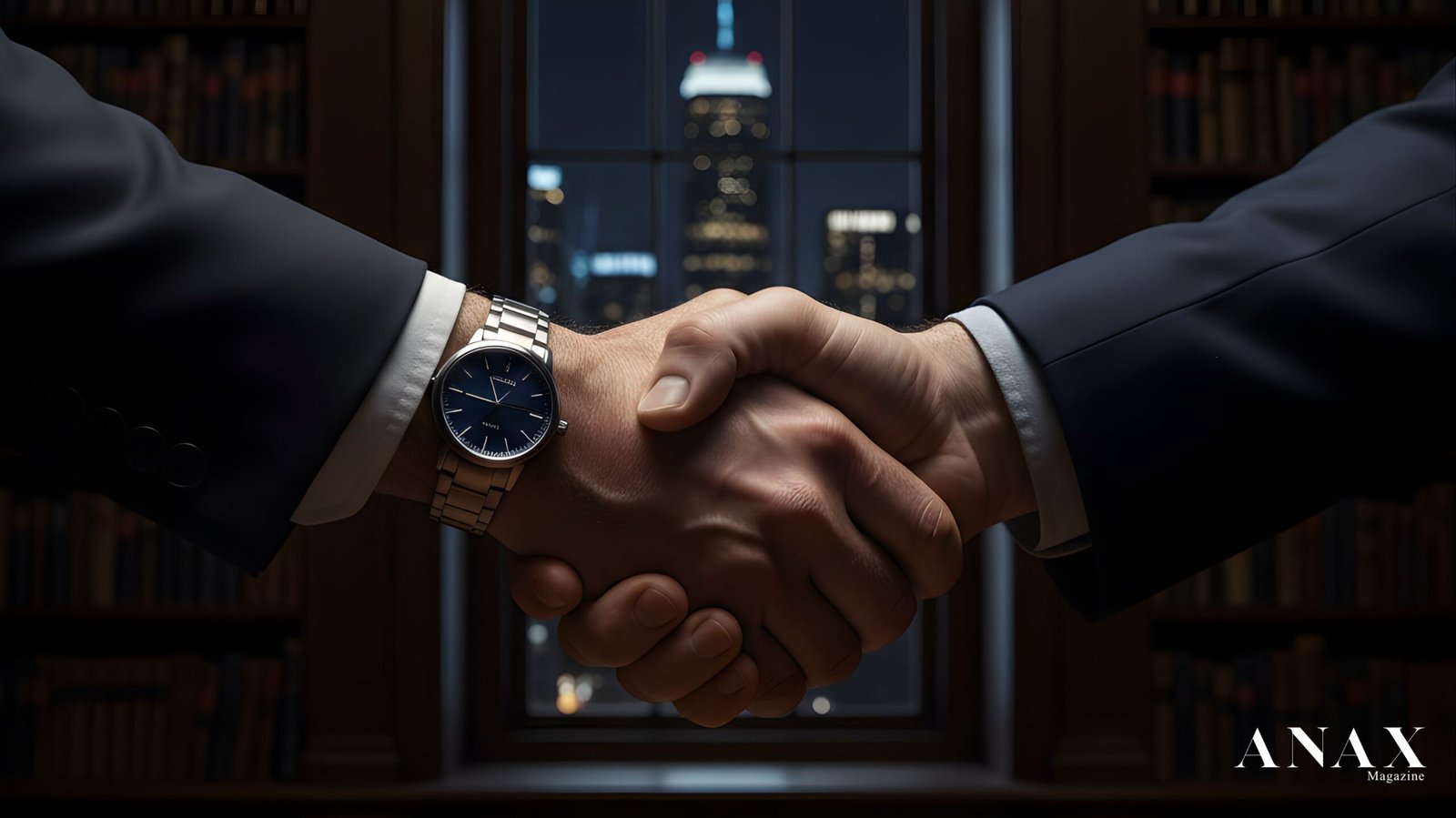
In an era of smart contracts, blockchain verification, and thousand-page legal dossiers, the most powerful transactions on the planet are still finalized with a simple, tactile gesture: the handshake. For the ultra-elite, the sovereign individuals, and the global titans, The Art of The Deal is not found in the fine print of a PDF; it is found in the unspoken subtext of human character. While a contract can enforce compliance, it cannot enforce loyalty. In the upper echelons of power, where legal battles are viewed as an “inefficiency,” trust is the only currency that doesn’t devalue.
The Psychology of High-Stakes Trust
At the level of $100-million acquisitions or sovereign partnerships, the legal system is often a slow, blunt instrument. The elite recognize that if you have to look at the contract to see if you can trust someone, the deal has already failed. This is what psychologists call “High-Fidelity Trust.” It is a Darwinian vetting process where reputation is more valuable than collateral.
A handshake is a neurological shortcut. It signals the end of the “hunting” phase and the beginning of the “partnership” phase. For the readers of Metropolitan India, this is a familiar cultural nuance—where a person’s Zubaan (word) carries the weight of their entire lineage. In this world, breaking a written contract is a legal issue; breaking a handshake is a social death sentence.
The Handshake as a Sovereign Filter: Beyond the Fine Print
In the ‘Dark Luxury’ corridors of global finance, a deal is often “shaken on” months before the lawyers even enter the room. This initial agreement acts as a filter. If a party begins to haggle over minutiae during the drafting process that contradicts the spirit of the handshake, the elite exit immediately.
As noted by the Harvard Business Review, physical touch and eye contact trigger the release of oxytocin, which facilitates long-term cooperation. In the context of The Art of The Deal, this biological grounding is why a Zoom call can never replace a face-to-face meeting in a private lounge in Riyadh or a penthouse in New York. The physical presence allows for the assessment of “Micro-Cues”—the subtle shifts in posture or tone that reveal a partner’s true intent.
The Cost of Friction: Why Lawsuits are for the Middle Class
For the ultra-wealthy, litigation is the ultimate “friction.” It is a drain on the most precious resource: time. By operating on a foundation of trust, family offices and sovereign funds can move at a velocity that public corporations cannot match.
The Financial Times has often highlighted how private “Club Deals” between billionaires are frequently based on decades of mutual history. When two individuals have a shared history of “handshake integrity,” they can execute complex multi-billion dollar pivots in a matter of days. The contract is merely a post-script—a formality for the accountants and the tax authorities, not the principals.
The Aesthetic of the Silent Agreement
In the world of Anax Magazine, we understand that power is often quiet. A contract is loud; it is defensive; it assumes the other party is a predator. A handshake is quiet; it is confident; it assumes both parties are peers. This is the “Dark Luxury” of trust: the ability to move through the world without a shield because your reputation is your armor.
“A contract protects you from a stranger. A handshake admits you into a circle.” — Anax Editorial.
The Future of the Human Element
As AI begins to draft more of our legal frameworks, the value of human intuition will only increase. The Art of The Deal will return to its roots—a game of character, legacy, and skin in the game. In a digital world, the most sophisticated technology remains the human hand. If you want to know the future of global power, don’t look at the signatures on the paper; look at the hands that shook before the ink was even dry.