

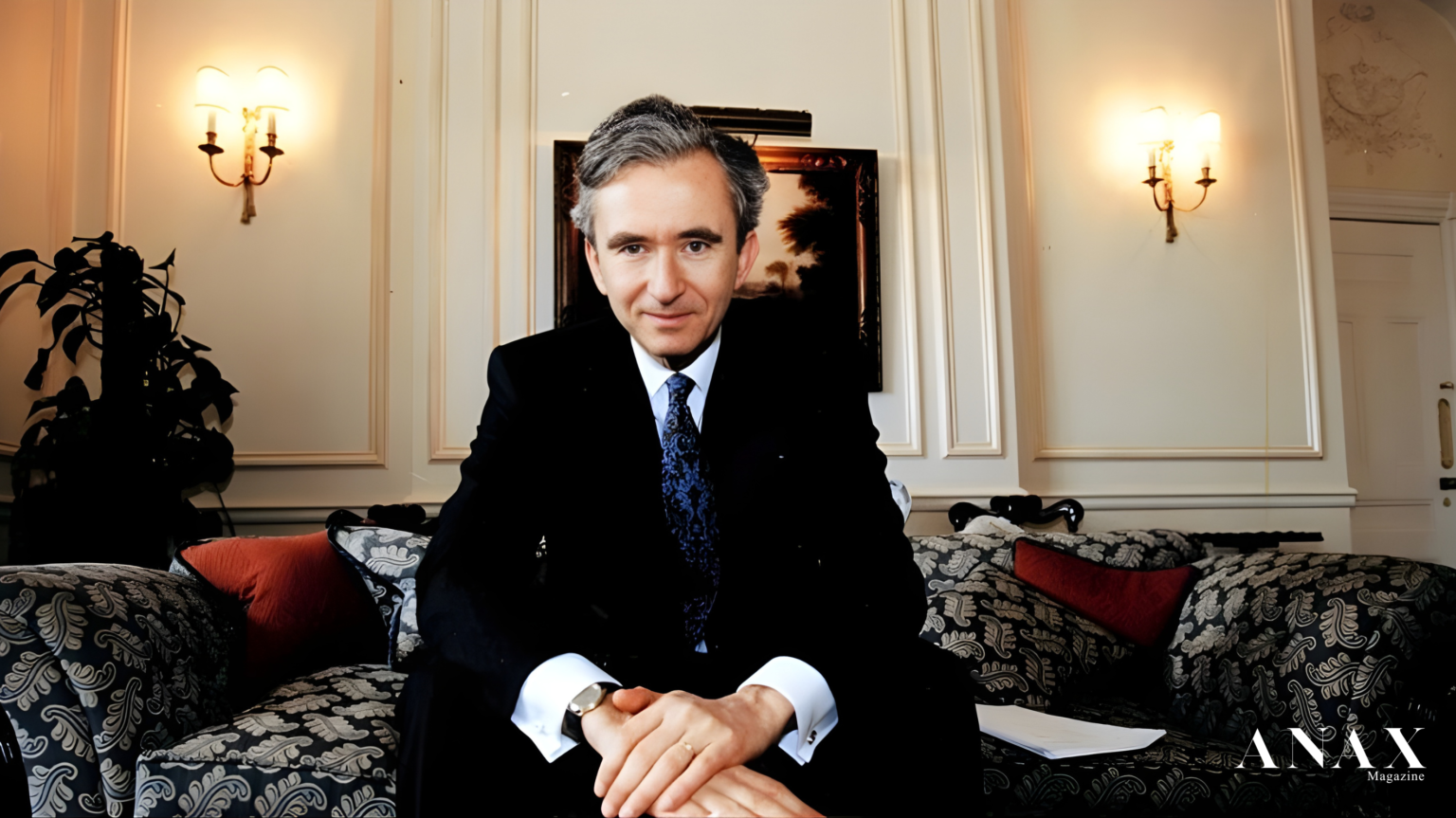
The LVMH chairman did not just amass the world’s greatest portfolio of luxury brands; he engineered a geopolitical system of desire, governing the very currency of modern status.
In the grand theater of global wealth, there are those who create noise, and then there are those who compose silence. The former construct fortunes that scream for attention, tethered to the volatile whims of technology cycles and public adoration. The latter build empires that whisper, rooted in the immutable bedrock of human psychology. Bernard Arnault, the chairman and CEO of LVMH Moët Hennessy Louis Vuitton, belongs emphatically to the latter category. To classify him merely as the world’s richest man, a title he exchanges periodically with the titans of Silicon Valley, is a vulgar simplification. It is an accounting metric that fails to capture the true nature of his dominion. Arnault is not simply a merchant of expensive goods; he is the modern world’s preeminent architect of desire.
His ascent was not fueled by a revolutionary algorithm or a disruptive app, but by a cold, analytical mastery of a far older commodity: status. Arnault understood, perhaps better than any sovereign since Louis XIV, that true luxury is not about the object itself, but the distance it creates between those who possess it and those who yearn for it. He did not just acquire heritage brands; he industrialized the production of scarcity, transforming the ethereal concept of “prestige” into a scalable, high-margin asset class.
The Engineer of Elegance
Arnault’s origin story is deceptively provincial. Born into a family of industrial contractors in Roubaix, France, his pedigree was engineering, not haute couture. This foundational training at the École Polytechnique is crucial to understanding the LVMH machinery. While his contemporaries in the fashion world operated on instinct and artistic temperament, Arnault approached luxury with the detached precision of an engineer diagnosing a structural inefficiency.
He saw a fractured landscape of European heritage houses, Dior, Givenchy, Guerlain, many aging, mismanaged, and relying on fading glory. Where others saw romantic decay, Arnault saw undervalued assets with an irreplaceable resource: history. He understood that you cannot invent a century of heritage in a fiscal quarter. In the 1980s, his hostile acquisition of Boussac Saint-Frères, primarily to secure its crown jewel, Christian Dior, was not the maneuver of a fashion enthusiast, but the calculated strike of a corporate raider. The French press, aghast at his unsentimental dismantling of the parent company’s textile assets, dubbed him “The Terminator.” They misunderstood the mission. He was not terminating tradition; he was pruning the dead wood so the heirloom rose could bloom, and yield a higher dividend.
The Psychology of the Holding Company
The genius of the LVMH structure is not in the sum of its parts, but in the synergy of its psychological governance. Arnault realized that luxury brands, left to their own devices, are prone to the gravity of commodification. To maintain the illusion of exclusivity while pursuing perpetual growth is the central paradox of the luxury business. Arnault solved this by creating a corporate ecosystem that functions like a benevolent feudal system.
LVMH provides its 75 Maisons with the scale, logistics, and capital of a multinational conglomerate, yet aggressively protects their individual creative fiefdoms. This allows a brand like Loro Piana to obsess over the micron count of vicuña wool without being crippled by supply chain logistics, which are handled by the central apparatus. It is a dual-structure of centralized power and decentralized creativity, ensuring that the “magic” remains untainted by the mundane reality of the P&L statement.
More significantly, this structure allows Arnault to govern the cadence of desire globally. If the appetite for Louis Vuitton monogrammed canvas reaches a saturation point in Shanghai, the machine can subtly throttle supply, while simultaneously igniting a fervor for Tiffany diamonds in New York or Celine minimalism in Tokyo. He does not just respond to market demand; he conducts it like an orchestra, ensuring no single note becomes too loud for too long. This ability to modulate global desire is a form of soft power that few nation-states possess.
The Curator of the Impossible
Arnault’s true mastery lies in his understanding that in an age of digital abundance, the only truly valuable things are those that cannot be downloaded. He has anchored LVMH’s value not in transient trends, but in the tangible, irrefutable realities of craftsmanship and heritage. By investing heavily in the métiers d’art, the ateliers of Paris, the tanneries of Tuscany, the watchmakers of Switzerland, he has created a protective moat around his empire.
When a client purchases a Kelly bag, they are not buying leather; they are buying into a myth of permanence in a disposable world. Arnault’s genius was to recognize that this myth needs constant, rigorous curation. He appoints radical designers, John Galliano at Dior, Alexander McQueen at Givenchy, Virgil Abloh at Louis Vuitton, not to respect the heritage, but to electrify it. He understands that for tradition to survive, it must occasionally be violated, creating the necessary tension that keeps a century-old brand part of the contemporary cultural dialogue. He is a conservative custodian employing radical tactics, a wolf draped in the finest cashmere, ensuring the flock remains both protected and profitable.
The Future of the Sovereign
As Bernard Arnault enters the autumn of his career, the question of legacy looms larger than any acquisition. He has built not just a company, but a dynasty, meticulously preparing his five children to assume roles within the empire. This, too, is a calculated act of sovereignty, moving LVMH beyond the realm of a publicly traded company and towards something resembling a modern monarchy.
The future challenge for the House of Arnault will not be commercial, but existential. In a world increasingly polarized by wealth inequality, the conspicuous consumption upon which luxury depends faces new moral scrutiny. Furthermore, as the definition of status shifts from owning objects to acquiring experiences and intellectual capital, LVMH must adapt its machinery of desire.
Yet, if history is any indicator, betting against Bernard Arnault’s ability to read the collective psyche is a foolish wager. He knows that while markets may fluctuate and technologies may evolve, the fundamental human need to distinguish oneself, to purchase a tangible shard of immortality, is perennial. As long as that need exists, the Wolf in Cashmere will remain the undisputed master of the hunt.