
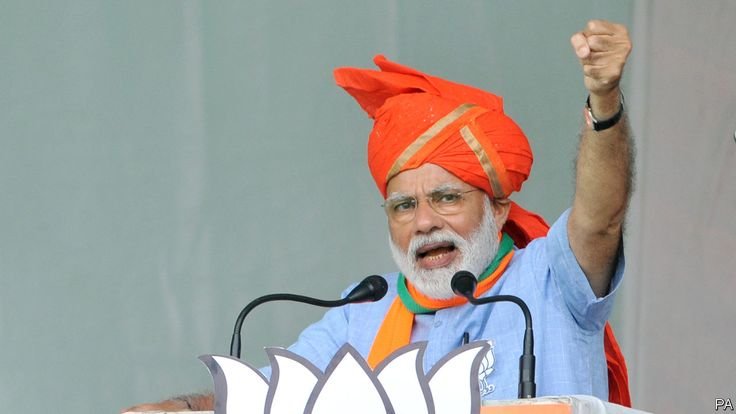
At the centenary convention of FICCI, Prime Minister Narendra Modi challenged India’s corporate leaders to explain why years of government support, tax relief and business reforms had not translated into stronger employment and better salaries. His message has opened a wider conversation about the responsibilities of businesses in India’s next phase of economic growth.
A Direct Question to India’s Business Leaders
On 19 November 2026, Prime Minister Narendra Modi delivered a pointed message to India’s corporate leadership during the centenary celebrations of the Federation of Indian Chambers of Commerce and Industry (FICCI) at Bharat Mandapam in New Delhi.
His address went beyond the usual discussion of investment, industrial expansion and economic opportunities. Instead, he asked businesses to examine what they had delivered to their employees after receiving years of government support.
Referring to corporate tax reductions and other business-friendly reforms, Modi questioned whether companies had responded by increasing employee salaries and expanding their workforces.
His central question was direct: if the government had taken steps to support businesses, why had those benefits not resulted in more jobs and better compensation?
The remarks brought an important issue into the spotlight: India’s economic progress must be examined not only through corporate earnings and investment announcements, but also through the opportunities it creates for working people.
The Tax Relief and Employment Debate
One of the key points in Modi’s address concerned the reduction of the basic corporate tax rate for existing domestic companies from 30 per cent to 22 per cent in 2019.
The measure was introduced to improve India’s investment environment and strengthen the competitiveness of domestic businesses.
The government has also pursued reforms intended to simplify compliance, improve the ease of doing business and encourage private investment.
However, Modi questioned whether corporate India had responded adequately to these measures.
His remarks highlighted a broader economic debate about how the benefits of business-friendly policies are distributed.
Government support can improve the financial environment for companies, but employment creation also depends on investment decisions, market demand, productivity, technology and expectations about future growth.
The Prime Minister’s challenge was directed at businesses to demonstrate how their success contributes to the wider economy.
The Numbers Behind Modi Ji’s Question
The debate becomes particularly significant when viewed alongside industrial data.
A Reuters report published on 24 November 2026, drawing on government figures, highlighted the difference between the growth of factory profits, employee compensation and employment.
Between 2020–21 and 2024–25, profits at registered Indian factories grew at an average annual rate of approximately 17 per cent. Employee compensation increased by around 13.5 per cent annually, while employment grew by less than 7 per cent.
These figures relate specifically to registered factories, not every business or employee across India.
Nevertheless, they illustrate why the relationship between corporate performance and employment has attracted attention.
A growing company can improve its financial position without expanding its workforce at the same rate. Automation, capacity utilisation, productivity improvements and changes in business models can all influence hiring decisions.
The important question is whether India’s expanding industrial economy can generate enough productive employment opportunities to support its growing workforce.
Beyond Profits: The Responsibility of Corporate India
Modi’s remarks also raised questions about the relationship between business success and national development.
Indian companies operate in an economy supported by public infrastructure, financial institutions, skilled professionals and a large domestic consumer market.
Their contribution extends beyond the products and services they sell.
Employment, professional training, research, innovation and investment in local supply chains are also important parts of their economic role.
For major corporations, this means considering how growth can create opportunities throughout their organisations and the wider business ecosystem.
For smaller companies, it means building sustainable operations capable of offering stable employment and developing skilled teams.
Corporate responsibility is therefore not limited to charitable activities or public statements. It also involves the everyday decisions businesses make about people, investment and long-term development.
India’s Manufacturing Ambition: More Than Producing at Home
Another important part of Modi’s FICCI address concerned India’s manufacturing capabilities.
The Prime Minister cautioned businesses against becoming too comfortable with the size of India’s domestic market.
His message was that a population of approximately 1.4 billion people should provide Indian companies with the confidence to compete internationally, rather than become a guaranteed market for products that may not meet the highest standards.
He also questioned why India continued to export certain raw materials while importing specialised finished products.
Steel, aluminium, pharmaceuticals and agricultural processing were among the areas highlighted in his remarks.
The challenge is particularly relevant as India seeks to strengthen domestic manufacturing and reduce dependence on imported specialised products.
Developing local capabilities requires more than establishing factories. It involves technology, research, skilled employees, reliable suppliers and consistent product quality.
Companies must also understand international customer requirements if they want Indian manufacturing to become more competitive in global markets.
The Quality Question: What Indian Consumers Deserve
Modi also addressed the quality of products offered to Indian consumers.
He argued that domestic customers should not receive inferior products while international markets are offered higher-quality alternatives.
This is an important issue for India’s manufacturing reputation.
A company that wants to establish itself internationally must demonstrate consistent standards across the markets it serves.
Quality affects customer confidence, brand reputation and the long-term competitiveness of Indian businesses.
For Indian manufacturers, the opportunity is to build products that can compete with established international alternatives while meeting the expectations of domestic consumers.
The discussion also connects with the growing importance of Indian brands in international markets.
From pharmaceuticals and engineering to automobiles, electronics and consumer products, the country’s future industrial reputation will depend partly on its ability to deliver dependable quality.
The Young Workforce and the Employment Challenge
India’s large working-age population offers considerable economic potential.
However, creating meaningful opportunities for millions of people requires continuous investment in education, professional training and industry-relevant skills.
Technology is changing the nature of employment across sectors. Artificial intelligence, automation, advanced manufacturing and digital services are transforming the requirements of modern businesses.
This creates new opportunities, but it also increases the importance of preparing workers for changing professional environments.
Companies that invest in employee development can build stronger capabilities while helping workers adapt to new responsibilities.
For young professionals, the issue is not simply obtaining their first job. It is finding opportunities that provide financial stability, professional growth and a pathway towards greater responsibility.
India’s employment conversation must therefore consider the quality and sustainability of jobs alongside the number of positions created.
A Larger Role for Indian Industry
Modi also urged businesses to look beyond immediate domestic opportunities and prepare for the international markets opened through India’s trade agreements.
He called on industry leaders to study consumer requirements across different countries, develop dependable procurement systems and invest in products that have international demand.
He further encouraged larger companies to help smaller businesses improve quality and production capacity.
This is particularly important because India’s industrial growth depends on interconnected businesses rather than isolated corporate achievements.
Large manufacturers require suppliers, logistics companies, specialist service providers and skilled professionals. Strengthening these relationships can create opportunities across different levels of the economy.
The Prime Minister also invited industry representatives to offer suggestions for further reforms, reinforcing the importance of communication between government and business.
The Question That India Inc Must Now Answer
The FICCI centenary address has brought several interconnected issues into one national conversation.
Employment, salaries, corporate investment, manufacturing quality and international competitiveness are not separate subjects. They are different parts of the same economic challenge.
India’s companies have an opportunity to strengthen their global positions, but their long-term contribution will also be measured by the opportunities they create within the country.
Government reforms can establish favourable conditions for growth. However, businesses must make the investment, hiring and development decisions that turn those conditions into practical economic outcomes.
The discussion should not be reduced to a disagreement between the government and corporate leadership. It should encourage a closer examination of how both sides can contribute to sustainable development.
Modi Ji’s question to corporate India has therefore opened a conversation that extends well beyond one industry gathering.
As India looks towards its ambitions for the coming decades, the measure of economic success will involve more than rising corporate profits or expanding industrial capacity.
It will also depend on whether workers receive better opportunities, young people find meaningful careers, domestic products earn international recognition and businesses become stronger contributors to national development.
The question now facing India Inc is straightforward: how will corporate growth translate into a stronger future for the people who make that growth possible?