


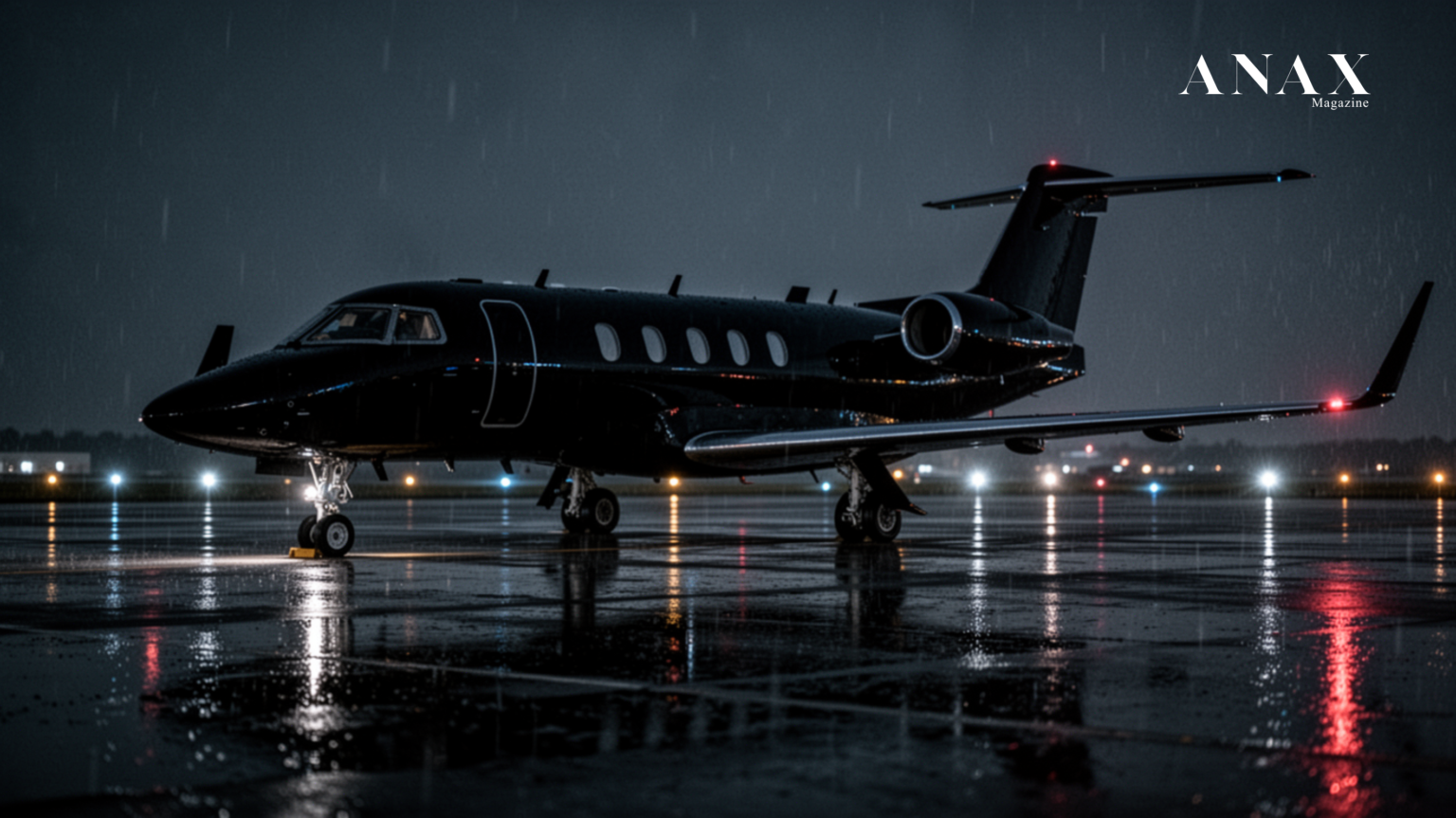
Understanding the private jet economics of the 0.01%, where bespoke aviation is a strict utility for sovereign isolation rather than an exercise in public vanity.
To the uninitiated observer, the acquisition of a custom-configured Gulfstream or Bombardier Global is the ultimate declaration of financial triumph. Popular culture and the digital exhibitionism of the newly wealthy have fundamentally distorted the public understanding of bespoke aviation, reducing it to a theatre of champagne flutes, plush leather seating, and performative excess. However, for the architects of generational wealth, this interpretation is profoundly infantile. To comprehend the private jet economics that govern the highest echelons of global power, one must strip away the veneer of glamour and analyse the aircraft strictly as a utilitarian instrument. It is not a luxury carriage; it is a time machine, an impenetrable vault, and an instrument of sovereign geopolitical agility.
The Calculus of Absolute Time Preservation
The foundational principle of sovereign wealth is that capital is infinite, but time is finite. For a chief executive commanding a multinational conglomerate, or a patriarch managing a sprawling family office, the standard friction of commercial travel, even in international first-class cabins, represents an unacceptable haemorrhaging of the world’s most valuable asset. The queuing, the routing inefficiencies, the delays, and the rigid adherence to commercial schedules cost millions in lost intellectual momentum and strategic execution.
When a corporate sovereign evaluates the acquisition of a sixty-million-dollar aircraft, they are not evaluating the cost of the leather or the mahogany veneer. They are executing a precise mathematical equation based on the hourly valuation of their own cognition. If a billionaire’s time is quantifiably worth hundreds of thousands of dollars per hour, the ability to depart from a private terminal in Geneva, conduct a confidential meeting in London, and return to an estate in Tuscany for dinner is not an indulgence. It is a highly rational, cost-saving operational efficiency.
The Architecture of Airborne Isolation
Beyond the preservation of time, the true value of independent aviation lies in absolute informational and physical security. The modern commercial terminal, regardless of its VIP lounges, is a porous environment of surveillance and exposure. For the sovereign elite, public visibility is an inherent geopolitical liability.
As corporate espionage and cyber-surveillance reach unprecedented levels of sophistication, the boardroom has become vulnerable. Consequently, the aircraft serves as a secure, airborne sanctum. Within the pressurised cabin of a privately owned aircraft, negotiations concerning multi-billion-dollar mergers, state-level diplomacy, and dynastic succession can be conducted with the assurance of total acoustic and electronic isolation. According to rigorous market analyses by , the surge in corporate fleet acquisitions is driven primarily by this necessity for encrypted, uncompromised airspace rather than executive comfort.
Analysing The Private Jet Economics of Geopolitical Agility
The ability to move capital and personnel across international borders without friction is a defining characteristic of true sovereignty. The private jet economics dictate that an entity must never be captive to the logistical limitations or geopolitical whims of a commercial carrier. When crises emerge, whether they be sudden market crashes, political instability, or global health emergencies, the sovereign individual does not wait for a commercial flight path to reopen. They possess the autonomous infrastructure to extract themselves, their families, and their critical personnel immediately.
This requirement for absolute agility has fuelled the rise of hyper-long-range aircraft capable of connecting virtually any two cities on the globe without refuelling. It allows the elite to bypass transit hubs, avoiding jurisdictions that may pose diplomatic or legal complications. As we have frequently documented within the editorial pages of , the modern aristocrat requires an infrastructure that operates entirely parallel to the state apparatus, ensuring that their movements remain unpredictable, untrackable, and entirely autonomous.
The Financial Structuring of the Asset
From a purely financial perspective, the ownership of such an asset is structured with clinical precision to maximise tax efficiencies and mitigate depreciation. The aircraft is rarely owned directly by the individual; rather, it is held within a labyrinthine structure of offshore trusts and corporate entities. This allows for complex jurisdictional arbitrage, leveraging the favourable aviation registries of the Isle of Man, Malta, or Bermuda.
Furthermore, as the affluent classes in emerging markets rapidly mature, a phenomenon extensively covered by, the demand for bespoke aviation has surged in regions like Mumbai and Dubai. Yet, the old money families understand that the outright purchase of a depreciating asset must be offset by rigorous corporate utilisation. When the aircraft is not transporting the principal, it is frequently leased back into the charter market or utilised by the executive suite, ensuring that the asset generates operational value rather than merely draining capital. As discussed in the , the integration of aviation assets into the broader corporate balance sheet is a hallmark of disciplined institutional wealth.
The Future of Sovereign Flight
As the global discourse increasingly focuses on environmental sustainability and carbon taxation, the sovereign elite face a new paradigm of scrutiny. Yet, they will never surrender the autonomy of private flight. Instead, the private jet economics will pivot toward the monopolisation of sustainable aviation fuels (SAF) and the eventual acquisition of zero-emission propulsion technologies. The elite will pay whatever premium is necessary to maintain their isolation, ensuring that their right to frictionless, invisible travel remains an unassailable privilege. The aircraft will remain what it has always been: the ultimate physical manifestation of distance between the rulers and the ruled.