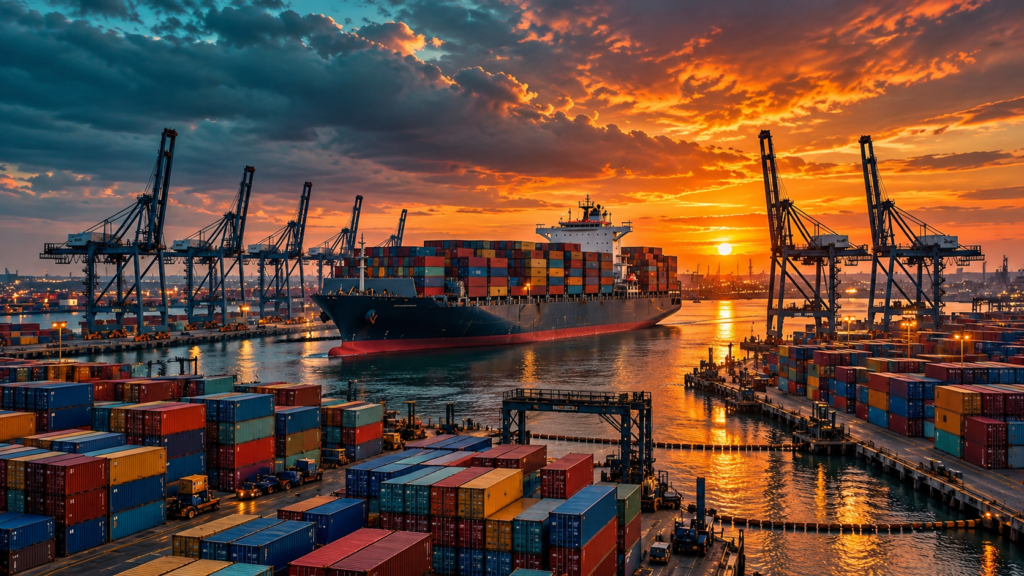
How the world’s most important maritime gateways are transforming international trade, technology and geopolitical influence.
Global Ports are becoming much more than destinations where cargo ships arrive and depart. They are emerging as strategic centres of economic influence, industrial development, technological innovation and international competition. As global commerce evolves, the importance of controlling, developing and connecting maritime infrastructure is becoming increasingly apparent.
For centuries, ports have determined the commercial fortunes of cities and nations. They connected distant markets, enabled the movement of essential commodities and allowed businesses to reach customers across continents. Today, however, their responsibilities have expanded considerably. Modern ports are expected to function as sophisticated logistics ecosystems, integrating shipping, railways, road networks, manufacturing facilities, energy infrastructure and digital technology.
The transformation is changing how countries approach international trade and economic security.
The Strategic Importance of Maritime Gateways
International trade depends on reliable transportation networks, and maritime shipping remains central to the movement of goods across the world. From industrial machinery and automobiles to agricultural commodities and consumer products, an enormous range of international commerce passes through port infrastructure.
This makes ports important economic assets.
The European Commission recognised this strategic importance through its EU Ports Strategy, introduced in March 2026. The initiative focuses on strengthening competitiveness, security, sustainability and digitalisation across European ports. The strategy also acknowledges their expanding role in energy infrastructure and industrial development.
According to the European Commission, European ports handle approximately 74 per cent of the European Union’s external trade. Their importance extends beyond commercial transportation into employment, energy security and regional economic development.
The message is increasingly clear: ports are no longer simply transportation facilities. They are strategic national infrastructure.
Singapore: Building the Port of Tomorrow
Few maritime centres demonstrate the changing role of ports as effectively as Singapore.
Positioned along one of the world’s most important maritime trading routes, Singapore has developed an international reputation for efficient port operations, sophisticated logistics and connectivity.
Its Tuas Port development represents a significant step towards the next generation of maritime infrastructure. Designed around large-scale automation, digital systems and advanced cargo-handling facilities, the project reflects Singapore’s ambition to strengthen its position in international shipping.
The modern port is increasingly dependent on intelligent systems that coordinate vessel arrivals, manage container movements and improve operational efficiency.
Automation is also changing the physical environment of maritime terminals. Electric equipment, automated vehicles and interconnected information systems are gradually becoming important features of modern port operations.
The objective is not simply to handle more cargo. It is to create a more reliable, efficient and technologically advanced trading environment.
Rotterdam and Europe’s Industrial Ambitions
The Port of Rotterdam occupies a distinctive position in Europe’s economic landscape.
As one of the continent’s most important maritime gateways, Rotterdam connects international shipping networks with major industrial centres across Europe.
Its future development is closely connected to the transformation of European energy and manufacturing systems.
The port is investing in infrastructure that supports alternative fuels, hydrogen distribution, industrial connectivity and lower-emission operations. These developments demonstrate how maritime facilities are becoming important participants in the transition towards new energy systems.
Ports are increasingly expected to support industries beyond traditional shipping. They must accommodate changing energy requirements, new manufacturing technologies and the movement of specialised industrial materials.
Rotterdam illustrates how a maritime gateway can become an essential component of a much larger industrial ecosystem.
India’s Expanding Maritime Ambitions
India’s maritime infrastructure is becoming increasingly important to its international economic ambitions.
With expanding manufacturing activity, rising trade requirements and growing international connectivity, the country’s ports are positioned to play an important role in supporting its economic development.
Major maritime centres such as Mundra, Jawaharlal Nehru Port and Chennai serve different commercial and industrial regions, connecting domestic businesses with international markets.
India’s port development ambitions also extend beyond individual terminals. Greater integration between ports, inland waterways, railways, highways and logistics facilities is becoming central to improving cargo movement.
The country’s maritime development strategy reflects a broader ambition: strengthening its position within international supply chains while improving the efficiency of domestic transportation.
For Indian businesses, better maritime connectivity can mean improved access to overseas markets, more reliable movement of industrial inputs and stronger opportunities for international partnerships.
The next stage will depend on how effectively infrastructure expansion is matched with operational efficiency, technology and sustainable development.
The New Competition for Port Infrastructure
Port development is increasingly attracting international investment.
Major terminal operators, infrastructure investors and governments are competing for opportunities to expand existing facilities, develop new terminals and establish stronger connections with international trade routes.
The investment is not limited to cranes, warehouses and container yards. It increasingly involves digital platforms, automated handling equipment, energy infrastructure and integrated logistics systems.
Drewry’s Global Container Terminal Operators Annual Review and Forecast 2026/27 reported that global port throughput increased by 6.5 per cent in 2025, reaching 994 million twenty-foot equivalent units. It also reported stronger growth among major global terminal operators.
These developments demonstrate why maritime infrastructure is attracting sustained commercial attention.
A strategically positioned port can influence the competitiveness of entire industrial regions. It can attract manufacturers, logistics companies, exporters and infrastructure investors.
For investors, the appeal lies in the long-term importance of international trade and the infrastructure required to support it.
Technology Is Changing the Economics of Ports
The modern port is becoming increasingly digital.
Artificial intelligence, automated machinery, Internet of Things sensors and advanced monitoring systems are changing how terminals operate.
Ships, cargo movements, storage facilities and transportation networks generate enormous quantities of operational information. Digital platforms can help port authorities and terminal operators coordinate these activities more effectively.
Automation can also improve workplace safety and reduce certain operational delays.
However, technological development introduces new responsibilities. Cybersecurity has become an important concern because disruption to port management systems can affect shipping schedules, cargo handling and wider supply chains.
The International Association of Ports and Harbors’ 2026 World Ports Tracker highlights the growing integration of cybersecurity into port technology, alongside increasing adoption of automation and digital systems.
As ports become more connected, protecting their digital infrastructure becomes as important as maintaining their physical facilities.
Sustainability Becomes a Commercial Priority
Environmental responsibility is another major consideration shaping the future of maritime infrastructure.
Traditional port operations involve substantial energy consumption, emissions from equipment and transportation, and environmental pressures around coastal regions.
The industry is increasingly exploring electrification, renewable electricity, alternative marine fuels and improved energy management.
Some ports are also investing in shore-side electricity facilities, allowing compatible vessels to use electricity from land while berthed instead of relying entirely on onboard generators.
These developments are gradually changing expectations around port investment.
Sustainability is no longer simply an additional consideration. It is becoming an important part of long-term infrastructure planning, operational efficiency and international competitiveness.
Nevertheless, the transition requires considerable investment, technical coordination and cooperation between shipping companies, governments and port authorities.
Who Will Control Tomorrow’s Trade Routes?
The future of international commerce will not be determined exclusively by manufacturers, financial institutions or technology companies.
The infrastructure connecting them will matter just as much.
Ports sit at the intersection of geography, commerce, diplomacy and national security. Their location can influence shipping routes, their capacity can affect industrial growth, and their operational resilience can determine how effectively countries respond to international disruptions.
The growing attention being given to maritime infrastructure reflects a wider understanding of economic power. Nations increasingly recognise that access to reliable transportation networks is essential to maintaining commercial competitiveness.
The most successful ports of the future will not necessarily be the largest. They will be those capable of combining efficient operations, advanced technology, environmental responsibility and international connectivity.
The next era of global trade will be shaped not only by what countries produce, but also by how effectively they connect their industries to the rest of the world.
And increasingly, that connection begins at the port.