
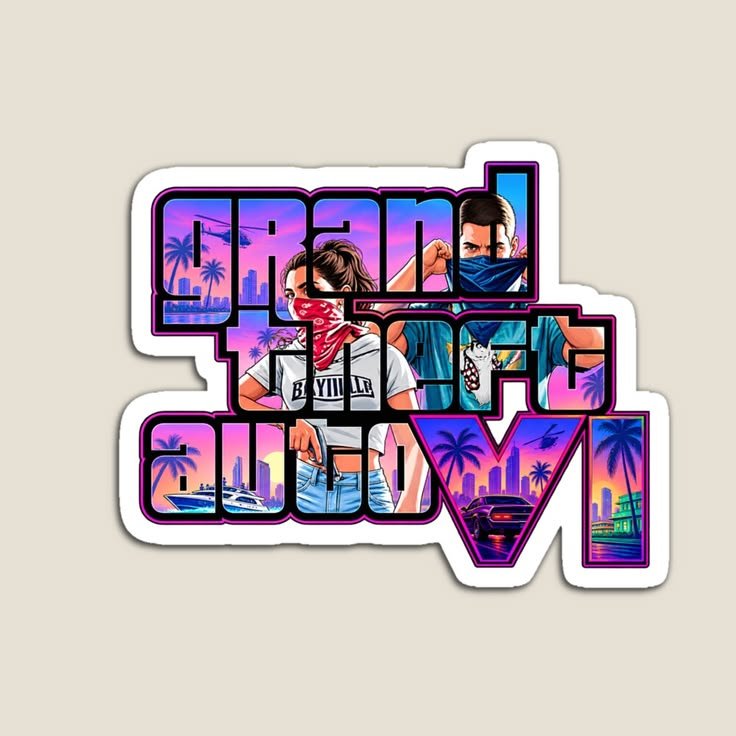
From cinematic storytelling and virtual city-building to unprecedented commercial anticipation, Grand Theft Auto VI is demonstrating how interactive entertainment is becoming one of the defining cultural forces of the modern world.
GTA 6 has arrived, and its launch represents something considerably larger than the release of another video game. After years of anticipation, speculation and extraordinary public interest, Rockstar Games has introduced a new chapter in one of entertainment’s most influential franchises. Released worldwide on 19 November 2026, Grand Theft Auto VI has established itself as a major cultural and commercial event.
Its arrival reflects a changing entertainment landscape in which audiences no longer experience stories exclusively through cinema, television or literature. Interactive worlds are increasingly becoming places where people explore characters, environments, music, social identities and narratives at their own pace. GTA 6 arrives at the centre of this transformation.
A Virtual World Built to Feel Real
The setting of GTA 6 returns audiences to Vice City, within the fictional American state of Leonida. Inspired by Florida, this environment brings together coastal landscapes, urban neighbourhoods, nightlife, contemporary architecture and the distinctive social contrasts of modern American life.
Yet the ambition extends beyond creating an impressive visual environment. Rockstar’s approach places considerable emphasis on the feeling of inhabiting a functioning world. The smallest details, from everyday activities to the atmosphere of public spaces, contribute to an environment that encourages exploration beyond the central storyline.
This attention to environmental storytelling is an important part of the game’s identity. A virtual city becomes more memorable when it feels as though it exists independently of the player, with its own rhythms, characters and unexpected encounters.
The result is an experience that increasingly resembles an interactive interpretation of a contemporary city rather than a conventional backdrop for missions.
Jason and Lucia: A Different Kind of Narrative
At the centre of GTA 6 are Jason Duval and Lucia Caminos, two protagonists whose relationship provides the foundation for the game’s central narrative.
Their story unfolds through crime, ambition, personal choices and a conspiracy extending across Leonida. Rather than presenting a single perspective, the game follows two characters whose circumstances and motivations intersect.
Lucia’s presence is particularly significant for a franchise that has historically been associated with male protagonists. Her position as a central character introduces another dimension to the series’ storytelling and reflects the changing expectations of contemporary entertainment audiences.
The relationship between Jason and Lucia also gives the narrative a more personal foundation. Their partnership creates opportunities to explore loyalty, trust, vulnerability and ambition within a world defined by instability and excess.
This emphasis on character-driven storytelling demonstrates how video games can approach narrative development with the complexity traditionally associated with long-form television and cinema.
When Entertainment Becomes a Global Event
The commercial response to GTA 6 has been extraordinary. According to an announcement by Rockstar Games’ parent company, Take-Two Interactive, the title generated an estimated $3.79 billion in worldwide first-day retail sales, based on company estimates through the end of 19 November. The company also reported 32.5 million pre-release unit sales.
The significance of this launch extends beyond the gaming market. It demonstrates the scale of audience anticipation that a carefully developed entertainment franchise can command after years of cultural visibility.
The thirteen-year gap since Grand Theft Auto V also contributed to the anticipation. During that period, audiences experienced substantial changes in technology, entertainment consumption and digital culture. Expectations surrounding GTA 6 therefore developed across an entire generation of players.
Its release became a shared international moment, attracting attention from audiences, entertainment commentators, businesses and the wider media industry.
The scale of the launch also reinforces the commercial importance of intellectual property. A recognisable fictional universe, supported by a committed global audience, can become an enduring entertainment asset rather than a product defined solely by its release date.
The Sound of a Virtual City
Music has always played an important role in the Grand Theft Auto universe. Radio stations, musical selections and the atmosphere created by sound contribute significantly to the identity of its fictional locations.
GTA 6 continues this relationship through its musical programming and a dedicated official soundtrack. The release of Grand Theft Auto VI: The Album, featuring 34 original tracks, further demonstrates the franchise’s ambition to connect interactive entertainment with the wider music industry.
For artists and music audiences, this creates an additional cultural dimension. Music becomes part of the environment rather than simply an accompanying feature. A particular track can become associated with a character, a journey or a memorable moment within the game.
The relationship between music and virtual environments also reflects a broader development in entertainment. Audiences increasingly encounter music through films, games, digital platforms and shared cultural experiences. The boundaries between these industries are becoming less distinct.
The Business of Creating Worlds
Behind the cultural attention lies an increasingly sophisticated entertainment business.
Developing a title of GTA 6’s scale requires years of creative direction, technical production, artistic collaboration, sound design, marketing and international distribution. Its launch illustrates the commercial possibilities available to companies capable of building recognisable worlds with sustained audience appeal.
The franchise also demonstrates the value of long-term intellectual property management. Its previous instalments have maintained international relevance across changing generations of hardware and consumer preferences.
For the wider entertainment industry, the launch provides a significant example of how an established creative property can retain its relevance while introducing new characters, environments and experiences.
However, commercial success also brings greater expectations. Audiences now evaluate major releases not only on visual quality but also on narrative depth, cultural representation, accessibility and the quality of the experience over time.
A Cultural Conversation Beyond the Screen
The influence of GTA 6 will not be measured exclusively through sales figures. Its fictional setting, characters, music and interpretation of contemporary society will continue to generate discussion.
The Grand Theft Auto franchise has historically used satire to examine consumerism, celebrity culture, public institutions and social contradictions. Its latest instalment continues within that tradition, offering an exaggerated fictional reflection of modern American life.
At the same time, the franchise’s mature themes and depictions of violence invite important conversations about representation and the responsibilities of entertainment creators. Its cultural influence therefore exists alongside legitimate debate about the material audiences encounter.
This tension is part of what makes the series culturally significant. It does not simply offer an escape from reality; it frequently draws inspiration from the realities, contradictions and excesses of the world outside the screen.
The Future of Interactive Entertainment
GTA 6 arrives at a moment when the distinction between traditional entertainment and interactive experiences is becoming increasingly fluid. Cinema offers visual storytelling, music creates emotional identity, literature develops characters and video games allow audiences to participate directly in unfolding narratives.
The most ambitious entertainment experiences increasingly draw from all these creative traditions.
For Rockstar Games, the challenge now is to sustain the expectations created by an extraordinary launch. For the wider industry, the release offers a reminder that audiences continue to value creative ambition, distinctive storytelling and worlds that invite repeated discovery.
GTA 6 is more than a highly anticipated sequel. It represents the growing cultural importance of interactive storytelling and the commercial influence of imaginative worlds. Its launch marks another significant moment in the evolution of global entertainment, where the most memorable experiences are no longer limited to watching a story unfold, but increasingly involve stepping inside it.