
In a world where luxury increasingly favours subtlety over spectacle, the lipstick has evolved into more than a beauty essential. From heritage beauty houses to fashion’s most exclusive labels, the finest lip colours reveal how craftsmanship, identity and understated prestige meet.
Luxury is no longer defined exclusively by what can be seen. It is increasingly recognised through the details: the weight of a beautifully constructed case, the precision of a formulation, the heritage behind a name and the confidence of choosing something that does not need to announce its value.
The luxury lipstick occupies an interesting position within this changing landscape. It is one of the smallest objects in a beauty collection, yet it can carry the identity of an entire fashion house. A lipstick from a prestigious maison is not simply about colour. It represents design, formulation, packaging, craftsmanship and the cultural influence of the brand behind it.
As quiet luxury reshapes the language of fashion and personal style, beauty is experiencing a similar transformation.
When a Lipstick Becomes a Luxury Object
For decades, lipstick has been associated with glamour, self-expression and personal identity. However, the luxury beauty market has introduced another dimension: collectability.
Some beauty houses approach lipstick packaging with the same attention that fashion labels give to accessories. Refillable cases, sculptural silhouettes, polished metal finishes and distinctive detailing transform an everyday cosmetic into an object worth keeping.
The appeal lies in the experience as much as the product itself. Opening a beautifully designed lipstick case can become a small personal ritual, one that reflects an appreciation for detail rather than an interest in displaying wealth.
This is particularly relevant to quiet luxury, where value is often communicated through quality and restraint instead of conspicuous branding.
The Beauty Houses Defining Expensive Lipstick
Certain international brands have established distinctive positions in luxury cosmetics. Their lipsticks reflect different interpretations of exclusivity, from heritage craftsmanship to contemporary fashion design.
Louis Vuitton La Beauté
Louis Vuitton’s entry into luxury cosmetics introduced a new dimension to its universe of leather goods, travel and fashion. La Beauté extends the house’s design language into colour cosmetics, placing particular emphasis on collectible packaging and the experience of ownership.
Its lipstick collection represents the growing relationship between luxury fashion and beauty, where even a small cosmetic object can become an extension of a maison’s identity.
Hermès Beauty
Hermès approaches beauty through the language of craftsmanship and considered design. Its Rouge Hermès collection features distinctive cases, carefully developed colours and refillable formats.
The house’s approach reflects a philosophy in which the object itself matters. The lipstick becomes part of a wider relationship between materials, design and personal expression.
Guerlain
With a history deeply connected to French perfumery and beauty, Guerlain occupies an established place in luxury cosmetics.
Its Rouge G collection is particularly recognised for its jewel-inspired cases, which bring together beauty and decorative design. The refillable concept also gives the lipstick an enduring character beyond the initial purchase.
Christian Louboutin Beauty
Christian Louboutin translated the dramatic visual identity of its footwear into cosmetics. Its lipsticks are known for sculptural packaging, distinctive silhouettes and a strong association with fashion spectacle.
Unlike the quieter aesthetic of some heritage beauty houses, Louboutin embraces theatrical luxury. It demonstrates that exclusivity can be expressed through bold design as well as restraint.
Chanel Beauty
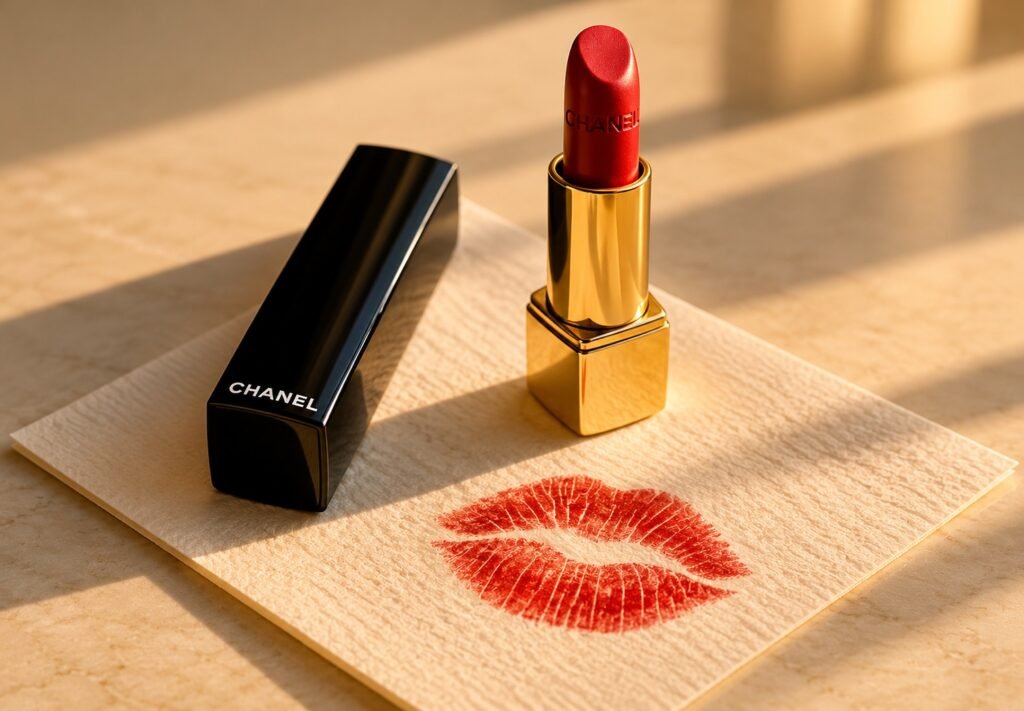
Chanel has long understood the relationship between beauty and personal identity. Its lipstick collections, including Rouge Allure, reflect the house’s enduring design language.
Black and gold detailing, recognisable packaging and carefully developed colour collections give its products a sense of continuity with the wider Chanel universe.
Tom Ford Beauty
Tom Ford approaches beauty through modern glamour and a distinctive aesthetic. Its lipstick collections combine sophisticated shades with sleek packaging, appealing to consumers who associate luxury with confident, polished design.
Alongside these houses, Dior, Sisley Paris and La Prairie contribute to the international prestige beauty landscape through their own approaches to formulation, design and brand heritage.
What Makes an Expensive Lipstick Expensive?
The price of a luxury lipstick is rarely determined by one factor.
Formulation is an important part of the equation. Texture, pigmentation, finish, comfort and the development process all contribute to the final product. Luxury beauty houses invest in research and product development to establish distinctive sensory experiences.
Packaging is another significant consideration. Specially designed metal cases, refillable mechanisms, decorative finishes and limited-edition presentations can increase the cost of a product.
Brand heritage also plays a role. A lipstick from a historic fashion or beauty house carries associations built through decades of design, cultural influence and customer loyalty.
At the highest end of the market, collector editions introduce an entirely different category. Diamond-encrusted or precious-metal lipstick cases can command extraordinary prices, although their value is often driven more by jewellery craftsmanship and rarity than by the formula inside.
This distinction matters: the most expensive lipstick is not necessarily the one with the best performance.
The Quiet Luxury Approach to Beauty
Quiet luxury is not about owning the most expensive object available. It is about understanding what makes an object meaningful.
Within beauty, this philosophy can be expressed through carefully chosen shades, elegant packaging and a preference for quality over quantity.
A timeless rose, muted nude, soft brown or classic red can become a signature colour. Rather than collecting every new release, the emphasis shifts towards finding products that complement personal style.
This approach also challenges the idea that luxury must be immediately recognisable. A refined lipstick case, a beautifully balanced shade and a formula that feels comfortable can offer a more personal form of indulgence than an oversized display of logos.
In this sense, quiet luxury is less about the price printed on the packaging and more about the thought behind the purchase.
Beauty, Identity and the Value of Discretion
Lipstick has always been a personal object. It can accompany someone through professional meetings, private occasions, celebrations and everyday routines.
Its significance is not necessarily measured by its cost. A modestly priced lipstick can hold as much personal meaning as an exclusive creation from a celebrated maison.
Yet luxury beauty houses have succeeded in turning this everyday object into an expression of design culture. They have created a market in which cosmetics intersect with fashion, collectability and the desire for individual distinction.
The modern luxury consumer is increasingly interested in understanding what sits behind a product: its origins, its design, its craftsmanship and the philosophy of the house that created it.
Perhaps this is where lipstick finds its place in the wider conversation about quiet luxury. It demonstrates that refinement does not always require scale. Sometimes, the smallest object can communicate the most considered sense of style.
Because true luxury is not always carried in a handbag or displayed as jewellery. Sometimes, it rests quietly in the smallest details.