Across India, Diwali transforms homes, temples, streets and marketplaces into expressions of light, devotion and togetherness. Beyond its spectacular appearance, the festival represents a living heritage shaped by mythology, regional customs, family traditions and the enduring human desire for renewal.
Diwali, also known as Deepavali, is among India’s most significant cultural and religious celebrations. The word Deepavali is commonly understood as a row or series of lights, an expression that captures the festival’s defining image: thousands of small lamps illuminating the darkness.
Celebrated according to the Hindu lunar calendar, usually in October or November, Diwali carries different meanings across regions and religious communities. For many Hindus, it commemorates Lord Rama’s return to Ayodhya after fourteen years of exile and his victory over Ravana. In other traditions, it celebrates Lord Krishna’s victory over Narakasura. For Jains, the occasion marks the nirvana of Lord Mahavira, while Sikhs commemorate Bandi Chhor Divas, associated with Guru Hargobind Ji’s release from imprisonment.
Although the stories differ, a shared message emerges: the triumph of goodness, knowledge, hope and light over darkness and ignorance.
The Five Days of Celebration
Diwali is traditionally observed across five days, each carrying its own rituals and significance. The celebrations are not identical everywhere, but together they create an extended period of preparation, prayer and family gatherings.
The festivities begin with Dhanteras, a day associated with prosperity and auspicious beginnings. Families often purchase gold, silver, utensils or other household items, while shops and marketplaces welcome customers preparing for the festive season.
The second day, Naraka Chaturdashi, also known as Chhoti Diwali, recalls the defeat of Narakasura. In several parts of India, families wake early, take traditional oil baths, decorate their homes and light lamps.
The third day is the principal Diwali celebration. Homes are illuminated with diyas and decorative lights, families perform Lakshmi and Ganesha puja, and loved ones gather for prayers, meals and the exchange of gifts. Goddess Lakshmi is worshipped as the embodiment of wealth and prosperity, while Lord Ganesha represents wisdom and the removal of obstacles.
The fourth day has different meanings across communities. It is associated with Govardhan Puja in many Hindu traditions and with the beginning of the Gujarati New Year in Gujarat. The fifth day, Bhai Dooj, celebrates the relationship between brothers and sisters through prayers, family visits and gifts.
How Different Regions Celebrate Diwali
One of the most fascinating aspects of Diwali celebrations in India is the way regional identity shapes the festival. The central spirit remains recognisable, but the customs, stories, food and ceremonies can change considerably from one state to another.
In North India, Diwali is closely associated with the return of Lord Rama to Ayodhya. Homes, temples and public spaces are decorated with lamps, flowers and elaborate lighting arrangements. Ayodhya, in Uttar Pradesh, is particularly significant for its large-scale Deepotsav celebrations.
In West Bengal, the occasion coincides with Kali Puja, when devotees worship Goddess Kali. Temples and neighbourhoods become centres of devotion, decorated with flowers, lights and elaborate arrangements.
In South India, particularly Tamil Nadu, Karnataka and Andhra Pradesh, celebrations often place greater emphasis on Naraka Chaturdashi. Early morning oil baths, new clothes, traditional sweets and savoury preparations form important parts of the festivities.
In Gujarat, Diwali is closely connected with the arrival of the Gujarati New Year, known as Bestu Varas. Families visit temples, exchange greetings and begin the new financial and spiritual chapter with prayers and optimism.
In Maharashtra, the festival includes distinctive culinary traditions, household rituals and the celebration of family relationships. In several rural communities, Diwali also reflects agricultural life and the importance of livestock and harvest traditions.
These regional expressions demonstrate that Diwali is not a single uniform celebration. It is a collection of traditions that together represent India’s cultural richness.
The Art of Light, Decoration and Craftsmanship
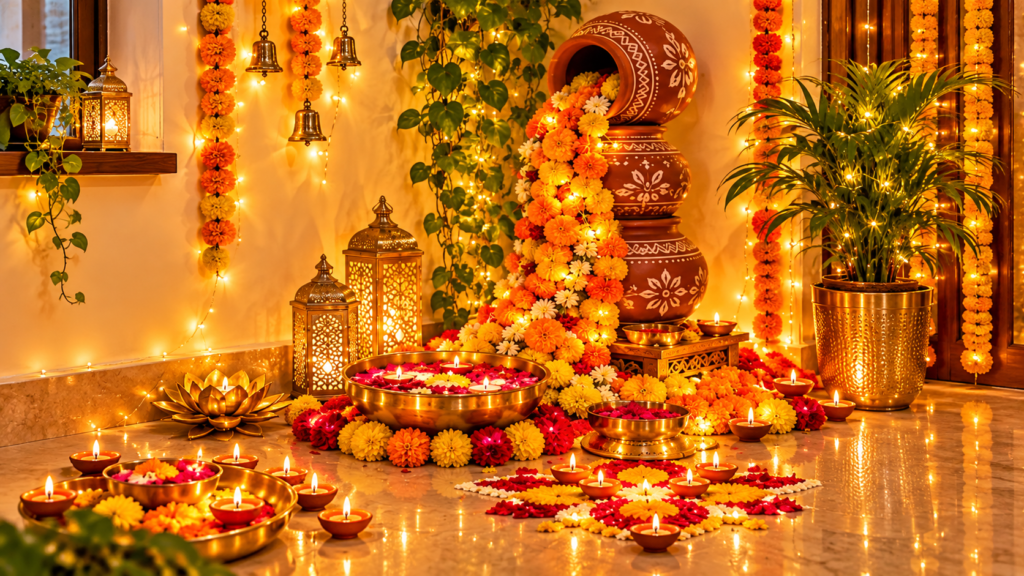
The visual identity of Diwali is one of its most remarkable features. Before the festival, families clean and prepare their homes, decorate entrances with torans, arrange fresh flowers and create intricate rangoli designs.
Rangoli is an art form traditionally created using coloured powders, rice flour, flower petals and other natural materials. These patterns welcome guests and are associated with auspiciousness and prosperity.
The humble clay diya remains one of the festival’s most recognisable symbols. Made by artisans across India, these lamps represent a tradition of craftsmanship that connects the festival to local communities and generations of makers.
In contemporary celebrations, traditional oil lamps exist alongside decorative lanterns, handcrafted ornaments and modern lighting installations. Yet the appeal of the diya remains difficult to replace. Its simplicity gives the festival an intimate character that elaborate decorations alone cannot recreate.
Food, Fashion and the Language of Hospitality
Food is central to the experience of Diwali. Kitchens become active long before the main celebration, with families preparing sweets and savoury delicacies to serve guests and exchange as gifts.
From laddoos, barfis and gujiyas in the north to karanji, anarse and chakli in Maharashtra, each region contributes its own culinary identity. These preparations are often associated with family recipes, festive memories and the passing of traditions between generations.
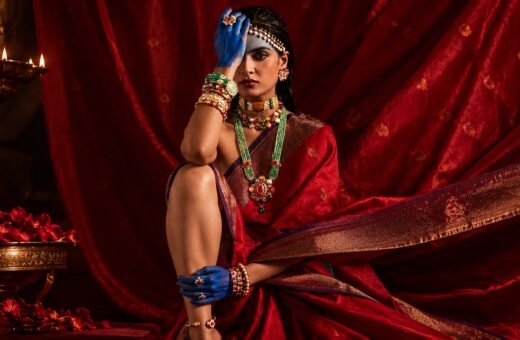
Fashion is another important expression of the occasion. Silk sarees, embroidered garments, traditional jewellery, sherwanis and contemporary festive ensembles bring colour and elegance to family gatherings. Indian craftsmanship becomes especially visible through textiles, hand embroidery, jewellery and accessories.
Gift-giving also carries a deeper meaning. Sweets, dry fruits, decorative objects, clothing and thoughtful presents are exchanged as expressions of affection, gratitude and goodwill. Hospitality becomes a defining part of the celebration.
Diwali Beyond Religious Boundaries
Although deeply rooted in Indian religious traditions, Diwali’s cultural significance extends across communities. Jain celebrations honour Mahavira’s liberation, while Sikh observances of Bandi Chhor Divas remember Guru Hargobind Ji’s release and the freedom of other prisoners.
Across India, people from different backgrounds participate in the festive atmosphere through family gatherings, cultural events, shared meals and neighbourhood celebrations.
The festival has also developed an international presence. Indian communities across the United Kingdom, Singapore, the United States, Canada, Mauritius and other countries celebrate Diwali through public events, performances, illuminated streets and cultural gatherings.
Its international reach demonstrates how cultural traditions can travel across borders while retaining their connection to their origins.
Preserving the Meaning of Diwali in a Changing World
Modern Diwali celebrations increasingly combine heritage with contemporary lifestyles. Digital greetings, online shopping, designer festive collections and elaborate public installations have become part of the experience.
However, the festival also raises important questions about sustainability and responsible celebration. Excessive fireworks can contribute to air and noise pollution, while disposable decorations create unnecessary waste. Choosing traditional clay lamps, reusable decorations, locally made products and environmentally considerate celebrations can help preserve the festival’s spirit.
Supporting artisans, purchasing handcrafted products and passing family recipes and rituals to younger generations are equally meaningful ways of protecting its cultural heritage.
A Celebration That Belongs to Generations
Diwali celebrations in India are ultimately about more than illuminated buildings, festive shopping or spectacular displays. They represent a relationship between the past and the present, between individual families and wider communities, and between inherited traditions and evolving expressions of identity.
Every diya carries a familiar message. Every shared meal strengthens a relationship. Every regional ritual contributes another chapter to India’s cultural story.
As generations continue to reinterpret the festival, Diwali remains a powerful reminder that heritage does not survive simply because it is remembered. It survives because people continue to practise, share and give meaning to it.
And perhaps that is the greatest beauty of India’s festival of lights: its ability to make an ancient tradition feel meaningful in every new generation.