

Exploring the enduring appeal of old-world wedding aesthetics, where heritage, romance, ceremony, and understated luxury create celebrations beyond the ordinary.
Old-world luxury weddings possess a distinctive elegance that transcends changing trends. Rooted in heritage, cultural traditions, and the art of refined celebration, they represent a vision of marriage that extends beyond a single occasion. Their appeal lies in the atmosphere they create: an elegant gathering shaped by history, meaningful rituals, exquisite craftsmanship, and a sense of continuity between generations.
Old-world luxury weddings are not defined by extravagance alone. They draw inspiration from historic estates, aristocratic traditions, European palaces, royal ceremonies, and the enduring customs of families whose celebrations have long been shaped by cultural identity and social heritage.
In a world where wedding aesthetics frequently follow seasonal trends, this approach offers something different. It celebrates the enduring beauty of tradition, allowing a wedding to become an expression of personal identity, family history, and timeless romance.
The Allure of Old-World Elegance
The old-world aesthetic is distinguished by its appreciation for history, craftsmanship, and the beauty of things that endure.
Historic architecture, classical interiors, antique furnishings, and carefully preserved traditions establish the visual and emotional foundation of this style. Rather than relying on contemporary spectacle, old-world weddings create their atmosphere through details that feel meaningful and considered.
A celebration within a centuries-old château, a historic palace, a country estate, or an elegant heritage mansion possesses a character that modern venues may find difficult to replicate. The architecture itself contributes to the experience, offering a setting shaped by generations of history.
The appeal is not necessarily tied to a particular country or aristocratic tradition. It can emerge through the heritage of an Indian royal family, the elegance of an Italian villa, the grandeur of a French château, or the ceremonial customs of a family whose traditions have been preserved across generations.
What connects these celebrations is a shared appreciation for continuity, beauty, and cultural identity.
Heritage Venues and the Romance of History
The venue often becomes the defining element of an old-world wedding.
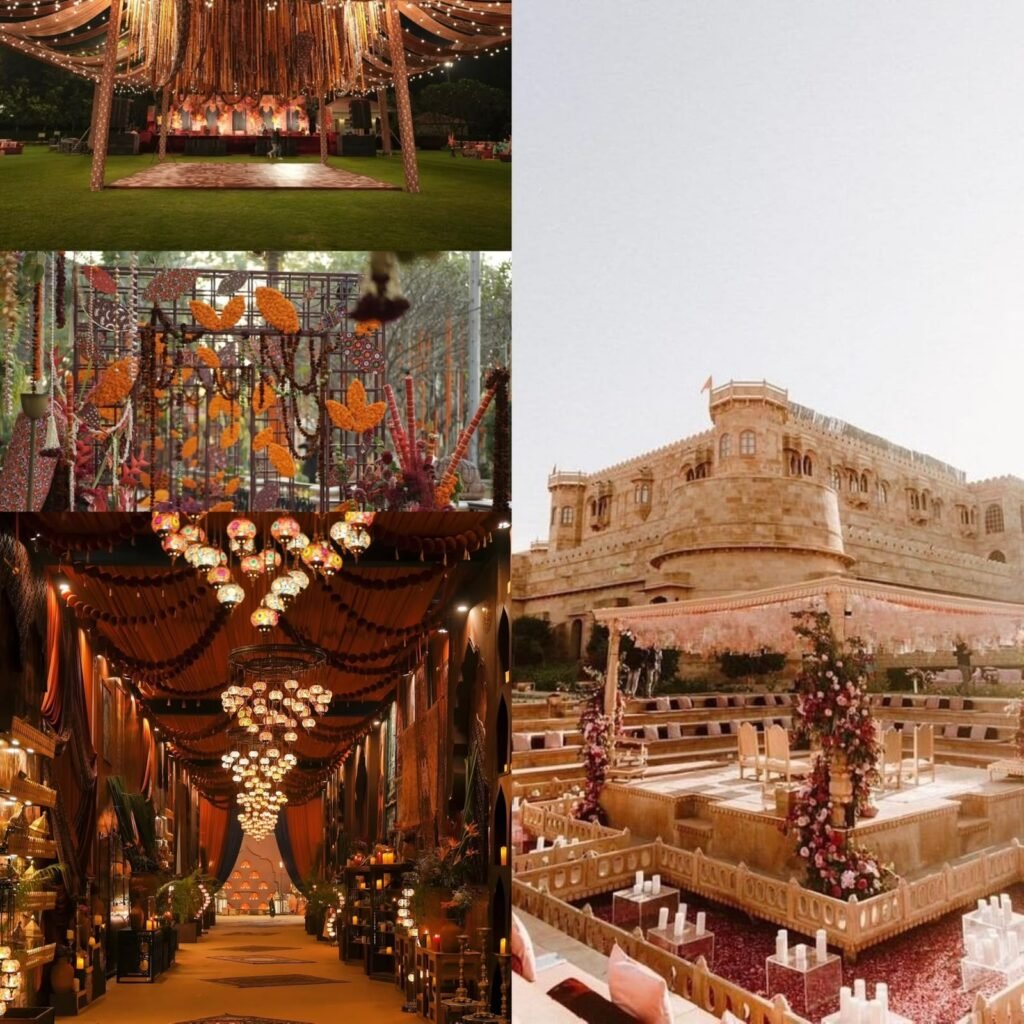
Historic palaces, private estates, manor houses, heritage hotels, and traditional residences offer a distinctive relationship between architecture and celebration. Their courtyards, grand staircases, gardens, and ceremonial halls provide a natural sense of occasion.
A wedding held within such a setting becomes part of a larger story.
The architecture introduces its own visual language: carved stone, ornate ceilings, antique chandeliers, sweeping staircases, and expansive gardens. These elements create an atmosphere that feels established rather than manufactured.
For families with a strong connection to heritage, a historic venue can also carry symbolic significance. It may reflect a shared cultural identity, a family tradition, or an appreciation for architectural and artistic history.
The setting becomes more than a backdrop. It contributes to the meaning of the celebration.
The Art of Timeless Wedding Aesthetics
Old-world wedding aesthetics are shaped by restraint, proportion, and thoughtful composition.
Floral arrangements may draw inspiration from classical gardens, incorporating roses, peonies, lilies, and seasonal blooms in soft, romantic palettes. Candlelight, antique candelabras, embroidered linens, and carefully selected tableware introduce texture and warmth.
Rather than overwhelming the venue, the design works in harmony with its architecture.
A historic ballroom may require little more than elegant floral arrangements and warm lighting to establish its atmosphere. A garden ceremony may rely on the natural beauty of the landscape, with delicate details that complement rather than compete with the surroundings.
The distinction lies in intention.
Every element contributes to the overall experience, creating an environment that feels cohesive, personal, and timeless.
Wedding Couture and the Language of Tradition
Fashion plays an important role in the visual identity of an old-world wedding.
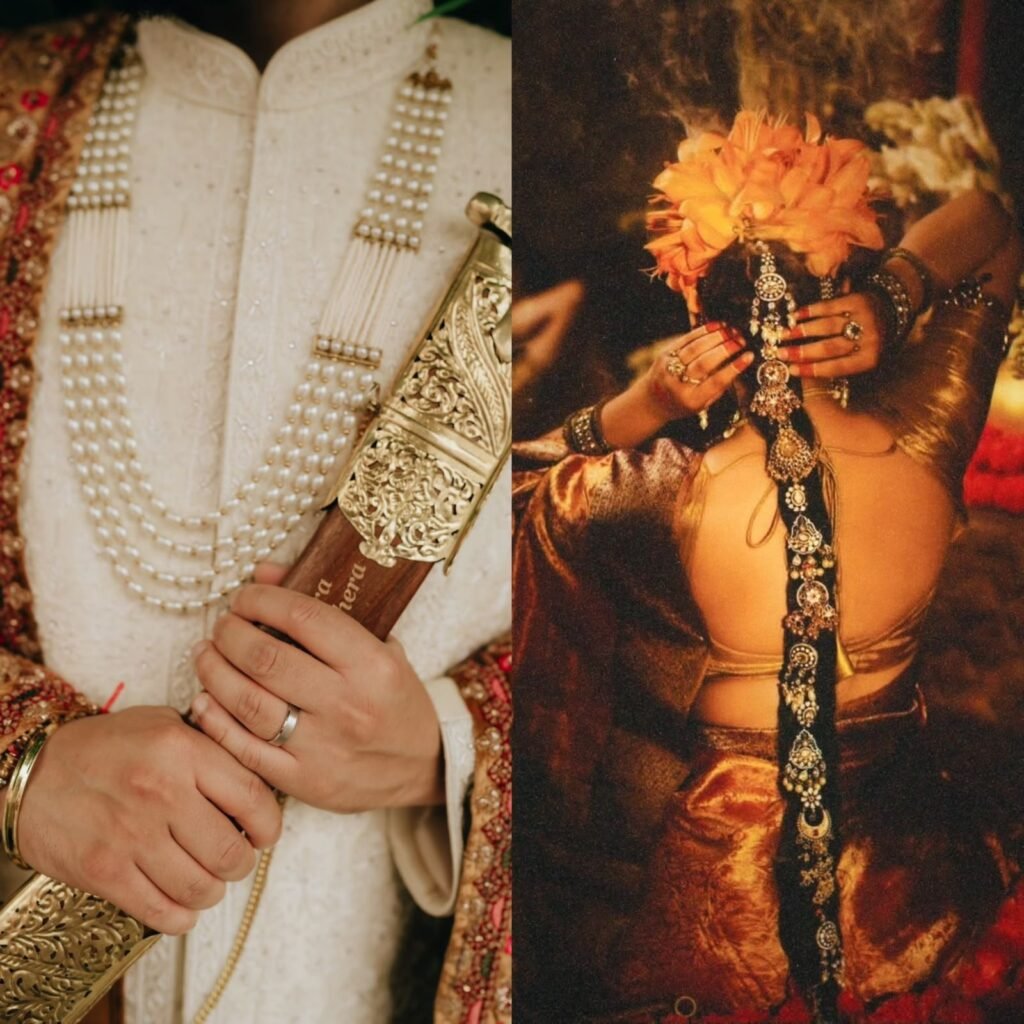
Bridal couture often draws inspiration from classic silhouettes, intricate embroidery, delicate lace, heirloom jewellery, and traditional craftsmanship. These elements may be interpreted through contemporary design while retaining their connection to historical aesthetics.
In Indian wedding traditions, for example, richly embroidered bridal ensembles, heirloom ornaments, and ceremonial attire can express cultural identity and family heritage. In European-inspired celebrations, structured gowns, lace veils, and classical tailoring may establish a similarly timeless aesthetic.
The groom’s attire also contributes to the overall character of the celebration, whether through traditional ceremonial dress, refined tailoring, or garments that reflect the cultural background of the family.
The most meaningful wedding fashion is not simply a matter of appearance. It can represent a connection to family, tradition, and the personal significance of the occasion.
Heirloom jewellery and garments passed between generations may carry a particularly powerful emotional dimension, transforming an individual detail into part of a larger family narrative.
Ceremony, Ritual, and Cultural Identity
The ceremony remains the emotional centre of a wedding.
Old-world celebrations often place particular importance on rituals that have been preserved through generations. These traditions may express faith, family values, cultural belonging, and the significance of marriage within a wider community.
Royal and aristocratic weddings have historically incorporated elaborate ceremonial customs, formal processions, and carefully observed protocols. While contemporary celebrations may reinterpret these traditions, their influence continues to shape the language of formal weddings.
In many cultures, marriage is understood not only as the union of two individuals but also as the joining of families.
This understanding can be reflected in the ceremony itself, through blessings, symbolic exchanges, traditional music, and rituals that acknowledge the families and communities involved.
When thoughtfully preserved, these customs provide a sense of continuity. They connect the present celebration to the experiences of previous generations while allowing the couple to establish traditions of their own.

The Influence of Aristocratic and Royal Weddings
Royal weddings and historic aristocratic celebrations have long influenced the aesthetics of luxury weddings.
Their ceremonial grandeur, formal dress, historic venues, and carefully considered presentation have shaped public perceptions of elegance and tradition.
Yet their most enduring influence is not necessarily their scale.
It is the attention given to symbolism, protocol, craftsmanship, and the relationship between ceremony and setting.
The architecture, the attire, the procession, and the formal gathering of guests contribute to a unified experience. Each element reflects a broader understanding of celebration as an occasion with cultural and social significance.
Contemporary luxury weddings often draw inspiration from this heritage without attempting to reproduce royal ceremonies in their entirety.
The result can be a more personal interpretation of old-world elegance, where the atmosphere of a historic celebration is adapted to the values and identity of the couple.

The Luxury of Intimacy and Personal Meaning
Although old-world weddings are often associated with grand venues and formal celebrations, their deeper appeal can also be found in intimate gatherings.
A private dinner in a heritage residence, a ceremony within a family estate, or a celebration surrounded by close relatives may possess a richness that does not depend on scale.
In such settings, the significance of the occasion emerges through personal relationships, family traditions, and the experience of sharing a meaningful moment.
Luxury, in this context, becomes the freedom to create a celebration that reflects individual priorities.
For some, this may involve a grand multi-day wedding with formal ceremonies and elaborate hospitality. For others, it may mean a discreet gathering in an extraordinary setting, where every detail has been selected with care.
The distinction is not between grandeur and simplicity.
It is between a celebration shaped by intention and one defined solely by appearance.

Weddings as a Living Legacy
A wedding is a moment in time, yet its significance can extend far beyond the day itself.
Photographs, heirloom jewellery, family traditions, handwritten letters, and ceremonial objects can become part of a family’s collective memory. They preserve details that may otherwise disappear as generations change.
For families with a strong sense of heritage, a wedding can become an occasion through which traditions are reaffirmed and passed forward.
This does not require the preservation of every historical custom.
Tradition remains meaningful when it is understood, respected, and adapted thoughtfully. A contemporary celebration can honour the past while expressing the values and aspirations of the people beginning a new chapter together.
The most enduring weddings are therefore not necessarily the most elaborate.
They are the ones that leave behind a meaningful connection between the occasion and the lives it celebrates.

Beyond the Celebration
Old-world luxury weddings reveal a more enduring understanding of elegance.
They demonstrate that beauty can be found in heritage, that ceremony can carry meaning beyond spectacle, and that traditions can remain relevant when they are thoughtfully preserved.
Historic venues, refined couture, cultural rituals, and carefully composed aesthetics contribute to the atmosphere, but their significance lies in the relationships and memories they help create.
The luxury of a timeless wedding is ultimately not measured by its scale or extravagance.
It is found in the ability to bring together history, identity, romance, and personal meaning in a celebration that feels both deeply rooted and entirely its own.
In this sense, the old-world wedding is more than an aesthetic.
It is an expression of continuity—a celebration of love shaped by the past, experienced in the present, and carried into the future.