
Inside the extraordinary residences that reflect the architectural imagination, artistic traditions and cultural identities of civilisations.
Few architectural creations communicate history, craftsmanship and grandeur as powerfully as palaces. Across continents, these remarkable structures have served as residences, ceremonial spaces, administrative centres and expressions of artistic ambition. Their architecture tells stories of different civilisations, revealing how societies understood beauty, power, identity and the relationship between space and human experience.
From the intricate courtyards of India to the monumental European residences and the refined imperial complexes of East Asia, palaces represent some of the most extraordinary achievements in architectural history.
Yet their importance extends beyond their original functions. Many have become museums, cultural institutions and internationally recognised heritage landmarks, allowing contemporary generations to experience the artistry of earlier periods.
Architecture That Transcends Generations
Palace architecture has never followed a single international style. Each civilisation developed its own interpretation of grandeur, influenced by geography, climate, materials, craftsmanship and cultural traditions.
European palaces frequently demonstrate monumental proportions, elaborate façades, formal gardens and carefully composed interiors. Indian palace architecture incorporates a remarkable combination of regional styles, including Rajput, Mughal, Indo-Saracenic and traditional South Indian influences.
Across East Asia, imperial palace complexes often reflect principles of symmetry, hierarchy, symbolism and harmony with their surroundings.
Despite these differences, many palaces share a common architectural ambition: to create environments in which every detail contributes to a larger visual and cultural experience.
Their entrances, staircases, courtyards, galleries and ceremonial halls were carefully designed to establish a sense of arrival, movement and significance.
Europe: The Language of Grandeur
European palaces offer an extraordinary record of architectural evolution.
The Palace of Versailles in France remains one of the most celebrated examples of monumental palace architecture. Its expansive gardens, elaborate interiors and famous Hall of Mirrors demonstrate the extraordinary relationship between architecture, decorative arts and landscape design.
In Austria, Schönbrunn Palace in Vienna represents the refinement of imperial architecture, with its formal gardens, ceremonial rooms and carefully preserved interiors.
Further south, the Royal Palace of Caserta in Italy reveals another expression of European grandeur. Its monumental scale, landscaped gardens and elaborate water features illustrate the ambition of eighteenth-century palace design.
These buildings are important not simply because of their dimensions or decorative richness, but because they demonstrate how architecture can become an expression of an entire cultural period.
India: A Landscape of Architectural Masterpieces
India possesses one of the world’s richest traditions of palace architecture, reflecting centuries of regional creativity, artistic exchange and craftsmanship.
The Mysore Palace in Karnataka is particularly remarkable for its Indo-Saracenic design, combining architectural influences through domes, arches, decorative details and richly appointed interiors. Its illuminated appearance during the annual Dasara celebrations has made it one of India’s most recognisable architectural landmarks.
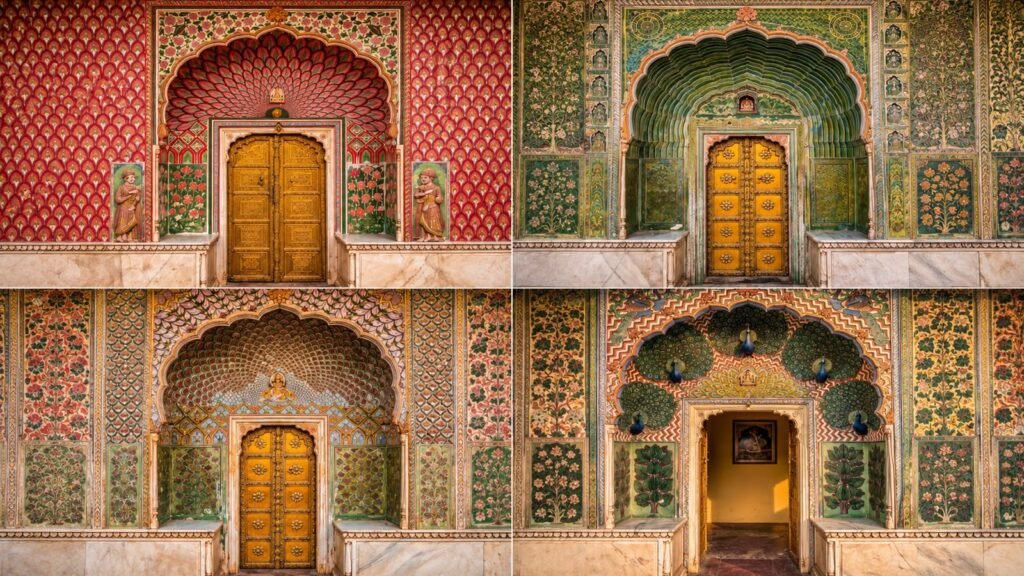
In Rajasthan, the City Palace in Jaipur presents a fascinating combination of Rajput and Mughal architectural influences. Its courtyards, gateways, galleries and decorative elements demonstrate the sophistication of regional design traditions.
The Lake Palace in Udaipur offers a different architectural experience. Situated on Lake Pichola, its pale stone structures and relationship with the surrounding water create an extraordinary sense of visual harmony.
Further south, Chowmahalla Palace in Hyderabad reflects the architectural and ceremonial traditions of the former Nizams, combining Persian, European and Indian influences.
Together, these landmarks demonstrate that Indian palace architecture cannot be reduced to a single style. It is a diverse architectural heritage shaped by different regions, materials, traditions and artistic communities.
Asia: Imperial Design and Symbolism
Across East Asia, palaces often reflect a sophisticated relationship between architecture, symbolism and spatial organisation.
The Forbidden City in Beijing, China, is among the world’s most significant historic palace complexes. Its vast arrangement of courtyards, halls, gates and traditional buildings demonstrates the importance of symmetry, colour and ceremonial order in imperial Chinese architecture.
In Japan, the Kyoto Imperial Palace reflects a different architectural philosophy, characterised by restrained aesthetics, traditional materials, elegant proportions and a close relationship with gardens and nature.
South Korea’s Gyeongbokgung Palace in Seoul provides another extraordinary example. Its traditional Korean architectural forms, expansive courtyards and decorative details reveal a distinctive approach to imperial design.
These buildings demonstrate how architectural grandeur can emerge through both monumental scale and thoughtful simplicity.
The Artistry Behind Palace Interiors
A palace is experienced not only through its exterior architecture but also through its interiors.
Ceiling paintings, carved columns, ornamental ceilings, marble floors, decorative screens, chandeliers, textiles and handcrafted furniture contribute to the identity of each space.
In many historic palaces, specialised artisans worked across generations to develop distinctive decorative traditions. Stone carving, woodwork, metalwork, fresco painting, mosaic design and textile craftsmanship were essential to creating interiors of exceptional quality.
The most remarkable palace interiors demonstrate an understanding of composition. Light, proportion, texture and colour are carefully balanced to create spaces that feel cohesive rather than excessively decorative.
These interiors also provide valuable insight into the artistic traditions of the societies that produced them.
Gardens, Courtyards and the Architecture of Nature
Palace architecture frequently extends beyond the building itself.
Gardens, fountains, courtyards, terraces and water features form essential parts of the architectural experience. They create transitions between interior and exterior spaces while establishing relationships with the surrounding landscape.
The formal gardens of Versailles demonstrate the European tradition of highly structured landscape design. Mughal gardens in India reflect the influence of geometric layouts, water channels and carefully composed planting arrangements.
In East Asia, traditional palace gardens often express a different approach, emphasising balance, natural scenery and carefully framed views.
These landscapes demonstrate that palace design has always involved more than constructing impressive buildings. It has also involved shaping the relationship between architecture and nature.
Restoration: Protecting Architectural Heritage
Preserving palaces presents considerable challenges.
Ageing materials, environmental conditions, structural deterioration, changing urban environments and the demands of tourism can place historic buildings under pressure.
Restoration requires more than repairing visible damage. Specialists must understand traditional construction methods, original materials, historic documentation and the artistic intentions behind the architecture.
Conservation projects frequently involve architects, historians, engineers, craftspeople and heritage organisations working together.
The objective is not simply to make an old building appear new. It is to preserve its authenticity while ensuring that it remains structurally sound and meaningful for future generations.
Responsible restoration also recognises the importance of retaining traditional craftsmanship, particularly techniques that are becoming increasingly rare.
Palaces in the Contemporary World
The role of palaces has changed considerably over time.
Many historic residences now operate as museums, public attractions, cultural venues or protected heritage properties. Others continue to serve official ceremonial functions or remain privately maintained historic estates.
Their contemporary significance lies partly in their ability to connect people with architectural and cultural history.
They also contribute to local economies through heritage tourism, conservation employment, cultural programming and the international recognition of historic cities.
However, maintaining public access while protecting delicate historic interiors requires careful management. Preservation must remain central to any commercial or tourism-related activity.
The Enduring Language of Grandeur
Palaces are among the most compelling expressions of human creativity because they bring together architecture, landscape, decoration and cultural identity.
Their significance cannot be measured only through their size, materials or visual magnificence. It lies equally in the craftsmanship they preserve, the architectural ideas they communicate and the histories embedded within their walls.
As cities evolve and contemporary architecture continues to explore new possibilities, these historic structures offer an important reminder of the relationship between design and cultural memory.
The most remarkable palaces do not simply belong to the past. Through preservation, restoration and thoughtful contemporary use, they continue to shape the architectural imagination of the present.
Their grandeur is timeless not because they remain unchanged, but because every generation discovers something new within them.