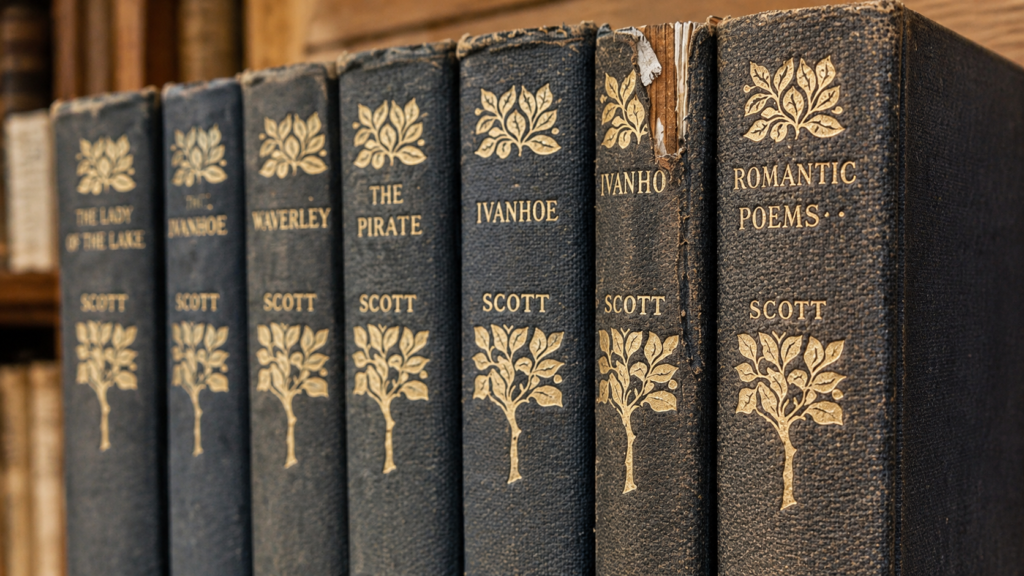
Some books are read, some are remembered, and a select few become treasures worth preserving for generations. Across international auction houses, private libraries and specialist collections, rare books are finding recognition as objects of literary heritage, historical importance and exceptional craftsmanship.
A book can carry far more than the words printed on its pages. It can preserve the first appearance of an influential idea, document a forgotten civilisation, reveal the handwriting of a celebrated author or offer a glimpse into a period that has long disappeared. This is what makes Rare Books so compelling to collectors. Their significance often extends beyond literature into history, art, politics, science and the evolution of human thought.
In a world where almost every publication can be accessed digitally, an original edition with a documented history possesses a different kind of attraction. It is a physical connection to the moment when a story, discovery or historical argument first entered public life.
When a First Edition Becomes a Piece of History
A first edition represents the earliest published edition of a work, but not every first edition is automatically valuable. Its importance depends on the author’s reputation, the publication’s historical influence, scarcity, condition and the demand among collectors.
An early edition of a landmark novel may be particularly desirable because it represents the work in the form in which its first readers encountered it. The original cover, publisher’s binding, illustrations and even printing characteristics can help distinguish one copy from another.
Consider the literary importance of works such as F. Scott Fitzgerald’s The Great Gatsby, James Joyce’s Ulysses and J. K. Rowling’s Harry Potter and the Philosopher’s Stone. Their earliest editions occupy an interesting position in publishing history because they are connected to works that subsequently achieved extraordinary cultural recognition.
For collectors, the attraction is not simply owning a famous title. It is possessing a particular physical edition that connects them to a defining moment in an author’s career.
The Extraordinary World of Literary Auctions
International auction houses have helped establish rare books as an important collecting category.
Institutions such as Sotheby’s and Christie’s regularly present historic manuscripts, signed publications, early printed works, illustrated volumes and private literary libraries to international buyers.
The scale of this market is reflected in recent auction results. In July 2026, Christie’s London Books and Manuscripts sale achieved £12.7 million, becoming the most valuable various-owner sale of its kind held in London. Its collection included a remarkable late-thirteenth-century illuminated manuscript associated with the legends of King Arthur and the Holy Grail.
Sotheby’s has also reported substantial activity in its Books and Manuscripts department, with sales exceeding $400 million over the preceding five years. Its 2025 results reached nearly $82 million, demonstrating the international interest in historically significant books and documents.
These results illustrate how literary objects can attract attention from collectors, institutions and individuals interested in preserving important cultural material.
The Signature That Changes a Book’s Story
An author’s signature can transform the significance of an ordinary publication.
A signed copy offers a direct connection to the individual who created the work. However, the value of an inscription depends on its authenticity, context and historical importance.
A book personally dedicated by an author to a fellow writer, political leader or influential public figure may carry additional significance. Such copies are often described as association copies because of their connection to a particular person or event.
Manuscripts can be even more compelling. Original handwritten pages, annotated drafts, correspondence and personal letters can reveal how an author developed an idea, changed a passage or responded to the world around them.
For literary historians, these objects provide evidence that cannot always be found in a published edition. For collectors, they offer a rare opportunity to encounter the creative process itself.
India’s Hidden World of Antiquarian Books
India has a particularly rich relationship with historical books and manuscripts. Its literary heritage spans classical languages, colonial-era publications, regional writing, religious texts, early scientific works and documents connected to the country’s political development.
Yet the Indian antiquarian book market remains a specialised field that often receives less public attention than paintings, jewellery and other traditional collectibles.
One notable example is Memoirs of India, a New Delhi-based rare-book emporium established in 1967. Now managed by the third generation of the family, it houses collections of first editions, signed books, historical maps, prints and other archival material.
Its collection demonstrates how books can preserve the country’s social, political and cultural history. Among its notable holdings are early editions of Mahatma Gandhi’s The Story of My Experiments with Truth and historical publications documenting India during earlier periods.
India’s auction market has also demonstrated the appeal of such material. Saffronart’s 2024 Passages to India auction achieved sales of approximately ₹6.47 crore, with 97 per cent of lots sold. One important highlight was a historic four-volume work by François Balthazar Solvyns, which achieved ₹1.14 crore.
These examples show that India’s rare-book heritage is not limited to institutional libraries. Private collections, specialist dealers and auction platforms also play an important role in preserving and circulating literary history.
What Makes a Rare Book Valuable?
The age of a book is only one part of its story. Collectors and specialists examine several characteristics before determining its significance.
Edition and printing: An important first edition or early printing can attract attention, particularly when it represents a major literary or historical milestone.
Condition and completeness: Original pages, illustrations, maps, bindings and dust jackets can influence desirability. Missing sections, substantial damage and poorly executed restoration may affect a book’s value.
Provenance: The documented history of ownership can make an individual copy especially interesting. A book previously held in a distinguished private library or associated with an important historical figure may possess additional significance.
Author signatures and inscriptions: Authentic signatures, personal dedications and handwritten annotations can distinguish one copy from otherwise similar editions.
Scarcity and demand: Limited surviving copies do not automatically guarantee high value. Collectors must also have a reason to seek the particular work, edition or historical association.
These considerations explain why two copies of the same title can have very different market values.
Preservation: Protecting Stories From Disappearing
Collecting rare books also brings responsibility. Paper, leather, ink and binding materials deteriorate when exposed to unsuitable environmental conditions.
Light, humidity, temperature fluctuations, dust and careless handling can gradually damage historic publications. Professional conservation therefore plays an important role in maintaining the physical integrity of valuable collections.
Specialist collectors often use archival storage materials, protective enclosures and carefully controlled environments. Fragile manuscripts may require professional assessment before handling, restoration or display.
Preservation is particularly important for books that contain historical illustrations, handwritten annotations or original documents. Their value lies not only in their appearance but also in the information they carry.
Libraries, museums, private collectors and antiquarian specialists all contribute to keeping these objects accessible for future generations.
Collecting With Knowledge, Not Just Investment Expectations
Rare books can attract substantial prices, but collecting them should not be confused with a guaranteed investment opportunity.
Values depend on changing demand, authenticity, condition, rarity and the availability of comparable examples. Some publications may appreciate considerably, while others may remain difficult to sell even after decades.
Anyone entering the market should seek specialist advice, verify provenance, examine condition reports and understand the difference between an edition, printing and individual copy.
For serious collectors, the strongest motivation is often a genuine interest in literature, history or a particular subject. Financial considerations may form part of the decision, but they should not replace proper research.
The Legacy That Lives on Paper
The world of rare books reminds us that cultural heritage is not always preserved in monumental buildings, paintings or royal objects. Sometimes, it survives in a carefully bound volume, a handwritten note or a publication that changed the direction of public thought.
A first edition can represent the beginning of a literary legacy. An annotated manuscript can reveal the mind behind an influential work. A centuries-old illustrated volume can preserve images of landscapes, people and traditions that have since transformed.
As international collectors continue to recognise the historical and artistic significance of these objects, rare books are finding a distinctive place within the world of cultural collecting.
Their greatest appeal, however, remains beyond the auction room. They are enduring records of imagination, knowledge and human experience — objects whose stories continue long after their first publication.