
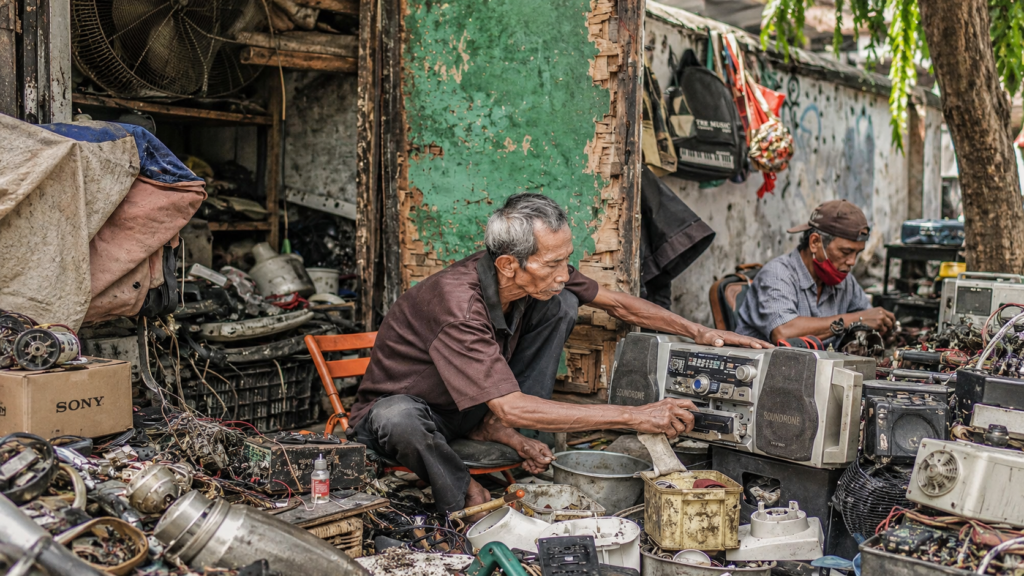
In a world accustomed to replacing rather than restoring, a different philosophy of consumption is gaining attention. From luxury fashion houses and electronics manufacturers to independent repair ateliers, the ability to preserve what we already own is becoming an important part of the global conversation about sustainability, craftsmanship and consumer rights.
For decades, modern consumer culture has been driven by convenience and constant upgrades. A damaged smartphone, a worn handbag, a malfunctioning appliance or a faded piece of clothing could easily become a reason to purchase something new. Products were increasingly judged by their latest features, appearance and availability rather than by how long they could remain useful.
That mindset is now being questioned. Right to Repair is emerging as an important global movement, challenging manufacturers to make products easier to maintain, repair and preserve. It is not simply an environmental campaign. It is also a conversation about consumer freedom, product design, business responsibility and the value of craftsmanship.
The central idea is straightforward: owning a product should not automatically mean accepting that it becomes disposable when one component fails.
A Global Movement Changing Consumer Rights
The right to repair has moved from specialist consumer advocacy discussions into public policy.
One of the most significant developments has taken place in the European Union. Its Directive on common rules promoting the repair of goods was adopted in June 2024, with member states required to apply the new rules from 31 July 2026.
The legislation aims to make repairs more accessible and attractive to consumers. For products covered by relevant European repairability requirements, manufacturers must provide repair services within a reasonable time and at a reasonable price. The rules also address the availability of spare parts and information about repair services.
An important provision gives consumers an additional year of legal guarantee when they choose repair instead of replacement under the applicable legal guarantee.
The legislation does not cover every product in existence. Its repair obligations apply to specified categories for which European Union law establishes repairability requirements. Nevertheless, it represents a meaningful change in how product longevity is approached within one of the world’s largest consumer markets.
The wider message is that durability and repairability are increasingly becoming part of the discussion around product quality, rather than optional considerations.
India’s Growing Repairability Conversation
India has also begun developing its own approach to repair accessibility and consumer awareness.
The Department of Consumer Affairs launched the Right to Repair India portal to bring repair-related information from participating brands together in one place. It covers sectors including automobiles, mobile phones and electronics, consumer durables and agricultural equipment.
In May 2025, the government announced that a committee had submitted a framework for a Repairability Index covering smartphones and tablets.
The proposed framework examines factors such as ease of disassembly, availability of repair information, spare-parts access, software updates, tools and fasteners. It also recommended making repairability information visible to consumers at the point of purchase and through online platforms.
This initiative is particularly relevant in India, where smartphones, household appliances and electronic devices have become essential parts of everyday life.
For consumers, the ability to access genuine components, understand repair costs and identify reliable service providers can influence whether a product remains useful or is discarded prematurely.
India’s repair economy also supports a large network of technicians, local workshops and independent service providers. Better access to repair information could strengthen this ecosystem while giving consumers greater confidence in maintaining their possessions.
When Luxury Chooses Restoration Over Replacement
Perhaps one of the most interesting developments is taking place in the luxury industry.
For generations, luxury has been associated with exceptional materials, careful construction and skilled craftsmanship. Yet the industry has also operated within a commercial environment that constantly introduces new collections and encourages purchasing.
Increasingly, some established houses are placing greater emphasis on aftercare, restoration and the long-term relationship between a customer and a product.
Brands such as Hermès, Chanel, Patagonia and Burberry illustrate different approaches to product care and repair.
Luxury restoration can involve replacing worn components, treating leather, repairing stitching, refreshing hardware and preserving original materials. Such work often requires specialist knowledge that cannot be replicated through ordinary repair services.
Burberry’s 2025–26 annual report offers a particularly interesting example. Through its ReBurberry aftercare programme, 385 stores across 32 countries and territories offered one or more aftercare services. During the financial year, more than 41,000 products were repaired or refreshed.
Its Trench Restored initiative also focuses on sourcing, authenticating and restoring older trench coats, extending the life of garments associated with the brand’s heritage.
These programmes demonstrate that aftercare can become part of a luxury brand’s identity. A product is no longer valued only at the moment of purchase; the quality of the service that follows can also shape the customer’s relationship with the house.
The Business Opportunity Behind Repair
Repair is also creating opportunities for businesses beyond traditional manufacturers.
Specialist workshops, independent technicians, restoration studios, component suppliers and digital repair platforms are contributing to an expanding service ecosystem.
Fashion companies are partnering with repair specialists to offer customers alterations, garment restoration and maintenance. Technology businesses are developing platforms that connect consumers with technicians, while independent workshops are finding demand for the repair of electronics, watches, furniture and household equipment.
The commercial opportunity lies in extending the usefulness of existing products while creating services around maintenance and restoration.
However, repair is not automatically profitable in every category. The cost of labour, availability of components, complexity of manufacturing and price of replacement products all influence a consumer’s decision.
Businesses therefore need to make repairs accessible, reliable and reasonably priced if they want customers to choose restoration over replacement.
The most successful models are likely to be those that combine technical expertise, transparent pricing and convenient customer service.
Craftsmanship Is Finding New Relevance
There is also a cultural dimension to this movement.
Repairing an object requires an understanding of how it was made. A skilled watchmaker must understand the relationship between tiny mechanical components. A leather artisan must know how different hides respond to treatment. A furniture restorer must recognise the materials, construction techniques and finishes used in an earlier period.
These skills preserve more than the usefulness of an object. They preserve knowledge that can otherwise disappear as traditional crafts become less commercially visible.
In an era of automated production, restoration gives skilled artisans an important role in contemporary business.
India has a particularly rich tradition in this area. From textile mending and embroidery restoration to jewellery repair, furniture craftsmanship and traditional metalwork, generations of artisans have maintained practices that reflect regional knowledge and cultural heritage.
Connecting these skills with modern consumer markets could create opportunities for craft businesses while strengthening the value of traditional expertise.
The Challenges That Cannot Be Ignored
Despite its growing appeal, the repair movement faces practical obstacles.
Many modern products are designed with complex internal components, specialised fasteners and integrated electronic systems. Some repairs require proprietary software or tools that may not be available to independent technicians.
Spare parts can also be expensive or difficult to obtain. In other cases, a repair may cost almost as much as replacing the product, making the decision difficult for consumers.
There are also legitimate safety and quality considerations. Batteries, electrical components and specialised machinery require trained professionals. Poorly performed repairs can create risks and may compromise a product’s performance.
This is why meaningful repair policies need more than slogans. They require accessible technical information, dependable components, skilled workers, clear warranties and responsible repair standards.
Manufacturers, governments, service providers and consumers all have a role in creating a functioning repair ecosystem.
A New Definition of Ownership
The right to repair represents a broader change in the way people think about ownership.
For some, it means keeping a smartphone for longer instead of upgrading every year. For others, it means restoring a treasured handbag, maintaining a mechanical watch or preserving furniture that has been part of a family home for generations.
The movement also challenges the assumption that newer always means better. A well-made object that can be maintained over time may offer greater practical and emotional value than something designed for a short period of use.
Repair does not mean rejecting innovation or refusing to buy new products. It means making durability, serviceability and responsible consumption part of the purchasing decision.
As legislation evolves, brands rethink aftercare and skilled artisans receive renewed attention, the culture of replacement is facing a serious alternative.
The future of ownership may not be measured only by what people purchase, but also by what they choose to preserve.