
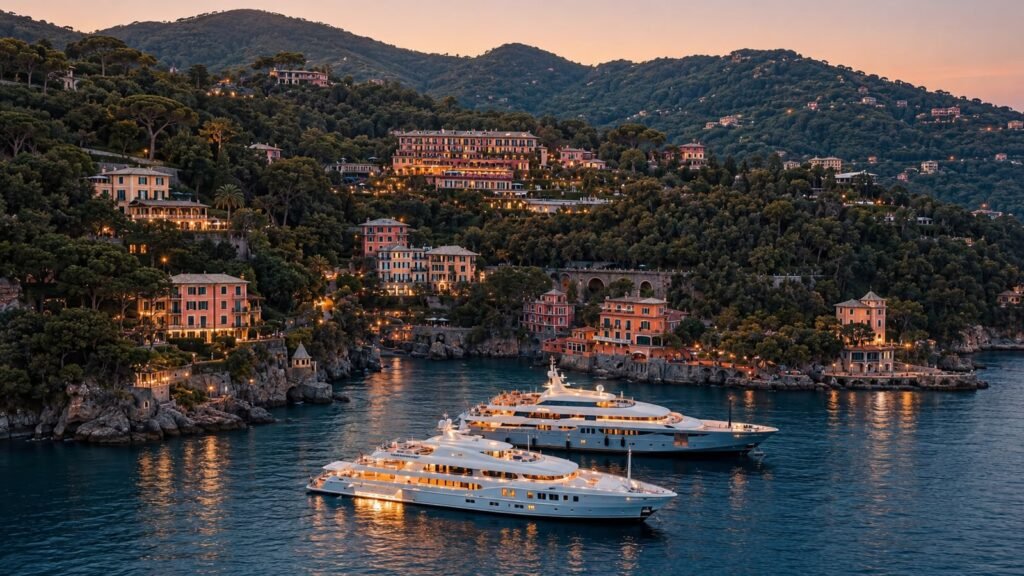
Beyond the horizon, a different expression of luxury takes shape. Superyachts bring together extraordinary engineering, architectural imagination, personal freedom and the privilege of experiencing the world’s oceans from an entirely different perspective.
There are few expressions of contemporary luxury as distinctive as a superyacht. Part private residence, part engineering achievement and part personal sanctuary, these remarkable vessels represent an unusual meeting point between design, technology and the open sea.
For their owners and guests, superyachts offer more than transportation or leisure. They create an environment in which the boundaries between architecture, hospitality and exploration become almost invisible. A vessel can travel between continents while offering the privacy, comfort and individuality of a carefully designed home.
Yet the true significance of superyachts lies beyond their size or price. They reflect a culture of personalisation in which almost every detail, from the exterior silhouette to the smallest interior fitting, can be shaped around an individual vision.
When Naval Architecture Becomes an Art
A superyacht begins with a demanding architectural and engineering challenge: creating a vessel that is visually exceptional while remaining safe, stable and capable of navigating the sea.
Naval architects, marine engineers and designers work together to develop its structure, propulsion systems, balance and overall performance. The exterior design must respond to the practical realities of maritime engineering while expressing a distinct visual identity.
Some vessels favour streamlined, contemporary profiles, while others draw inspiration from classical ships and traditional maritime forms. Expansive decks, sculptural windows and carefully integrated outdoor spaces have become defining features of modern yacht design.
The result is a form of architecture that must function in a constantly changing environment. Unlike a conventional building, a superyacht must accommodate movement, weather, changing temperatures and the technical demands of life at sea.
Interiors Designed Around Individuality
Inside a superyacht, the language of luxury becomes deeply personal.
Owners often work with specialist interior designers to create spaces that reflect their preferences, collections and lifestyles. Natural stone, fine timber, handcrafted furniture, custom lighting and carefully selected textiles can transform the vessel into an individual design statement.
The layout may include formal dining rooms, private suites, libraries, cinemas, wellness facilities and expansive lounges. Some vessels also feature dedicated offices, art collections and entertainment spaces.
However, designing interiors for a yacht involves more than selecting beautiful materials. Every element must account for weight, movement, maintenance and maritime safety. Furniture and fittings need to remain secure while the vessel is underway, and materials must withstand the marine environment.
This combination of refinement and technical discipline makes yacht interiors a distinctive field within luxury design.
The Experience of Life at Sea
The appeal of superyachts is closely connected to the experiences they make possible.
A private vessel can provide access to secluded coastlines, remote islands and destinations that are difficult to reach through conventional travel. An itinerary can be adapted around weather, personal interests and the preferences of those on board.
Life aboard can include open-air dining, swimming, water sports, wellness treatments and evenings spent watching the coastline from a private deck. Larger yachts may also carry tenders and specialist equipment that allow guests to explore nearby shores.
Hospitality plays an essential role. Captains, engineers, chefs, stewards and other crew members coordinate the complex operations that make an extended voyage possible. Their work combines maritime expertise with highly personalised service.
For guests, the experience can appear effortless. Behind that ease lies an extensive operation involving navigation, maintenance, provisioning, safety and hospitality.
Ownership, Chartering and the Economics of Exclusivity
Superyachts exist within a specialised international industry that includes shipyards, designers, brokers, management companies, charter operators and maintenance specialists.
Ownership involves commitments that extend well beyond the original purchase. Crew salaries, fuel, insurance, maintenance, port charges, refits and regulatory requirements all contribute to the continuing cost of operating a vessel.
For this reason, some individuals choose to charter rather than own. Chartering provides access to a yacht for a defined period, allowing guests to experience private voyages without assuming the responsibilities of permanent ownership.
The charter market also offers considerable variety. Vessels differ in size, design, onboard facilities, cruising range and the destinations they can access.
For owners, professional yacht management can help coordinate technical operations, crew administration, compliance and maintenance. The industry therefore relies on an extensive network of expertise that remains largely invisible to guests.
The Global World of Superyacht Design
Superyachting is an international industry, shaped by shipbuilding traditions, design studios and maritime destinations across several regions.
The Netherlands has developed a prominent reputation for high-end yacht construction and engineering. Italy is widely recognised for its contribution to yacht design, craftsmanship and luxury interiors. Germany also has an established position in the construction of large and technically sophisticated vessels.
The Mediterranean remains an important centre of the yachting lifestyle, with destinations including the French Riviera, the Italian coast, Greece and the Balearic Islands. Beyond Europe, the Caribbean, the Indian Ocean and parts of Southeast Asia attract yachts seeking different cruising experiences.
These locations demonstrate that superyachting is not defined by a single culture or destination. It is an international world in which architecture, hospitality, maritime expertise and travel traditions continually influence one another.
Innovation and the Future of Maritime Luxury
The future of superyachts will be shaped increasingly by environmental responsibility and technological development.
The maritime industry faces pressure to reduce emissions, improve energy efficiency and reconsider the environmental impact of large private vessels. Designers and shipbuilders are exploring more efficient hull forms, improved propulsion systems, energy-management technologies and alternative fuels.
Hybrid propulsion can allow certain vessels to combine conventional engines with electric systems, depending on their design and operating conditions. Solar technology and battery storage may also contribute to onboard energy management, although their practical contribution varies significantly between vessels.
Advances in navigation, automation and onboard monitoring are changing how yachts are operated and maintained. At the same time, new materials and construction methods are creating opportunities to improve efficiency without compromising performance.
Environmental responsibility will remain a complex challenge, particularly for large vessels with substantial energy requirements. The industry’s future will depend not simply on adopting new technology, but on making measurable progress in how yachts are designed, built and operated.
Beyond Possession: A Different Relationship with the Sea
For some, a superyacht represents achievement and personal expression. For others, it is an opportunity to explore the world with greater independence and privacy.
Its significance is not limited to the vessel itself. It also reflects a broader relationship between luxury and experience, in which time, access, individuality and freedom of movement become central considerations.
Yet the most interesting superyachts are not necessarily those that attract the greatest attention. They are the vessels in which engineering, design and purpose come together with clarity.
The ocean remains unpredictable, and no amount of luxury can remove its natural demands. Perhaps that is part of the enduring appeal of yachting: it combines the sophistication of human design with the scale and uncertainty of the natural world.
Ultimately, superyachts represent more than extraordinary objects. They are moving expressions of architecture, innovation and personal vision. At their finest, they transform the experience of travel into an intimate encounter with the sea, where the destination matters, but the journey becomes an equally important part of the story.