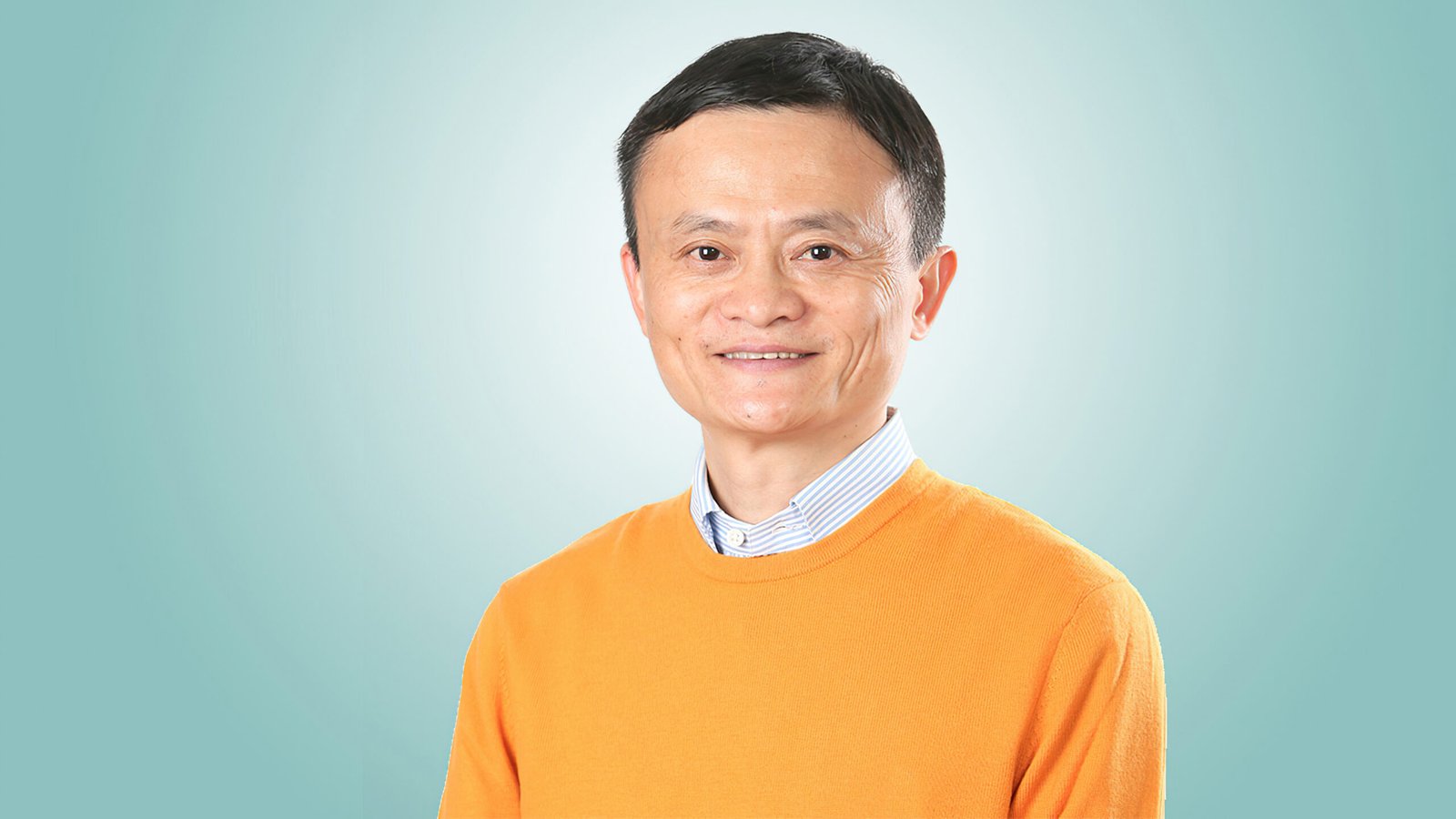
There are men who build businesses. And then there are men who build civilisations of commerce, entire ecosystems of exchange, trust, and capital that reshape how hundreds of millions of people interact with the economy. Jack Ma is the latter. His story is not simply a story of wealth. It is a story of will, of philosophy applied to scale, and of what becomes possible when a man refuses to accept the limits the world assigns him.
At its peak, the empire Ma built Alibaba Group, was valued at over $800 billion. Its ecosystem touched e-commerce, cloud computing, digital payments, logistics, and media across Asia and beyond. The numbers are staggering. But numbers have never been the most interesting thing about Jack Ma.
From Rejection to Reconstruction: The Early Architecture of Resilience
Jack Ma Yun was born in Hangzhou, China, in 1964. He failed his university entrance exam twice. He applied to Harvard ten times and was rejected each time. He applied to thirty jobs after graduation, including one at KFC — and was turned down for all of them. He was the only applicant KFC rejected out of twenty-four who applied.
Most people would have recalibrated their ambitions downward. Ma recalibrated upward.
“I think the most important thing is you have to be a person of action,” he has said. “I call myself a blind man riding on the back of a blind tiger.”
This is the first principle of the Ma philosophy: resilience not as endurance, but as intelligence. Each rejection, in his framing, was not a verdict on his worth, it was information about where not to go. The direction, eventually, would reveal itself.
He trained as an English teacher and spent years building his language skills by offering free tours to foreign visitors in Hangzhou. Those conversations with Western tourists shaped his understanding of the gap between China’s commercial reality and the world that was coming. When he first encountered the internet in 1995 on a trip to the United States, he searched the word “beer” and found no Chinese results. He saw not an absence but an opportunity.
The Alibaba Thesis: Trust as Infrastructure
In 1999, Ma gathered eighteen friends in his Hangzhou apartment and pitched them a vision. Not for a company, precisely — but for a system. A digital infrastructure through which Chinese manufacturers could reach buyers anywhere in the world, bypassing the intermediaries that had historically extracted the margin between production and sale.
Alibaba was born not as a marketplace but as a trust mechanism. Its foundational insight, that the primary barrier to global trade for small businesses was not product quality or logistics, but the absence of trusted verification — was years ahead of its time.
“We are not an e-commerce company,” Ma would later say. “We are a company that helps small businesses.”
That framing matters. It explains why Alibaba’s growth was not driven primarily by consumer acquisition — as Amazon’s was — but by merchant empowerment. Every tool Alibaba built, from Alipay to Alibaba Cloud to Cainiao logistics, was designed to remove friction for the seller. The consumer followed.
By 2014, Alibaba’s IPO on the New York Stock Exchange raised $25 billion, the largest IPO in history at that time. Ma, who had started with $60,000 borrowed from friends and family, was suddenly among the wealthiest individuals on earth.
The Philosophy of the Sovereign Builder
What distinguishes Ma from the majority of the world’s billionaires is not the scale of what he built, but the philosophical coherence behind it. He is, in the truest sense, a builder who thinks at the civilisational level.
His framework for leadership is rooted in what he calls IQ, EQ, and LQ, intelligence quotient, emotional quotient, and love quotient. The last, he argues, is the most important and the most overlooked in business education.
“If you want to be respected, you must respect others first,” he has said. “If you want to be trusted, you must trust others first.”
This is not sentiment. In Ma’s model, love — meaning genuine investment in the wellbeing of employees, customers, and society — is a strategic asset. Businesses that extract value without returning it eventually collapse the ecosystems they depend on. Businesses that build genuine loyalty create what he calls “the invisible moat” — a competitive advantage that no amount of capital can directly replicate.
His approach to talent is equally distinctive. Ma has consistently said he surrounds himself with people smarter than himself — a statement that sounds like humility but functions as strategy. An organisation built around a single intelligence is fragile. An organisation built around a culture of distributed excellence is sovereign.
Power, Politics, and the Price of Visibility
In October 2020, Ma gave a speech at a financial forum in Shanghai that would alter the trajectory of his public life. He criticised China’s state banking system as operating like “pawnshops” and suggested that Chinese financial regulators were suppressing innovation. The speech was characteristically direct. The consequences were swift.
The $37 billion IPO of Ant Group, Alibaba’s financial affiliate and the world’s most valuable fintech company at the time, was suspended by regulators within days. What followed was a sustained regulatory pressure campaign against Alibaba that wiped hundreds of billions from its market value and effectively ended Ma’s period of public prominence in China.
He largely disappeared from public view for several months. Speculation was widespread. His eventual re-emergence, in Tokyo, then in other international locations, was characteristically quiet.
The episode reveals something essential about sovereign wealth at the highest level: visibility and invulnerability are not the same thing. Ma had built one of the world’s great commercial empires, but had underestimated the degree to which that empire existed within a political ecosystem it did not control.
It is, in Anax’s view, the single most instructive chapter of his career — not because he failed, but because of what it reveals about the limits of commercial sovereignty without political alignment.
The Legacy Architecture
Today, Jack Ma’s legacy is being reassessed, not by markets, but by history. The infrastructure he built has permanently altered how Asia conducts commerce. Alipay alone processes transactions for over one billion users. Alibaba Cloud is the dominant cloud provider across Southeast Asia. The logistics network he created employs millions and moves the physical economy of an entire continent.
He has also committed significant portions of his wealth to education and environmental causes through the Jack Ma Foundation, work he has described as “the most important thing I will do in the second half of my life.”
For Anax, the Jack Ma story is not ultimately a story about money. It is a story about the architecture of conviction, about what becomes possible when a man with no obvious advantages decides that the world’s assessment of him is incorrect and builds, with patience and philosophy, a monument to that decision.
The blind man on the blind tiger did not fall. He rode it to the summit.