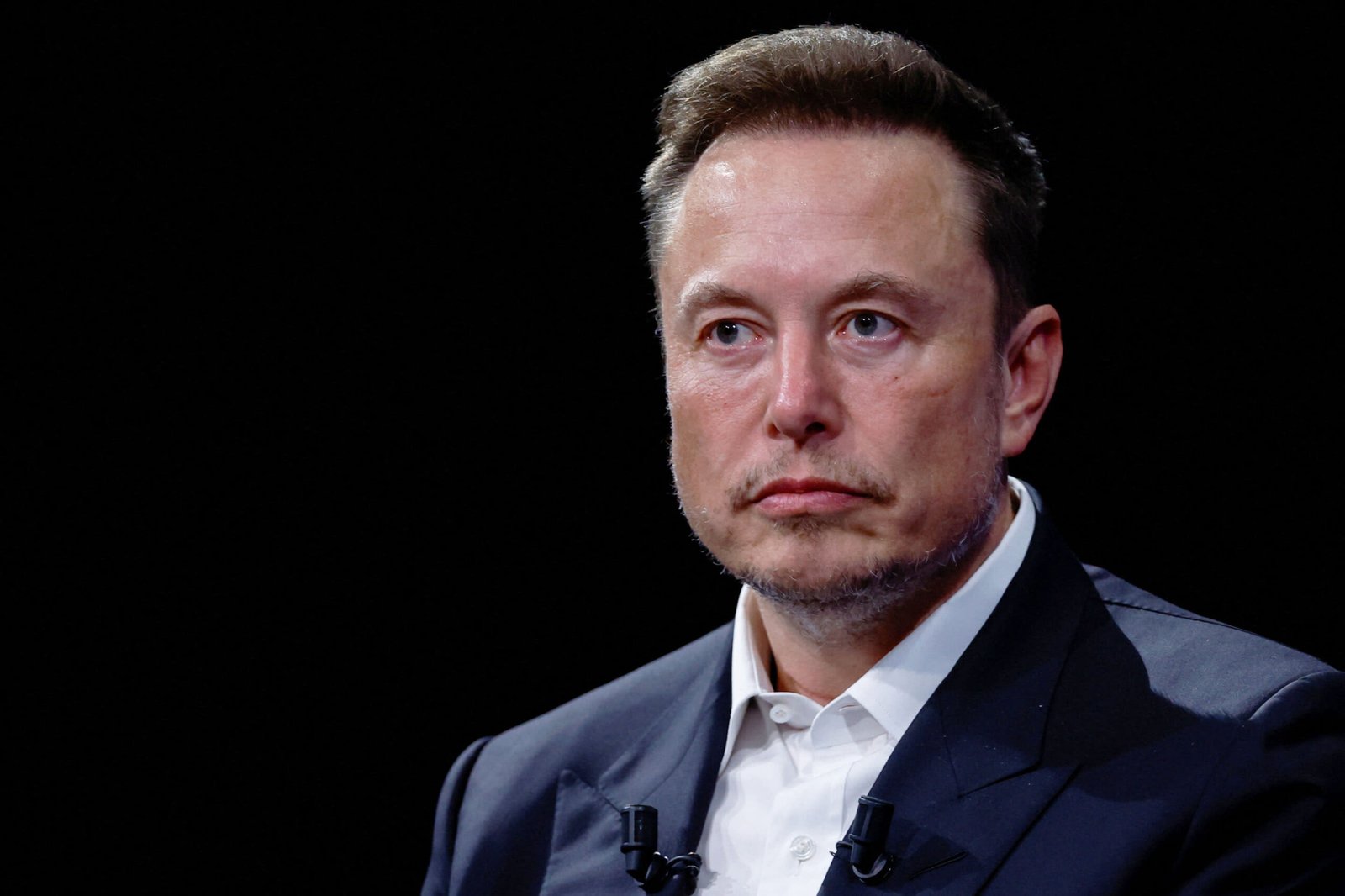
There is a particular kind of person who looks at a problem the size of a civilisation and thinks: I should fix that. Not as metaphor. Not as mission statement. But as a literal operational agenda, to be executed with engineering precision and an apparently genuine indifference to the possibility of failure.
Elon Musk is that person. And whatever one’s view of his politics, his personality, or his methods, the objective record of what he has built places him in a category that resists easy analysis. He is simultaneously the most admired and most polarising entrepreneur of his generation, a man who has disrupted automotive manufacturing, private space exploration, digital payments, social media, and artificial intelligence within a single career.
The question Anax asks is not whether you like him. The question is: what does the architecture of his mind reveal about the nature of sovereign ambition?
The Formation of a Compulsive Builder
Elon Reeve Musk was born in Pretoria, South Africa, in 1971. By his own account, his childhood was marked by intense intellectual solitude, he was a voracious reader who had consumed the local library by early adolescence and turned to encyclopaedias when he ran out of other books. He taught himself programming at ten years old and sold a video game he had written, called Blastar, to a computer magazine at twelve.
He left South Africa at seventeen, first for Canada and then for the United States, ultimately studying economics and physics at the University of Pennsylvania. He was accepted into Stanford’s PhD programme in energy physics but left after two days to co-found Zip2, a web software company that provided online business directories to newspapers, with his brother Kimbal.
The decision to leave a Stanford PhD after forty-eight hours is not recklessness. It is, in Musk’s framework, the application of first-principles thinking to opportunity cost: if the marginal value of the degree is lower than the marginal value of the company, abandon the degree. Most people cannot execute this logic because of social pressure, sunk cost psychology, and risk aversion. Musk has demonstrated, repeatedly, a near-total immunity to all three.
The Portfolio of Disruption: What He Actually Built
To enumerate what Musk has built is to confront the implausibility of it:
PayPal, After selling Zip2 to Compaq for $307 million in 1999, Musk founded X.com, an online financial services company that merged with Confinity to become PayPal. When eBay acquired PayPal in 2002 for $1.5 billion, Musk received $180 million, capital he immediately redeployed into his next ventures.
SpaceX, Founded in 2002 with the explicit goal of making humanity multiplanetary. The proximate objective: reduce the cost of access to space by a factor of ten through reusable rocket technology. SpaceX has since become the world’s leading commercial launch provider, has developed the Falcon 9, the first orbital-class rocket to successfully land and refly its first stage, and is developing Starship, the most powerful rocket ever built. NASA has contracted SpaceX for lunar missions. The company is valued at over $200 billion.
Tesla, Musk joined Tesla Motors as chairman in 2004, became CEO in 2008, and transformed it from a struggling electric sports car startup into the world’s most valuable automotive company by market capitalisation. More significantly, Tesla’s success forced every major automobile manufacturer on earth to accelerate their electric vehicle programmes, a competitive externality that may prove more consequential than Tesla’s own sales figures.
X (formerly Twitter), Musk’s $44 billion acquisition of Twitter in 2022 was the most controversial business decision of his career. His stated rationale that a privately controlled global public square was preferable to a corporation governed by advertiser sensitivities, reflects a particular theory of speech and sovereignty that one need not agree with to understand.
xAI and Neuralink, Ventures at the frontier of artificial intelligence and brain-computer interface technology, respectively. Both reflect Musk’s stated concern that unaligned artificial general intelligence represents an existential risk to humanity, a concern he takes seriously enough to fund competing approaches to the problem.
The First-Principles Architecture
The consistent intellectual thread running through everything Musk builds is what he calls first-principles thinking, the practice of decomposing a problem to its fundamental physical and logical constraints, stripping away the accumulated assumptions of prior practice, and rebuilding from the ground up.
Applied to rocket manufacture: instead of buying components from existing aerospace suppliers at aerospace margins, SpaceX reverse-engineered what those components actually needed to do, identified the commodity raw material costs, and discovered that the market price was often fifty to one hundred times the fundamental cost. They built the components themselves.
Applied to electric vehicles: instead of accepting the received wisdom that large-format lithium-ion battery packs were prohibitively expensive, Tesla asked what the cost of the raw materials was, what the fundamental electrochemical constraints were, and how to build manufacturing processes that approached those limits. The result was a battery cost curve that the rest of the industry has since been forced to chase.
This method, reason from physics, not from precedent, is the operational philosophy that explains how a single person has been able to disrupt industries that had been stable for decades.
The Psychology of Asymmetric Risk
What is perhaps most striking about Musk’s career is his relationship with risk. After the PayPal sale, he invested essentially his entire $180 million simultaneously into SpaceX, Tesla, and SolarCity. By 2008, SpaceX had failed three consecutive launches, Tesla was weeks from bankruptcy, and Musk was reportedly borrowing money for rent.
“I thought we would fail,” he said of that period, in an interview that remains one of the most candid accounts of entrepreneurial near-death in business history. “I just didn’t want to give up.”
This is not the behaviour of someone with a conventional psychological architecture. It reflects a genuine belief in the expected value calculation, that the probability-weighted outcome of success in his ventures was so large that it justified a personal financial outcome of zero. Most people’s risk tolerance is calibrated around protecting existing assets. Musk’s appears to be calibrated around maximising the probability of specific civilisational outcomes, with personal financial security as a secondary variable.
The Anax Assessment
Anax does not endorse political positions or personal conduct. What we document is the architecture of sovereign impact, the degree to which an individual’s choices reshape the world in durable, structural ways.
By that measure, Elon Musk is the defining builder of his era. The industries he has disrupted will not return to their prior states. The cost of access to space will never again be what it was before SpaceX. The electric vehicle transition has been irreversibly accelerated. The assumption that artificial intelligence development should be the exclusive province of a small number of corporate entities has been permanently challenged.
One need not admire his methods to recognise the scale of what has been moved.
For Anax, that is the definition of sovereign disruption: the irreversible alteration of systems so large that most people couldn’t even perceive them as changeable.
The Musk Principles for Sovereign Builders
- First principles over precedent. The most powerful question in any domain is: what do the fundamental constraints actually allow? Everything above that floor is convention, not law.
- Asymmetric risk tolerance is learnable. Musk’s appetite for risk is not recklessness — it is a disciplined recalibration of what the downside actually costs relative to what the upside could change.
- Vertical integration as sovereignty. By building his own supply chains, manufacturing, and technology, Musk has created organisations that are structurally independent of the incumbents they are disrupting.
- The mission is the moat. Tesla and SpaceX attract talent that conventional corporations cannot afford because the work feels like it matters beyond the individual career. Mission is a competitive advantage.
- Failure is data. Three failed SpaceX launches did not end the company. They produced the data that made the fourth launch successful. The willingness to treat catastrophic failure as information rather than verdict is the difference between a builder and a manager.
Anax Magazine is a sovereign intelligence publication documenting the individuals, institutions, and ideas that shape global wealth, power, and legacy. Explore more at anaxmagazine.com. To be considered for an editorial feature, contact our editorial team directly.