
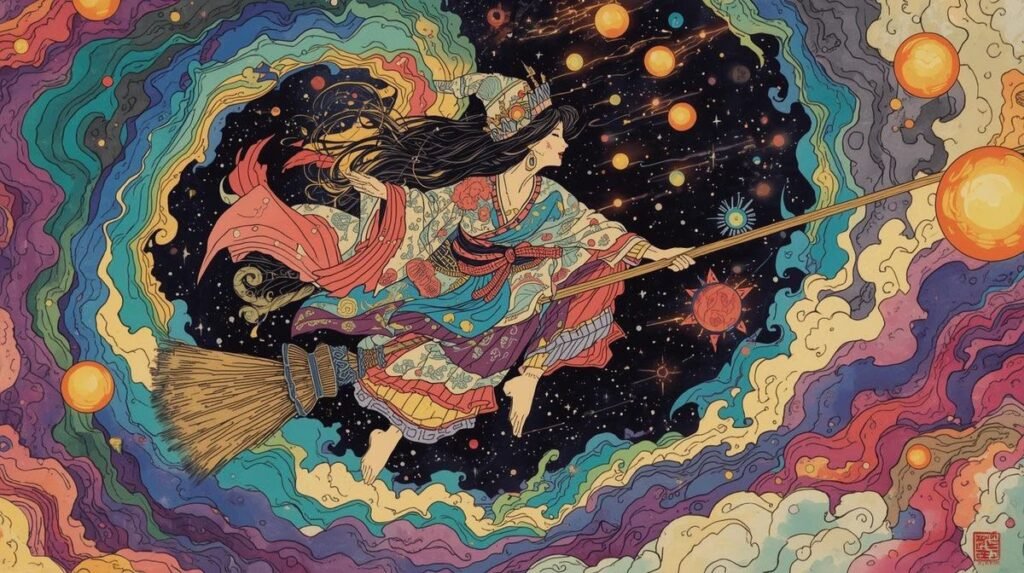
From Renaissance masterpieces to contemporary expressions, how extraordinary painters across the world have transformed imagination, emotion, and human experience into enduring cultural legacies.
The Power of Art lies in its ability to communicate beyond language, geography, and generations. A painting can preserve a historical moment, challenge social conventions, express private emotions, or introduce an entirely new way of seeing the world. Long after the artist has disappeared, the work can continue to influence how people understand beauty, identity, history, and human experience.
Throughout history, certain paintings have become more than celebrated works of creativity. They have entered the cultural imagination, recognised across continents and studied by generations. Yet what makes a painting truly timeless? Is it the painter’s technique, the originality of the vision, its emotional depth, or the historical circumstances surrounding its creation?
The answer often lies in the combination of all these elements.
The Renaissance: When Painting Changed the World
The Renaissance transformed European painting by introducing new approaches to perspective, anatomy, proportion, light, and human expression. Artists began exploring the natural world and the human figure with extraordinary attention to detail.
Leonardo da Vinci became one of the defining figures of this period. His Mona Lisa, recognised for its subtle expression and sophisticated composition, remains among the most studied paintings in history. His The Last Supper demonstrated an extraordinary understanding of perspective, narrative, and the arrangement of human figures.
Michelangelo’s celebrated ceiling paintings in the Sistine Chapel brought together monumental composition, anatomical knowledge, and religious storytelling. His work demonstrated how painting could transform an architectural space into an extraordinary visual experience.
The Renaissance established standards of artistic mastery that continue to influence painters and art historians today.
Impressionism: The Beauty of a Passing Moment
By the nineteenth century, a new generation of artists began challenging established academic traditions. Impressionism moved away from highly controlled historical and religious compositions towards everyday life, landscapes, changing light, and spontaneous observation.
Claude Monet became one of its most influential figures. His paintings of water lilies, gardens, and changing atmospheric conditions explored how light transforms the appearance of a subject. Rather than simply reproducing nature, he attempted to capture the experience of looking at it.
Vincent van Gogh developed a distinctive visual language through expressive colour, energetic brushwork, and emotional intensity. Works such as The Starry Night demonstrate how a landscape can become an expression of an artist’s inner world.
These painters changed the expectations of what a painting could communicate. Technique remained important, but personal interpretation became increasingly central to artistic expression.
Modern Art: Breaking the Rules of Representation
The twentieth century brought profound changes to painting. Artists questioned traditional representation, experimented with form, and explored psychological, political, and cultural subjects.
Pablo Picasso helped transform modern painting through Cubism, a movement that challenged conventional perspective by presenting subjects through multiple viewpoints. His Les Demoiselles d’Avignon and Guernica demonstrate different dimensions of his artistic influence. The latter became an internationally recognised response to the destruction and suffering caused by war.
Frida Kahlo developed an intensely personal approach to painting, using self-portraiture, symbolism, and elements of Mexican cultural identity to explore physical experience, relationships, and individuality.
Salvador Dalí brought dream imagery and surrealist experimentation into painting, creating compositions that challenged the boundaries between reality and imagination.
Modern art did not follow a single direction. Expressionism, Surrealism, Abstract Expressionism, and other movements developed different ways of understanding the relationship between the artist, the subject, and the viewer.
India’s Contribution to the World of Painting
India possesses a rich painting heritage that extends from ancient mural traditions and miniature painting to modern and contemporary artistic movements.
Raja Ravi Varma played an important role in the development of modern Indian painting. His combination of European academic techniques with subjects drawn from Indian mythology and literature created an influential visual language. His paintings helped bring familiar mythological figures into wider public imagination.
Amrita Sher-Gil occupies another significant place in Indian art history. Her work combined European artistic training with an increasingly personal engagement with Indian subjects and everyday life. Paintings such as Three Girls reveal her interest in human expression, stillness, and the emotional complexity of ordinary experience.
M. F. Husain brought a distinctive modern vocabulary to Indian painting through bold lines, movement, and subjects drawn from mythology, history, and contemporary society. S. H. Raza developed an influential abstract language in which colour, geometry, and spiritual symbolism played important roles.
Together, these artists demonstrate that Indian painting is not simply a regional expression. It is an important part of the wider history of modern art.
The Global Language of Contemporary Painting
Painting continues to evolve across the world. Artists in Africa, Asia, Europe, the Middle East, and the Americas are exploring identity, migration, memory, environment, politics, technology, and changing social realities.
Contemporary painting does not belong to one dominant movement. Some artists return to traditional techniques and historical references, while others experiment with abstraction, unusual materials, large-scale compositions, and new visual approaches.
Artists such as Yayoi Kusama, whose repeated patterns and immersive visual language have achieved international recognition, demonstrate how distinctive artistic ideas can develop into influential contemporary practices. Kehinde Wiley’s portraiture reinterprets traditional representations of power and status through contemporary subjects and visual references.
The international art landscape is increasingly diverse, allowing audiences to encounter artistic perspectives that were historically less visible in major cultural institutions.
Museums, Galleries and the Recognition of Masterpieces
An artist creates a painting, but its place in cultural history develops through many stages of recognition. Museums, galleries, curators, critics, historians, and collectors all contribute to the way paintings are interpreted and remembered.
Institutions such as the Louvre, the Metropolitan Museum of Art, the National Gallery in London, and the Museum of Modern Art have helped introduce generations of visitors to influential paintings and artistic movements.
Exhibitions can bring renewed attention to artists, while research and conservation preserve works for future audiences. Critical interpretation also changes over time. Paintings once considered unconventional may later become important examples of artistic innovation.
However, recognition and artistic importance are not identical. A painting does not become meaningful simply because it is expensive or displayed in a prestigious museum. Its significance also depends on its originality, context, execution, and ability to continue engaging audiences.
What Makes a Painting Timeless?
Some paintings remain influential because they capture emotions that people continue to recognise across different periods. Others preserve important historical experiences or challenge the conventions of their time.
A masterpiece may be admired for its technical precision, its use of colour, its composition, or the originality of its subject. Another may become significant because it introduces a new artistic language or offers a perspective that had previously been overlooked.
Timelessness is therefore not created through one decision or institution. It develops through continuing engagement between the artwork and the generations that encounter it.
A painting can mean something different to a viewer today than it did to someone a century ago. That ability to invite new interpretations is part of what allows art to endure.
Beyond the Canvas
The history of painting is ultimately a history of human imagination. From Renaissance masters to contemporary artists, painters have recorded the world, questioned its conventions, and created new ways of understanding human experience.
Their works survive changing tastes, political circumstances, and cultural boundaries because they offer more than a visual image. They preserve ideas, emotions, and perspectives that continue to matter.
The greatest paintings are not simply remembered because they were created by celebrated artists. They endure because each generation finds something worth discovering within them.
That is the enduring power of art: the ability of a single canvas to speak across centuries, connecting the vision of its creator with the imagination of the world.