
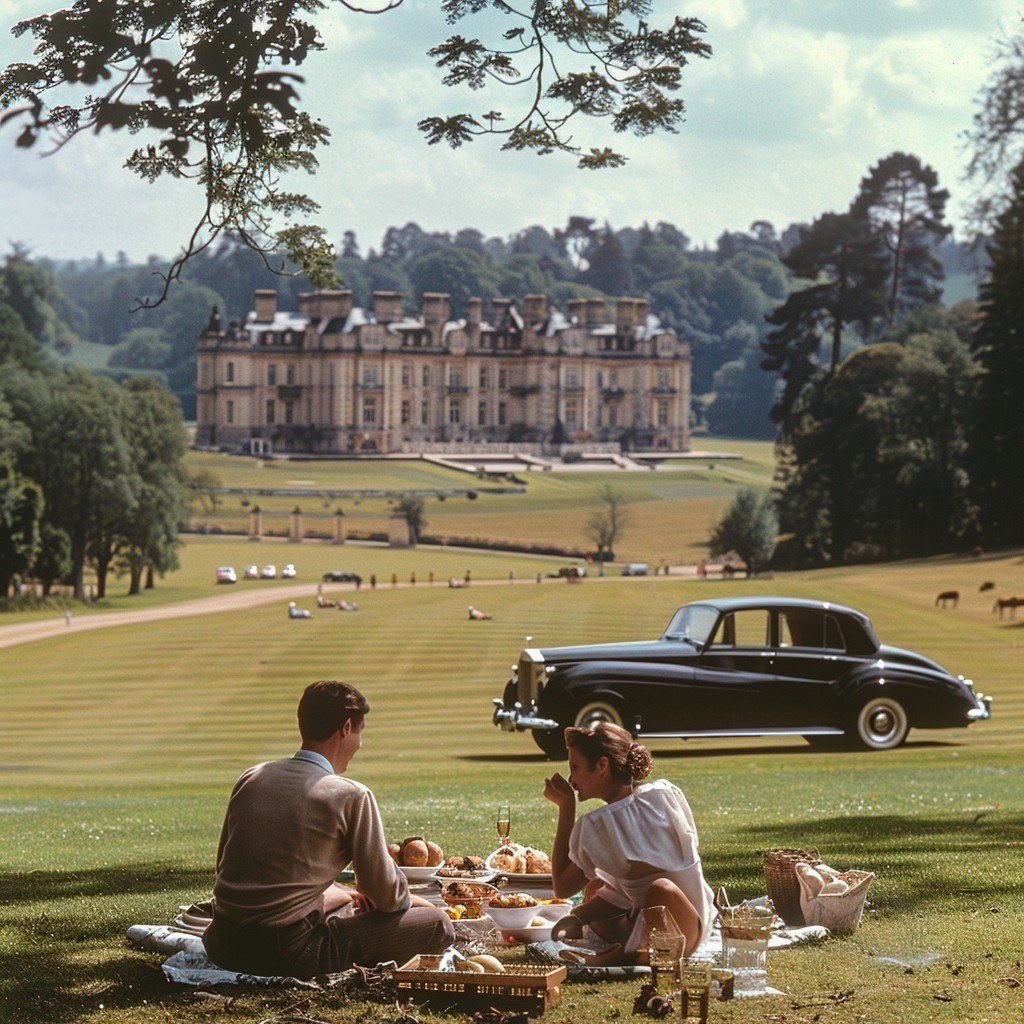
An exploration of the traditions, values, social intelligence and understated influence that have shaped the culture of established wealth across generations.
Old Money represents more than financial prosperity. It reflects a particular relationship with status, culture, discretion and social influence. Across the world, established wealthy circles have developed distinctive traditions that extend beyond material possessions. Their identities are often shaped by education, cultural familiarity, institutional relationships, personal conduct and an understanding of how influence operates.
From historic European estates to established business circles in India, old money has acquired a recognisable cultural identity. It is associated with restraint rather than display, continuity rather than spectacle and an appreciation of quality that does not always demand public recognition.
Yet the meaning of old money is more complex than the aesthetic often presented through fashion and popular culture. It is a social world built around traditions, expectations and networks that have evolved over considerable periods of time.
Beyond Wealth: Understanding the Old Money Identity
The distinction between old money and newly acquired wealth is not simply a question of how much someone owns. It often concerns the relationship between wealth and identity.
Established wealthy families may have developed their social position through business, land ownership, professional achievement or longstanding institutional involvement. Over time, their influence can become connected with particular cultural environments, educational traditions and social networks.
This does not mean every established wealthy family shares the same lifestyle or values. Old money is not a single global community, nor does inherited wealth automatically indicate sophistication, good judgement or cultural understanding.
Rather, the term describes a broad social tradition in which wealth is frequently accompanied by an established sense of belonging, familiarity with certain institutions and an emphasis on continuity.
Its defining characteristics are often less visible than the possessions associated with it.
The Language of Understated Luxury
One of the most recognisable expressions of old money culture is understated luxury.
Rather than relying on prominent branding or seasonal trends, this approach places importance on craftsmanship, material quality, fit and longevity. A beautifully tailored jacket, an inherited watch, a carefully maintained residence or a collection of rare books can communicate personal taste without requiring obvious displays of expense.
This philosophy is also visible in architecture and interiors. Historic properties, traditional craftsmanship, natural materials and carefully preserved objects often hold greater significance than constantly changing decorative trends.
However, understated luxury should not be confused with a fixed dress code. Its deeper principle is the understanding that quality does not always need to announce itself.
In contemporary culture, this distinction has become particularly relevant as luxury increasingly competes for attention through digital visibility and conspicuous consumption.
Etiquette: The Invisible Language of Influence
Within established social environments, etiquette can function as an important form of cultural understanding.
Knowing how to conduct oneself at a formal dinner, communicate across professional and social settings, respect personal boundaries and engage with different cultural traditions can influence how relationships develop.
These behaviours are not necessarily about rigid rules or excessive formality. At their best, they demonstrate consideration, self-awareness and an ability to make others comfortable.
Conversation is equally important. Listening carefully, avoiding unnecessary displays of knowledge and understanding when discretion is appropriate are often valued more highly than attempting to dominate a room.
The social codes of established circles can also be difficult for outsiders to recognise. They are frequently learned through family environments, education and long-term participation in particular institutions.
Nevertheless, good etiquette is not exclusive to inherited wealth. Courtesy, confidence and cultural sensitivity can be developed by anyone.
Education, Culture and Intellectual Refinement
Education occupies an important place in the culture historically associated with old money.
For some established families, education has extended beyond professional qualifications to include literature, history, languages, philosophy, music, art and international affairs. These interests can create a broader understanding of the world and provide common ground across different social and professional environments.
Cultural knowledge also influences how individuals engage with institutions such as museums, theatres, universities, galleries and historical organisations.
Patronage has long connected wealthy individuals and families with artistic and intellectual life. Supporting exhibitions, preserving historic buildings, funding educational initiatives and contributing to cultural institutions can become expressions of long-term social participation.
The significance lies not simply in financial contributions, but in the relationship between private resources and public cultural life.
In this sense, refinement is less about possessing expensive objects and more about developing an informed appreciation of the world.
Global Perspectives: Old Money Across Cultures
Old money does not have a single geographical identity. Its traditions differ according to the histories, institutions and social structures of individual countries.
In Britain, established landed families, historic estates, traditional schools and longstanding institutions have contributed to the familiar image of old money. The country’s aristocratic history has also influenced its relationship with heritage, formal occasions and social conventions.
Across continental Europe, historic merchant families, industrial houses and private estates have helped shape different traditions of established wealth. In countries such as France and Italy, craftsmanship, architecture, cultural patronage and established family businesses remain important elements of this landscape.
India offers a distinct perspective. Historic princely households, established merchant communities and longstanding business families have contributed to the country’s diverse traditions of wealth and social influence. From heritage residences to family-owned enterprises and cultural patronage, established Indian wealth reflects a combination of regional history, entrepreneurship and institutional continuity.
In the United States, old money has often been associated with established industrial, financial and philanthropic families. Its cultural identity has developed through private institutions, universities, foundations and longstanding social networks.
These examples demonstrate that old money is not defined by one particular style of clothing, residence or social behaviour. It is shaped by the cultural environment in which wealth has developed.
Privacy and the Value of Discretion
In an era when visibility is frequently treated as a measure of success, privacy has become an increasingly distinctive aspect of traditional wealth culture.
Many established wealthy individuals prefer to keep personal lives, family affairs and financial arrangements away from unnecessary public attention. Their social influence may be exercised through institutions, professional relationships, philanthropy and private networks rather than constant public exposure.
This preference for discretion does not mean that all wealthy families avoid publicity. Some maintain highly visible public profiles, while others operate almost entirely outside the public eye.
The broader principle is that influence and visibility are not the same thing.
A person does not need to display every achievement, acquisition or relationship to possess meaningful social or professional influence. Sometimes the ability to maintain boundaries is itself a form of confidence.
Old Money and New Money: Two Different Relationships With Status
The contrast between old money and new money is often presented through fashion, lifestyle and spending habits. However, the distinction deserves a more thoughtful examination.
Newly acquired wealth may be accompanied by a desire to establish recognition, demonstrate achievement and explore opportunities that were previously inaccessible. Established wealth may place greater emphasis on continuity, familiarity and preserving existing social traditions.
Neither approach is inherently superior.
New wealth can introduce innovation, transform industries and challenge established institutions. Established wealth can offer experience, long-term perspective and an understanding of institutional continuity.
Moreover, the two increasingly intersect. Entrepreneurs enter traditional cultural circles, established families modernise their businesses, and new generations develop their own interpretations of heritage and luxury.
The distinction is therefore becoming less rigid than popular culture sometimes suggests.
The Modern Evolution of Old Money
Today’s established wealthy circles are not immune to change. Younger generations are redefining traditional expectations around careers, identity, philanthropy, sustainability and personal expression.
Family businesses are adopting new technologies, historic properties are being reimagined, and cultural patronage increasingly includes contemporary art, independent institutions and emerging creative communities.
The modern interpretation of old money may retain an appreciation for discretion and quality while embracing a more international and contemporary outlook.
Importantly, heritage cannot remain relevant simply because it is old. Institutions and traditions must continue to demonstrate value, adapt responsibly and connect with changing societies.
This is where the future of old money will be determined: not by its ability to preserve appearances, but by its willingness to evolve without losing its sense of identity.
The Influence That Does Not Need an Audience
Perhaps the most enduring idea associated with old money is that status and substance are not necessarily the same.
A historic residence, an inherited collection or a familiar family name may attract attention, but these things alone do not establish character. Cultural understanding, responsible conduct, intellectual curiosity and meaningful contributions to society offer a more substantial measure of influence.
Old money, at its most thoughtful, represents an appreciation for continuity without an obsession with the past. It values quality without requiring constant recognition and understands that social influence carries responsibilities as well as privileges.
In a world increasingly defined by visibility, speed and immediate recognition, its most interesting lesson may be the value of restraint.
True distinction is not always found in what is displayed. Sometimes it is revealed through what is understood, preserved and quietly contributed to the world.