
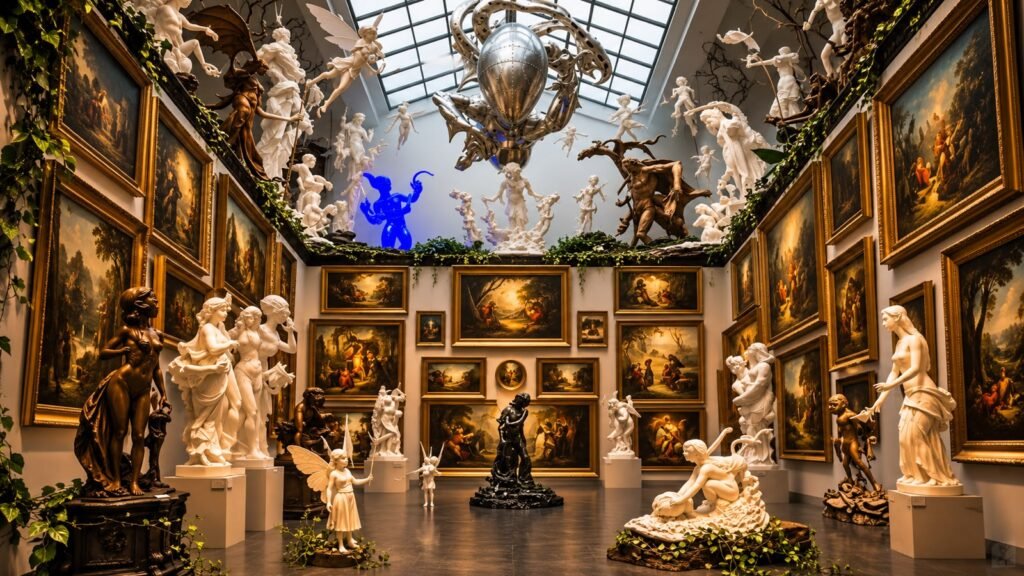
Behind some of the world’s most distinctive cultural institutions lies an individual vision: a collector’s passion, a family’s heritage or a personal commitment to preserving objects that deserve to be seen, studied and remembered.
A private collection often begins with curiosity. An individual discovers an artwork, acquires an historical object or develops an interest in a particular culture, period or artistic movement. Over time, that interest can become something considerably larger: an archive of knowledge, a carefully assembled collection and, eventually, a museum.
Private museums occupy a fascinating position in the cultural world. They bring together personal vision, financial resources, architecture and the responsibility of preservation. Unlike institutions established and primarily funded by governments, they are founded or supported by private individuals, families, foundations or organisations.
Their significance, however, is not simply that they contain valuable objects. At their best, private museums transform individual collecting into a cultural resource, allowing personal interests to contribute to a much wider understanding of history and creativity.
From Private Passion to Public Institution
The origins of a private museum are often deeply personal. A collector may spend decades assembling paintings, sculptures, manuscripts, historical documents, jewellery, furniture or objects associated with a particular civilisation.
What begins as a private pursuit can gradually develop into an institutional ambition. The collection may become too important to remain within a residence or private storage facility. A dedicated space offers the possibility of preserving the objects, presenting them in context and making them accessible to a wider audience.
The growth of private art museums during the twenty-first century has been particularly notable. Research published by the University of Amsterdam’s Private Museum Research project identified hundreds of privately founded museums devoted to modern and contemporary art. Their founders have helped bring collections into public view, although the research also raises important questions about the influence of private wealth over cultural institutions.
The transformation from collection to museum is therefore more than an architectural decision. It is a decision about stewardship: how objects will be documented, interpreted, maintained and made meaningful beyond their original owners.
Architecture as a Cultural Statement
A museum’s building can become part of its identity.
Some private museums occupy restored historic residences, industrial buildings or former estates. Others are conceived as contemporary architectural landmarks, with spaces designed specifically for the collections they contain.
The relationship between architecture and exhibition is particularly important. Natural light, circulation, proportions, materials and the arrangement of galleries can influence how visitors encounter individual works. A sculpture may require an expansive setting, while manuscripts and delicate historical objects demand carefully controlled environments.
The architecture must also balance visual ambition with practical requirements. Storage, conservation laboratories, security systems, accessibility and climate control are essential to a museum’s long-term operation.
For private founders, the building can express an individual philosophy of culture. It can be intimate and domestic, monumental and contemporary, or deliberately understated. Whatever its form, it becomes part of the story the institution communicates.
Collections That Preserve More Than Objects
The value of a private museum depends not only on what it owns, but also on what it preserves and communicates.
Paintings and sculptures may represent artistic movements, while coins, maps, manuscripts, textiles and everyday objects can reveal the economic, social and cultural experiences of earlier societies.
A carefully assembled collection can connect different periods and regions. It may document the development of a craft, the movement of people, the exchange of ideas or the evolution of a particular artistic tradition.
India offers an interesting example through Sarmaya, a privately founded cultural archive and museum in Mumbai. Its collection brings together material such as coins, maps, photographs, books and artworks, creating connections between objects and the histories they represent.
In this way, a private museum can become more than a display of possessions. It can function as a place of research, interpretation and cultural memory.
The Global Influence of Private Museums
Private museums have developed across different cultural and geographical settings, each reflecting the interests of their founders and the histories of their communities.
In Miami, the Rubell Museum grew from the collecting activities of the Rubell family. Its development demonstrated how a private collection could become a public platform for contemporary art, including the work of established and emerging artists.
In Singapore, The Private Museum was established as an independent non-profit institution with an emphasis on cultural exchange, education and artistic collaboration.
In India, institutions such as Sarmaya and the Atal Museum in Gurugram illustrate different approaches to privately supported cultural preservation, bringing together historical collections, art, science and public engagement.
These examples reveal that the private museum model is not limited to one artistic tradition or region. It can support contemporary experimentation, historical documentation, regional heritage and interdisciplinary learning.
The Responsibility Behind Ownership
Establishing a private museum can be an extraordinary cultural contribution, but it also creates long-term responsibilities.
Collections require professional documentation, appropriate storage, conservation expertise and clear records of ownership and authenticity. Objects must be protected from deterioration, environmental damage and inappropriate handling.
Professional curators and conservators play a crucial role in this process. Their work ensures that collections are not simply displayed attractively, but also studied, interpreted and preserved according to appropriate standards.
Governance is equally important. A museum needs a clear institutional purpose, responsible financial planning and a strategy for maintaining its operations beyond the founder’s lifetime.
Private museums can face particular challenges when their continued existence depends heavily on one individual’s financial support. Without a sustainable endowment, institutional structure or succession plan, even an important collection may become vulnerable.
The question of long-term stewardship is therefore central to the credibility of any private museum.
Public Access and the Question of Cultural Responsibility
One of the most important distinctions between a private collection and a private museum is the question of access.
Some institutions operate with regular visiting hours, educational programmes and public exhibitions. Others offer access by appointment or through occasional events. Their models may differ, but the relationship between private ownership and public benefit remains important.
A private founder has considerable influence over what is collected, displayed and interpreted. This can encourage experimentation and give attention to artistic traditions or subjects that larger institutions may overlook. It can also concentrate cultural influence in the hands of a limited number of individuals.
Transparency, responsible interpretation and meaningful public engagement help address these concerns.
A museum’s contribution should not be measured only by the financial value of its collection or the reputation of its founder. Its educational programmes, research opportunities, support for artists and accessibility to visitors are equally significant.
The Future of Private Museums
The next generation of private museums is likely to be shaped by technology, changing visitor expectations and a stronger emphasis on institutional responsibility.
Digital catalogues, virtual exhibitions and online archives can extend access beyond the physical building. Educational partnerships can connect museums with universities, schools and international cultural organisations. Collaborations between public and private institutions can also create opportunities for research, conservation and travelling exhibitions.
At the same time, questions surrounding provenance, restitution, ownership histories and the ethical acquisition of cultural objects remain essential. Museums must be prepared to examine the histories of their collections honestly and responsibly.
Private institutions also have an opportunity to support emerging artists, preserve regional traditions and give visibility to cultural narratives that have historically received limited attention.
Their future influence will depend on whether they can combine individual vision with professional standards and a genuine commitment to the public.
When a Collection Becomes a Legacy
A private museum begins with an individual’s interest, but its lasting significance is determined by what happens after that interest becomes an institution.
Objects that once belonged to a single collector can become part of a wider cultural conversation. A personal archive can support research. A building can become a destination for education and discovery. A collection can introduce future generations to histories and artistic traditions they might otherwise never encounter.
The most meaningful private museums understand that ownership brings responsibility. Their purpose is not simply to preserve what has been acquired, but to ensure that its significance continues to be understood.
Ultimately, a private museum represents a transition from possession to stewardship. It is where a personal collection can become a shared cultural resource, and where individual vision has the potential to create a legacy that reaches far beyond its founder.