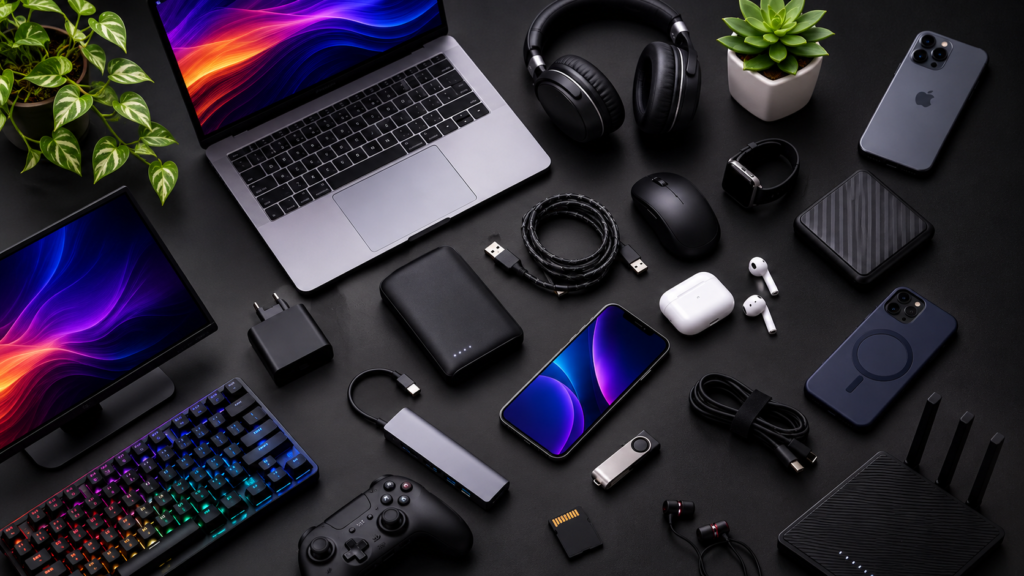
For today’s generation, technology is no longer something they occasionally use. It is something they carry, wear, depend on and increasingly define themselves through.
Life in the Age of Personal Technology
Gadget Culture Among Gen Z reflects a significant transformation in modern life. A smartphone is no longer simply a device for making calls. Wireless earbuds have become everyday companions, smartwatches monitor routines, tablets support creativity and gaming consoles create entire social worlds.
For today’s younger generation, gadgets are woven into almost every part of the day. The morning may begin with a smartphone alarm, continue with music through wireless earbuds, involve a smartwatch during exercise and end with entertainment on a laptop, tablet or television.
What makes this generation different is not simply the number of devices it owns. It is the way technology has become integrated into personal habits, relationships, entertainment and self-expression.
A gadget is increasingly chosen not only for what it can do, but also for what it represents. Design, brand identity, portability, convenience and the experience associated with a product all influence purchasing decisions.
The Smartphone Remains the Centre of Everything
Despite the arrival of increasingly sophisticated devices, the smartphone continues to occupy the most important position in the modern gadget ecosystem.
It serves as a communication centre, camera, entertainment screen, payment instrument, navigation system and personal organiser. For students, professionals, creators and entrepreneurs, it has become an essential everyday tool.
The competition among smartphone manufacturers has also changed. Consumers increasingly consider camera performance, battery life, processing speed, durability, software support and the overall experience rather than looking at specifications alone.
A 2026 smartphone insights report published by Flipkart in collaboration with Counterpoint Research highlighted this shift in India. Buyers are becoming more deliberate about upgrades, with performance, reliability, camera capabilities and affordability influencing purchasing decisions.
The modern consumer wants a device that can remain useful for longer, rather than simply owning the newest model.
This change is particularly relevant in a market such as India, where consumers have access to an expanding range of devices across different price segments.
The Rise of the Wearable Generation
One of the most interesting developments in personal technology is the growing relationship between gadgets and the human body.
Smartwatches, fitness bands, smart rings and wireless audio devices have moved beyond novelty products. They are becoming part of everyday routines.
Smartwatches allow users to receive notifications, monitor activity, track workouts and access selected features without constantly reaching for their phones. Fitness bands offer a more focused experience, while smart rings are attracting interest from consumers who prefer smaller and less noticeable devices.
India’s changing relationship with wearable technology is particularly interesting. PwC India’s 2026 Voice of the Consumer report found that 90% of surveyed Indian consumers use health apps or wearables, compared with 80% globally.
This points to a growing interest in technology that supports everyday awareness of personal routines and wellbeing. However, device-generated information should not automatically be treated as a medical assessment. Accuracy, privacy and responsible interpretation remain important.
The next stage of wearable technology will depend on whether these products can offer meaningful everyday value rather than simply adding another screen to a person’s life.
Gadgets Are Becoming Fashion Statements
Technology and fashion are increasingly sharing the same space.
A smartwatch is selected not only for its functions but also for its appearance. Wireless earbuds have become recognisable accessories. Premium headphones, minimalist fitness trackers and stylish phone cases are now part of how people present themselves.
The relationship between technology and personal style is particularly visible among younger consumers, who often consider design and brand identity alongside performance.
The emergence of smart glasses makes this relationship even more interesting. They bring technology closer to traditional fashion accessories, creating products that can combine eyewear with audio, cameras and connected features.
Market research from NIQ in 2026 has identified smart glasses and smart rings as emerging areas of interest within consumer technology. These products remain developing categories, but they suggest that future gadgets may become less visibly technological and more naturally integrated into everyday clothing and accessories.
For luxury and fashion brands, this creates an opportunity to explore a new category of products where craftsmanship, design and technology meet.
Entertainment Has Become More Personal
The modern generation does not experience entertainment through a single device.
A person may watch a series on a television, continue an episode on a smartphone, listen to music through wireless headphones and spend the evening playing games on a console or computer.
Gaming has become especially significant because it combines entertainment with social interaction. Multiplayer platforms allow friends to connect across cities and countries, while gaming communities create shared interests that extend beyond the screen.
Portable gaming devices and handheld consoles have also changed expectations around where entertainment can happen. A gaming experience is no longer restricted to a television or a dedicated room.
Tablets and laptops have similarly developed into multifunctional tools. They support studying, digital art, content creation, video editing, professional work and entertainment.
For younger consumers, the distinction between a device for work and a device for leisure is becoming increasingly flexible.
The New Competition: Building a Connected Ecosystem
Technology companies are no longer competing only to sell individual products. They are competing to create connected ecosystems.
A smartphone that works seamlessly with a smartwatch, wireless earbuds, laptop and home entertainment system can offer a more convenient experience than several unrelated devices.
This approach encourages brand loyalty because consumers begin to value the relationship between products rather than judging each purchase independently.
Companies such as Apple, Samsung and Google have developed interconnected product environments that encourage users to move between devices with fewer interruptions.
Other manufacturers are also building ecosystems around smart home products, audio equipment, personal electronics and connected accessories.
For consumers, the attraction is convenience. For companies, the opportunity lies in maintaining a long-term relationship with customers.
The challenge is to ensure that these ecosystems remain useful and accessible rather than becoming expensive arrangements that restrict consumer choice.
The Cost of Constant Upgrades
The enthusiasm for gadgets also raises an important question: how much technology does a person actually need?
New models, seasonal launches, influencer recommendations and changing design trends can create pressure to upgrade devices that are still functional.
However, consumer behaviour is beginning to show signs of greater selectivity. NIQ’s 2026 consumer technology research found that global technology purchases were becoming more value-conscious, with sales volumes under pressure even as spending value increased.
Consumers are increasingly looking for products that justify their prices through reliability, performance and useful features.
This shift could encourage manufacturers to focus more seriously on longer software support, repairability, battery replacement and product durability.
Electronic waste is another important consideration. Discarded phones, batteries, chargers and other electronic components create environmental and recycling challenges. Responsible consumption requires more than purchasing a product with attractive packaging or advanced specifications. It also involves considering how long it can be used and what happens when it reaches the end of its life.
Beyond the Screen: What the Next Generation of Gadgets Will Look Like
The future of personal technology is moving towards devices that are more portable, connected and integrated into everyday life.
Smart rings, smart glasses, advanced audio accessories and connected home products indicate that the next generation of gadgets may not always require a conventional screen.
Technology companies are also exploring new ways for devices to understand context, communicate with one another and reduce the effort required to perform everyday tasks.
Yet the success of these innovations will not be determined by how futuristic they appear. Their real value will depend on whether they solve practical problems, protect personal information and offer experiences that people genuinely want.
The most successful products will likely be those that fit naturally into everyday routines without demanding constant attention.
A Generation Defined by Its Connection to Technology
The modern gadget revolution is ultimately about more than devices. It reflects a change in how people organise their lives, express their identities and remain connected to the world around them.
For one generation, a smartphone may represent independence. For another, a smartwatch may become a fitness companion, while wireless headphones offer a personal space within a crowded environment.
The possibilities continue to expand, but so does the responsibility to use technology thoughtfully.
Gadgets will keep becoming smaller, smarter and more connected. The real measure of progress, however, will not be how many devices a generation owns. It will be how effectively those devices improve the way people live.