
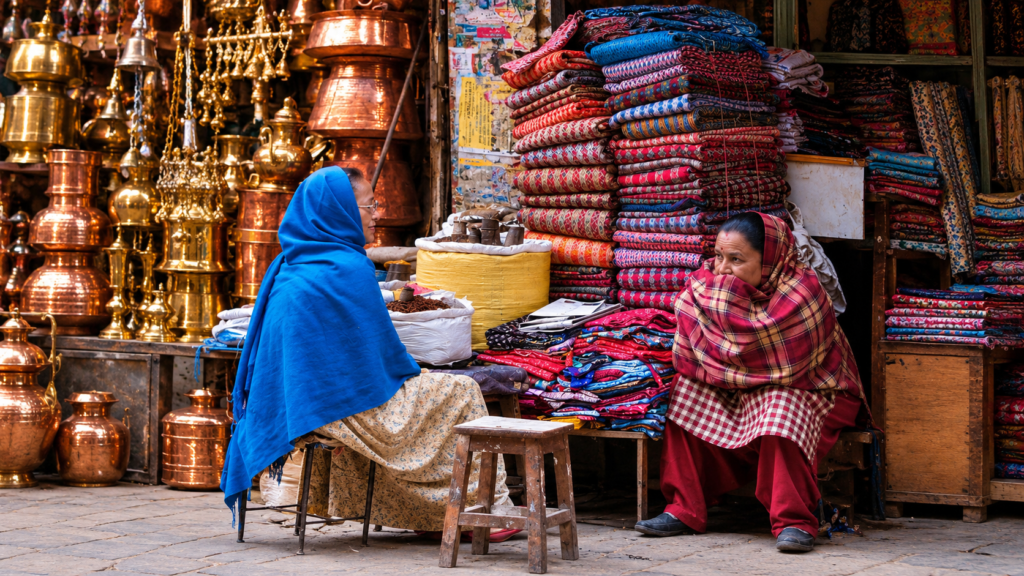
Every winter, as temperatures begin to fall across Indian cities, familiar seasonal marketplaces return. Rows of colourful jackets, sweaters, shawls, scarves and woollen garments transform ordinary streets into bustling shopping destinations. Behind these temporary markets is an established trading network built on seasonal migration, family entrepreneurship and decades of commercial relationships. For the traders who travel across India each year, winter is not simply a season. It is a business opportunity that supports livelihoods, families and an enduring tradition of enterprise.
Tibetan Woollen Markets have become a distinctive part of India’s winter shopping culture. Their appearance in cities such as Delhi, Chandigarh, Ahmedabad, Mumbai and Jaipur reflects a seasonal business model that connects traders, manufacturers and consumers across different regions.
What appears to shoppers as a convenient destination for affordable winter clothing represents something considerably larger: a network of families who organise their working lives around changing temperatures, temporary marketplaces and a commercial season that lasts only a few months.
How a Seasonal Business Became an Indian Market Tradition
The origins of the Tibetan winterwear trade in India can be traced to the decades following the arrival of Tibetan refugees in the country.
As communities established settlements in different parts of India, families explored opportunities to support themselves through agriculture, handicrafts, small businesses and seasonal trading.
The sale of woollen garments gradually developed into an important commercial activity. Traders began travelling to towns and cities during colder months, establishing temporary stalls and selling sweaters and other winter essentials.
A 2021 research report, Exiled Business: Migration, Movement, Trade & Gender, documented the scale of this activity. It estimated that approximately 45 per cent of India’s Tibetan population left their settlements during October to establish winter markets across the country. The report identified 178 active markets at the time, illustrating how extensive the seasonal network had become.
Over time, what began as a livelihood strategy developed into a familiar winter retail tradition for shoppers across India.
The People Behind the Winter Markets
The most interesting aspect of these markets is the entrepreneurial structure behind them.
Many traders operate through family businesses in which responsibilities are shared between generations. Some family members manage purchasing and transportation, while others oversee stalls, handle customers and manage daily sales.
For many households, the winter season also provides an opportunity to supplement income earned through other activities during the remaining months of the year.
A January 2019 report by The Times of India documented how Tibetan women travelled from settlements in different states to participate in seasonal winterwear trading. Their involvement demonstrated how the business could provide an additional source of household income, particularly for families with agricultural livelihoods.
The experience of traders varies considerably. Some have participated in the same market for decades, while younger family members are increasingly becoming involved in customer service, digital payments and the practical management of retail operations.
This combination of family participation and seasonal mobility has helped the business maintain continuity across generations.
From Ludhiana’s Manufacturing Centres to India’s Winter Streets
One common misconception about Tibetan woollen markets is that all the garments sold there are manufactured in Tibet.
In reality, the supply chain is much more diverse.
Research on Tibetan itinerant trading in India has documented the importance of wholesale purchasing from Indian manufacturing centres, particularly Ludhiana and Delhi.
Ludhiana has long been associated with India’s hosiery and knitwear industry. Its manufacturing ecosystem supplies a wide range of winter garments, including sweaters, thermal clothing and other knitted products.
Traders purchase merchandise through wholesale relationships and transport it to seasonal markets in different parts of the country.
Other products may come through suppliers in different regions, depending on the trader’s network and the type of merchandise being sold.
This creates an interesting commercial relationship between manufacturers and seasonal retailers. Producers gain access to customers in markets beyond their immediate locations, while traders benefit from established manufacturing and wholesale networks.
The result is a retail ecosystem that connects production centres with consumers who may otherwise have limited access to such merchandise.
Delhi’s Winter Market: A Familiar Seasonal Destination
Delhi offers one of the most recognisable examples of this seasonal retail culture.
The Tibetan woollen market at Meena Bazaar, near Jama Masjid, attracts shoppers looking for winter jackets, sweaters, shawls and other cold-weather essentials.
Every winter, the temporary marketplace adds a distinctive atmosphere to the surrounding area. Its seasonal character is part of its appeal: visitors know that the market will be present for a limited period rather than operating as a permanent shopping destination.
A January 2024 report by The Quint documented the market’s community of traders and described 138 shops operating at the location.
The report also explored the circumstances that bring traders to Delhi, including the need to find alternative livelihoods during colder months in their home regions.
Beyond Delhi, similar seasonal marketplaces have become familiar in several Indian cities.
Ahmedabad provides another example. The Indian Express reported that Tibetan traders began travelling to Gujarat during winter around 1969–70. Their organised commercial activity subsequently developed through the Tibetan Refugee Sweater Sellers Association.
These examples show how the winterwear trade has developed local identities while remaining connected to a wider network of seasonal enterprise.
When the Weather Becomes a Business Decision
Unlike conventional retail businesses, seasonal winterwear markets are particularly sensitive to weather conditions.
A delay in the arrival of cold temperatures can affect the timing of customer demand. Traders may have already invested in merchandise, transportation, temporary premises and other operating expenses before shoppers begin purchasing winter clothing in significant numbers.
This creates an unusual commercial challenge: the selling season is limited, but many expenses must be managed in advance.
In October 2026, reporting from Jodhpur highlighted how unusually warm weather delayed the opening of the city’s Tibetan winter market. The development illustrated how changing seasonal conditions can influence the financial calculations of traders.
For businesses dependent on winter demand, even a few weeks of delay can matter.
Traders must consider local weather patterns, expected customer footfall, inventory requirements and the possibility that certain products may remain unsold when temperatures begin rising again.
The success of a winter market therefore depends on more than attracting customers. It requires careful judgement about when to arrive, what to stock and how long the season is likely to last.
Digital Payments and the Changing Face of Traditional Retail
The commercial environment surrounding these markets is also changing.
Digital payments have become increasingly common across India’s retail economy, and seasonal traders are adapting to customer expectations.
UPI transactions have made it easier for small vendors to accept payments without depending entirely on cash. This has also made everyday transactions more convenient for customers who increasingly use digital payment applications.
A January 2026 report from Chandigarh examined the changing lives of winterwear traders and highlighted how digital payments had become part of their commercial routines.
However, technology is only one part of a much larger transformation.
Customers now compare prices across online platforms, explore new clothing styles through social media and expect greater variety from local retailers. Seasonal traders must therefore compete not only with other physical marketplaces but also with the convenience of online shopping.
Their advantage often lies in direct customer interaction, the ability to examine garments physically and the opportunity to compare several products within a single marketplace.
Maintaining that advantage requires flexibility, reliable merchandise and an understanding of changing consumer preferences.
Beyond Shopping: The Importance of Seasonal Entrepreneurship
The significance of Tibetan woollen markets extends beyond the garments displayed at their stalls.
They represent a form of entrepreneurship built around mobility, cooperation and the ability to identify commercial opportunities across different regions.
The business also demonstrates how smaller traders participate in larger supply chains without necessarily owning factories, permanent retail properties or major distribution infrastructure.
For manufacturers, seasonal traders provide access to additional markets. For consumers, they create concentrated shopping destinations during the colder months. For participating families, they offer an opportunity to generate income through an established commercial tradition.
At the same time, the model faces challenges involving rising operating costs, changing weather patterns, competition and the need to attract younger generations into the business.
Its long-term strength will depend on how successfully traders adapt while maintaining the relationships and experience that have supported the trade for decades.
A Winter Tradition Built on Enterprise
As winter arrives across India, the return of these woollen marketplaces represents more than a familiar shopping experience.
Behind every temporary stall is a commercial decision, a supply relationship and often a family that has organised an important part of its annual income around the season.
The Tibetan woollen trade demonstrates how entrepreneurship can develop outside conventional business structures. It has connected manufacturing centres with distant consumers, created seasonal economic opportunities and established a recognisable retail tradition across Indian cities.
For shoppers, these markets may simply signal the arrival of colder days. For the people who operate them, they represent months of preparation, investment, travel and work.
And that is what makes India’s winter markets particularly interesting: they are not merely places where winter clothing is sold. They are an example of how communities build businesses around opportunity, adapt to changing circumstances and sustain commercial traditions through generations.