Once a relatively unfamiliar racket sport outside a handful of countries, padel is becoming an international phenomenon. With new courts, professional competitions and a growing community of players, the sport is transforming the way people participate in, experience and connect through sport.
A new sporting movement is gaining momentum across continents. In cities where tennis courts once dominated recreational clubs, glass-enclosed courts are increasingly becoming part of the sporting landscape. Friends, professionals, celebrities and first-time players are discovering a game that combines elements of tennis and squash while offering a distinctive social experience.
The sport is global padel, and its expansion is attracting attention well beyond traditional sporting communities.
The International Padel Federation’s 2026 World Padel Report, published in October, recorded more than 40 million active players worldwide and over 91,200 courts across 191 countries and territories. Court numbers increased by more than 20 per cent compared with the previous year.
These figures reveal more than a passing recreational trend. Padel is developing into an international sporting ecosystem involving professional athletes, clubs, coaches, equipment manufacturers, investors and major competition organisers.
A Sport Built Around Connection
Padel originated in Mexico during the late 1960s, when Enrique Corcuera adapted elements of existing racket games to create a court surrounded by walls.
The sport subsequently gained popularity in Spain and Argentina, where it developed a strong recreational and competitive following. Its international expansion has accelerated over recent years, bringing it to new audiences across Europe, the Middle East, Asia and the Americas.
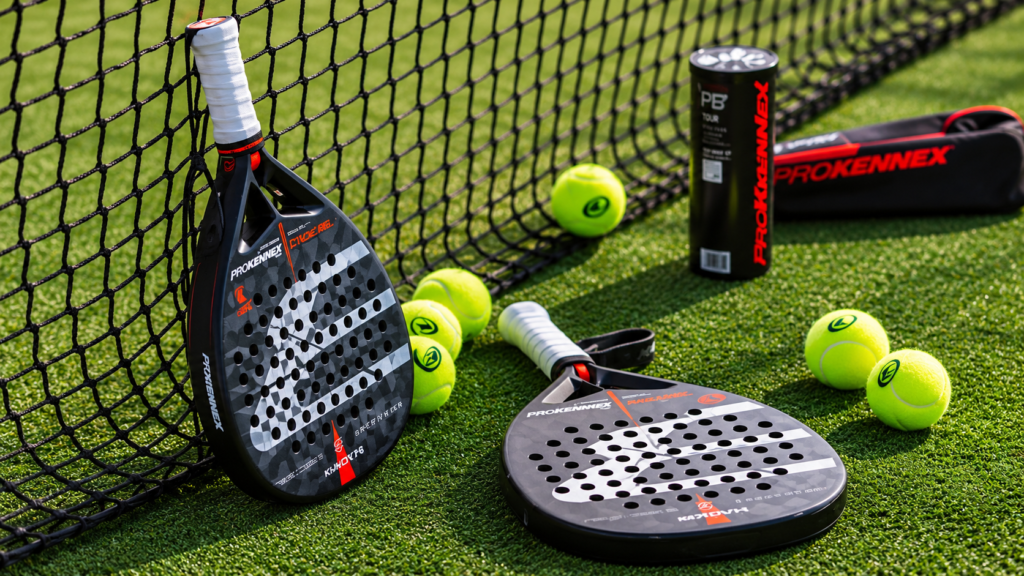
A standard padel match is played in doubles on an enclosed court. Players use solid rackets without strings, and the surrounding walls form part of the game. The ball can rebound off the glass and mesh surfaces, creating longer exchanges and distinctive tactical possibilities.
Its appeal lies partly in its accessibility. New players can begin enjoying the game without necessarily having the technical background required for advanced tennis.
The doubles format also creates a strong social dimension. Communication, positioning and coordination between partners are central to the experience.
This combination of competition and social interaction has helped padel establish itself as more than a conventional sporting activity.
Europe Remains at the Centre of the Movement
Spain has long been one of the sport’s strongest markets, with extensive participation, established clubs and a developed professional ecosystem.
Italy, Sweden, France and other European countries have also experienced substantial growth. The sport is becoming increasingly visible in urban areas, private clubs, hospitality destinations and dedicated recreational facilities.
The expansion is supported by professional competitions such as Premier Padel, which operates under the International Padel Federation’s recognised global sporting structure.
International tournaments are helping introduce new audiences to elite players while providing a pathway for emerging talent.
Professional padel is also becoming more international. The FIP World Padel Report recorded 434 tournaments confirmed across 62 countries for 2026, compared with 290 tournaments held in 50 countries during 2025.
This wider competitive network is important because it gives players from emerging markets more opportunities to participate and develop.
Asia’s Growing Sporting Ambition
One of the most interesting developments is the expansion of padel across Asia.
Indonesia has emerged as a particularly striking growth market. The International Padel Federation’s November 2026 reporting highlighted substantial increases in the country’s number of clubs and courts compared with the previous year.
The wider Asian market is also attracting attention as more people discover the sport through private clubs, recreational facilities and international competitions.
For countries such as India, the opportunity is worth watching. Urban populations, an expanding premium fitness market and growing interest in international sporting experiences could create conditions for further adoption.
However, sustainable development will require more than building courts. Qualified coaching, accessible facilities, competitive structures and long-term participation programmes will be important in establishing a genuine sporting community.
Asia’s future role in padel will depend on whether its rapid infrastructure growth can be matched by player development and local sporting institutions.
The New Architecture of Sporting Clubs
Padel is also changing the design and commercial identity of recreational sports facilities.
Modern clubs increasingly position themselves as lifestyle destinations rather than places where people simply arrive, play and leave.
Facilities may combine multiple courts with fitness spaces, cafés, social areas, coaching programmes and hospitality services. Some premium developments are integrating padel into hotels, residential communities and private members’ clubs.
This creates a broader experience around the sport.
The club becomes a place where people meet colleagues, maintain friendships, participate in competitions and spend time outside their professional routines.
For property developers and hospitality operators, padel can also become an additional recreational offering that attracts residents, visitors and members.
The challenge is to create facilities that remain active beyond the initial excitement surrounding a new sport. Long-term success depends on strong programming, good coaching and a genuine community.
A Growing International Sporting Economy
The expansion of padel has created opportunities across several industries.
Court construction, specialist flooring, lighting, glass manufacturing, racket production, sportswear, coaching, club management and tournament organisation all form part of its developing commercial ecosystem.
The 2026 FIP World Padel Report introduced a detailed economic study of the sport. It estimated annual global expenditure at approximately €6.84 billion, with an estimated contribution of €8.6 billion to global GDP and more than 235,000 jobs associated with the industry.
These estimates demonstrate the growing economic importance of a sport that began as a relatively small recreational activity.
Investment is now being directed towards clubs, professional events and the infrastructure required to support participation.
Nevertheless, expansion brings commercial risks. An increase in court construction does not automatically guarantee sustainable demand. Clubs must manage operating costs, utilisation, maintenance and competition from other recreational activities.
The strongest businesses are likely to be those that build loyal communities rather than relying entirely on the popularity of the sport.
The Athletes Shaping Its Future
As the professional game develops, its leading athletes are becoming increasingly recognisable beyond specialist padel audiences.
Players such as Arturo Coello, Agustín Tapia, Ale Galán and Federico Chingotto have helped raise the competitive profile of men’s padel. Among the women’s game, players including Ariana Sánchez, Paula Josemaría, Gemma Triay and Delfina Brea have contributed to its international visibility.
Their performances demonstrate the technical sophistication of the sport at its highest level.
Professional padel requires more than physical fitness. Players need rapid reactions, precise positioning, tactical awareness and the ability to use the walls intelligently.
As competitions become more international, the next generation will have access to stronger development pathways and a broader competitive environment.
The Challenges Behind the Growth
Rapid expansion does not guarantee lasting success.
Padel must address questions around coaching standards, facility quality, accessibility and the balance between recreational participation and professional competition.
The cost of establishing courts can also limit access in markets where land and construction expenses are high. In addition, the sport needs to maintain its welcoming character as commercial investment increases.
There is also the challenge of ensuring that growth benefits both men and women. The professional game has an opportunity to build a balanced international structure through equal visibility, development opportunities and investment.
The countries that establish strong local systems may ultimately become the most successful long-term padel markets.
A New Chapter in Global Sport
Padel’s rise reflects a wider change in how people approach recreation and competition.
Modern sporting culture increasingly values experiences that combine physical activity, social connection and community. Padel has found a place within that movement by offering a game that can be enjoyed casually while also supporting a demanding professional career.
Its expansion across 191 countries and territories suggests that its appeal is no longer confined to its traditional markets.
The next chapter will be shaped by the quality of its international competitions, the development of young players and the ability of clubs to create lasting communities.
Padel began as an inventive variation of familiar racket sports. It is now building an identity of its own.
And as more countries embrace the game, its most important achievement may be the creation of a new international sporting community.