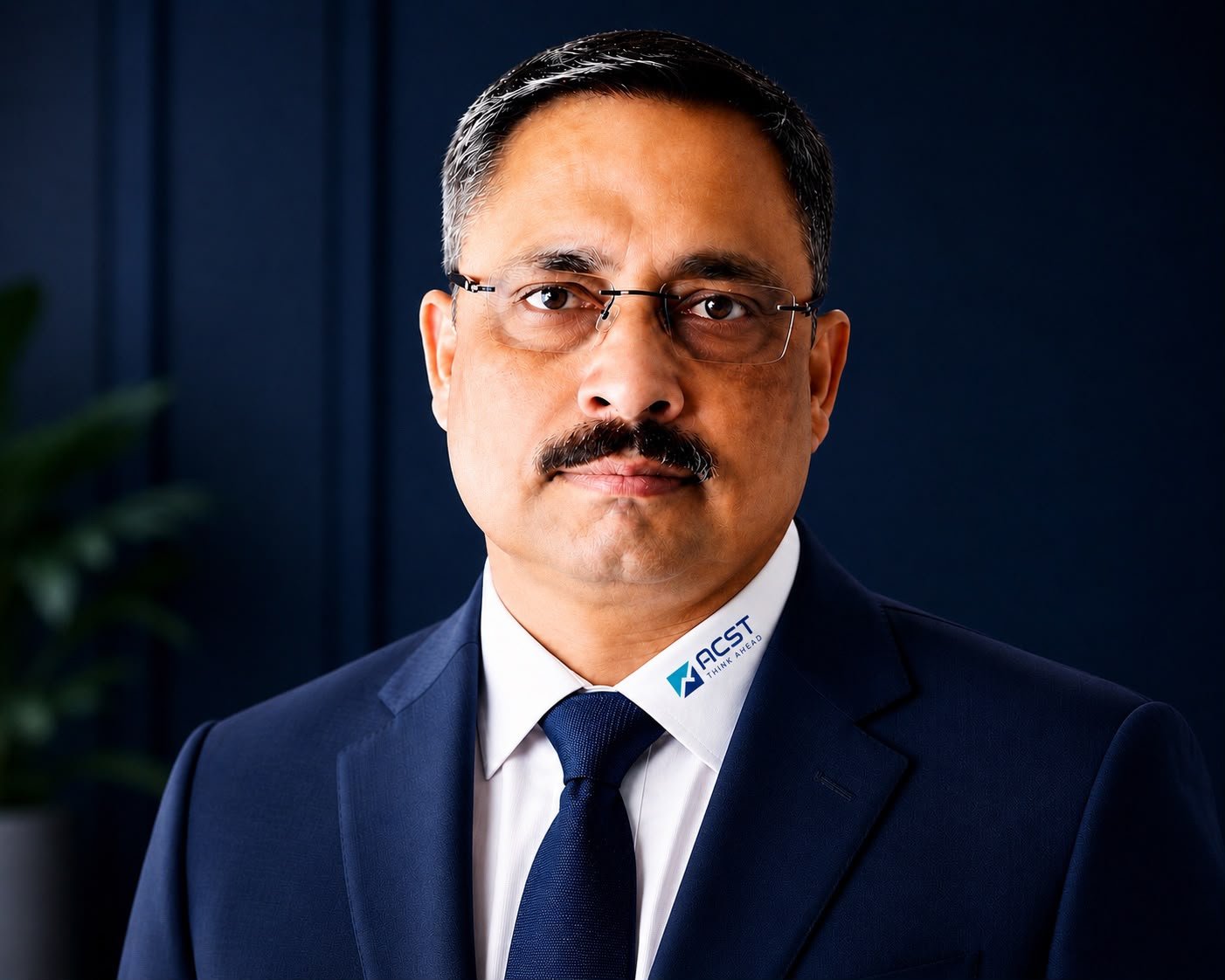
Through Cheers Group and its award-winning Kadamba Indian single malt, Dr Mohan Krishna is helping shape an ambitious new narrative for Indian craftsmanship, premium brand creation and global influence.
There is a particular kind of ambition that does not begin with the desire to follow an established market. It begins with the belief that an entirely new space can be created.
For Dr Mohan Krishna, the evolution of Cheers Group reflects that belief.
Built from Goa and connected to an expanding portfolio of beverage brands, Cheers Group represents an emerging Indian enterprise seeking to combine craftsmanship, cultural identity and commercial scale. Its story is not defined by one product alone, although Kadamba, its award-winning Indian single malt, has become a compelling symbol of what the group wants to represent.
Kadamba’s rise suggests that Indian brands no longer need to position themselves as alternatives to global luxury products. They can develop their own language of provenance, quality and contemporary prestige.
Behind that ambition stands a leadership journey shaped by experimentation, persistence and the desire to build an Indian institution with international relevance.
Creating a Brand House From India
Building a premium brand is different from manufacturing a product.
A product can be created through ingredients, processes and packaging. A brand must create meaning. It must earn recognition, communicate identity and remain memorable in a market crowded with established names.
Cheers Group’s reported portfolio of approximately 120 brands indicates an ambition to function as a broad beverage house rather than a single-label company.
The group operates across spirits, wines and ready-to-drink beverages, allowing it to engage different consumer categories and market segments. But scale alone does not define the enterprise.
Its more important challenge is coherence: ensuring that each brand expresses a clear idea and contributes to the wider reputation of the group.
Kadamba has emerged as the portfolio’s strongest luxury-facing expression. It connects Indian origin, Goan character and global whisky craftsmanship within one carefully positioned identity.
Kadamba and the New Confidence of Indian Whisky
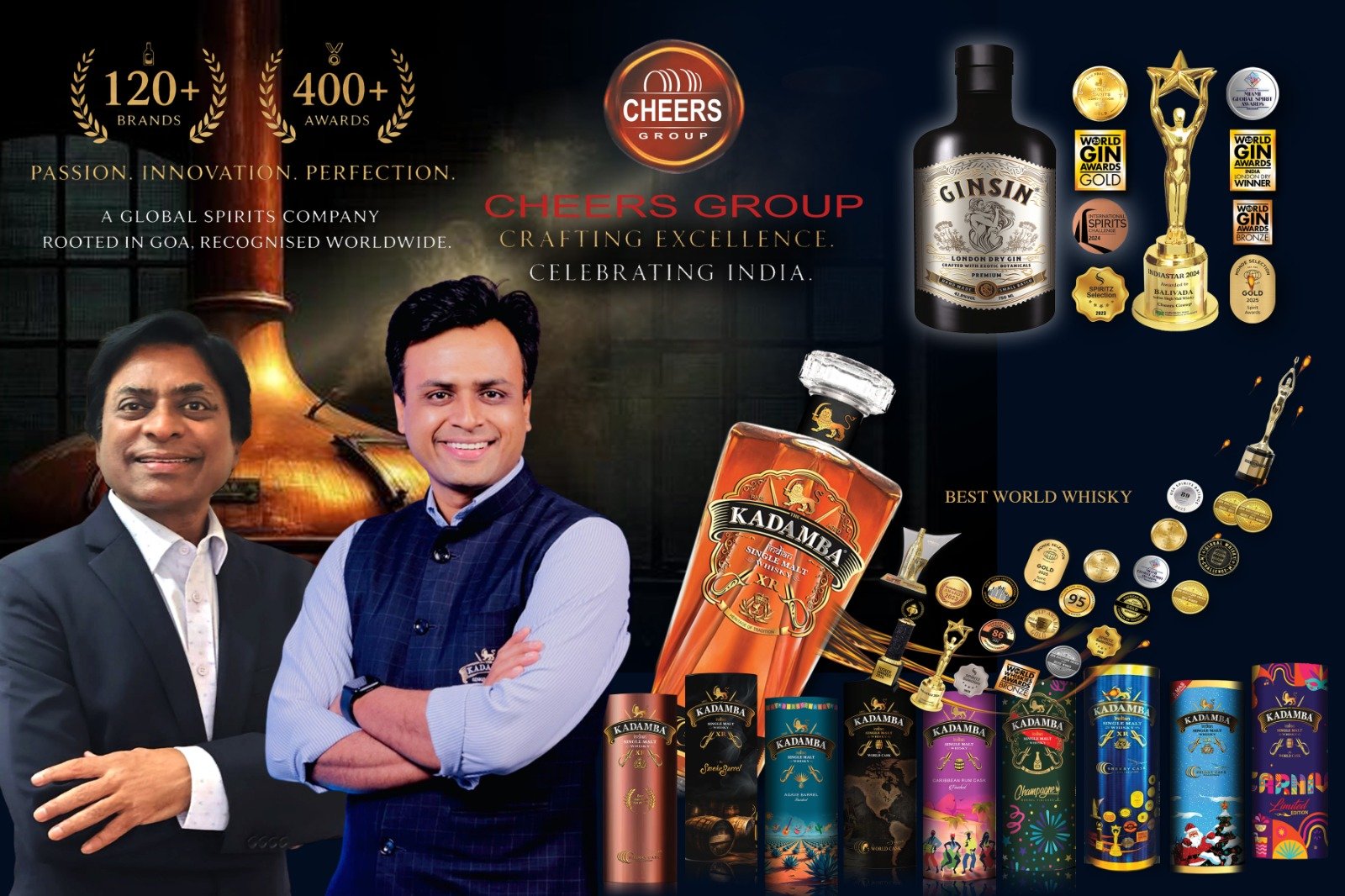
Kadamba Indian Single Malt has been crowned “Best World Whisky” at the John Barleycorn Awards in the USA and earned a Gold Medal at the Monde Selection.
The winning Signature Expression is produced in Goa and reportedly matured across bourbon, sherry and virgin American oak casks. This creates a layered profile while allowing the whisky to stand within the conventions of the global single-malt category without losing its Indian identity.
The award placed Kadamba within a wider movement that is changing how Indian whisky is perceived.
Indian single malts are no longer viewed only through the lens of an emerging category. They are increasingly being assessed on craftsmanship, originality and the ability to compete alongside established international expressions.
For Cheers Group, the significance of the recognition extends beyond one bottle. It provides proof that a brand developed in India can command attention in a category shaped by heritage-rich global competitors.
That confidence is central to Dr Mohan Krishna’s larger story.
Leadership Beyond the Label
Dr Mohan Krishna’s association with Cheers Group places him within a demanding intersection of creativity and enterprise.
The beverage industry is often represented through design, celebration and lifestyle. Behind that image lies a far more complex reality: production investment, quality assurance, regulation, distribution, inventory, consumer insight and long-term capital allocation.
To create a multi-brand portfolio, leadership must move continuously between vision and execution.
The material shared for this feature also references Dr Mohan Krishna’s recognition with an Indian Icon honour. While individual honours provide visibility, his more meaningful legacy will be determined by the strength of the institution built around the brands.
Can the company create systems capable of sustaining quality across scale? Can it enter new geographies without losing identity? Can it nurture multiple brands while giving each one a clear purpose?
These are the questions that separate a promising enterprise from an enduring business house.
Goa as Identity, Not Merely Origin
Goa occupies an important place within the Cheers Group narrative.
It is both a manufacturing base and a source of cultural meaning. The state’s connection to hospitality, travel, cuisine and celebration provides a natural setting for beverage innovation.
For Kadamba, the Goa association gives the brand emotional and geographical distinction. It allows the whisky to carry a sense of place—something increasingly valued within global luxury markets.
The name itself invokes history and cultural memory, while the product presents itself in a contemporary form.
This balance between heritage and modernity is central to premium storytelling. A successful luxury brand must feel rooted but not dated, distinctive but internationally understandable.
Cheers Group’s opportunity is to make Goa part of a globally recognisable brand language rather than simply a production location.
A Portfolio Shaped by Ambition
The company has communicated that it has developed around 120 brands and earned more than 400 awards.
These figures, once fully documented, would demonstrate considerable breadth. They also reveal an organisational appetite for continuous creation.
Within the portfolio, Kadamba serves as an Indian single-malt flagship, while Labrodog has been associated with the group’s Scotch-whisky interests. Its wider collection spans multiple designs, categories and consumer propositions.
Such diversity can become a competitive advantage when governed by a disciplined brand architecture.
The strongest global houses do not merely own many labels. They understand what each label represents, which audience it serves and how its value should develop over time.
For Dr Mohan Krishna and Cheers Group, the next chapter is therefore not simply about adding more products. It is about deepening the authority of the portfolio.
Recognition as a Beginning
Awards can transform the trajectory of a young premium brand.
They offer third-party validation, create media attention and open conversations with distributors and consumers. Kadamba’s recognition has already given Cheers Group a prominent position within discussions about India’s single-malt emergence.
However, recognition must become momentum.
The most respected global brands build trust through consistency. Each production cycle must protect the experience that earned the original acclaim. Every expansion decision must preserve the character of the product.
This is particularly important for limited-production and premium-positioned spirits, where perceived rarity and quality contribute directly to brand value.
Kadamba’s future will depend on balancing access with exclusivity and growth with craftsmanship.
Sustainability and the Meaning of Modern Luxury
Contemporary luxury is increasingly connected to responsibility.
Consumers want premium products, but they are also asking how those products are made, packaged and transported. Sustainability is therefore becoming part of brand credibility rather than an optional corporate message.
Cheers Group has highlighted environmentally conscious positioning around Kadamba, including campaigns connected to World Environment Day.
The opportunity now is to make sustainability a visible, measurable part of the enterprise—from resource efficiency and packaging choices to production processes and supplier relationships.
For an Indian luxury brand seeking international stature, responsible growth can become a meaningful point of distinction.
This must also include responsible communication and consumption. A modern spirits house earns respect not by encouraging excess, but by presenting craftsmanship within a mature and regulated cultural context.
India’s Moment in Global Spirits
India is living through an important premiumisation moment.
Its consumers are developing stronger appreciation for origin-led products. Its entrepreneurs are more willing to build brands with global aspirations. International audiences are also becoming increasingly curious about products that express India through contemporary craftsmanship rather than predictable symbolism.
Single malt provides a powerful platform for this shift.
It combines time, process, expertise and storytelling—all elements that support premium value. Indian climate and maturation conditions can also contribute distinctive character, giving producers an opportunity to create expressions that cannot be replicated elsewhere.
Kadamba belongs to this new generation of confident Indian products.
It does not need to imitate the identity of an established Scotch house. Its long-term strength will come from developing a vocabulary that is authentically its own.
The Legacy Dr Mohan Krishna Is Building
Dr Mohan Krishna’s story, viewed through Cheers Group, is ultimately a story of institution building.
Awards, portfolios and recognition provide important milestones. Legacy, however, is created when a business develops standards, culture and intellectual property that continue beyond its founders and individual leaders.
Cheers Group has already demonstrated the ambition to operate at scale. Kadamba has demonstrated that its products can earn credible international attention. Goa provides the enterprise with a distinctive sense of origin.
The next phase requires these elements to come together within one enduring vision.
For Dr Mohan Krishna, the opportunity is larger than creating a celebrated whisky or managing an extensive brand portfolio. It is the opportunity to contribute to a new chapter of Indian luxury—one where products created in India are respected not because they are Indian alternatives, but because they represent world-class craftsmanship in their own right.
Cheers Group’s journey is still unfolding.
But through Kadamba’s recognition and the scale of its ambitions, it has already delivered a compelling message: the next globally admired spirits house may not need to emerge from an old European capital.
It could rise from Goa.