
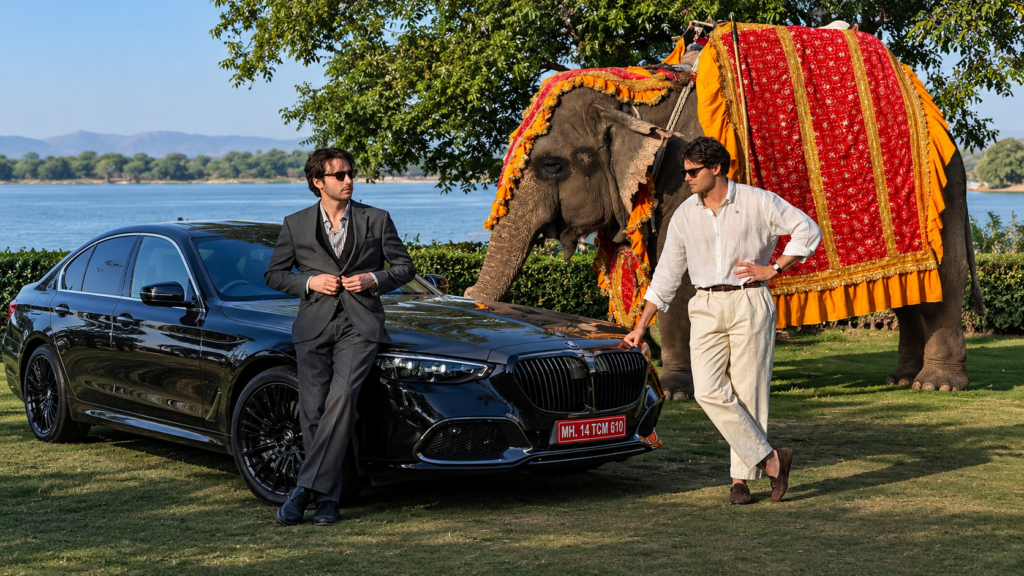
Luxury in India is no longer limited to royal wardrobes, inherited jewellery or the private collections of established industrial families. Designer labels, exclusive memberships, premium cars and curated experiences are becoming part of a new consumer culture. But beneath the appeal of exceptional craftsmanship lies a fascinating question: are Indians buying luxury for what it offers, or for what it says about them?
The New Language of Having Arrived
For a long time, luxury in India was associated with a relatively small circle of industrial families, royal households, established business communities and international travellers. Expensive possessions were often inherited, acquired through family networks or purchased during journeys abroad.
That landscape is changing.
A growing affluent population, expanding access to international brands and greater exposure to global lifestyles have brought luxury into a much wider cultural conversation. Designer handbags, premium watches, high-performance automobiles, exclusive hospitality and fine dining have become increasingly visible expressions of aspiration.
The Indian luxury market is attracting attention from international brands because consumers are not simply purchasing products. They are participating in a larger idea of achievement.
For some, a luxury purchase represents years of professional effort. For others, it marks entry into a particular social circle. For many, it is an opportunity to experience a world that once seemed distant.
The interesting question is not whether Indians enjoy luxury. It is why luxury has become such a powerful language of success.
The Psychology of the Logo
A luxury product often communicates two things simultaneously: what it is and what it represents.
A handcrafted leather bag may offer exceptional material quality, construction and durability. A recognisable designer name adds another dimension: social recognition. The owner is not only purchasing an object but also acquiring a symbol that other people may understand immediately.
This is the psychology of conspicuous consumption, a concept associated with economist and sociologist Thorstein Veblen. It describes the use of visible spending to communicate wealth and social position.
In India’s highly connected urban culture, such signals can become especially powerful. A recognisable watch, a particular automobile or a designer accessory can communicate achievement without requiring an explanation.
But the relationship is not always straightforward. Some consumers genuinely appreciate design, heritage and craftsmanship, while others are attracted to the recognition attached to a brand. Many are motivated by both.
The same object can therefore mean very different things to different buyers.
The Social Media Luxury Effect
Social media has transformed the way luxury is discovered and displayed.
A decade ago, many consumers encountered luxury primarily through magazines, fashion shows, celebrity appearances and international retail destinations. Today, a new collection, private event or designer accessory can become visible to millions within hours.
Influencers and celebrities have become important intermediaries between luxury houses and younger consumers. Their wardrobes, travel experiences, homes and dining choices help create an aspirational lifestyle around products.
The effect is powerful because social media makes extraordinary consumption appear ordinary through repetition.
A luxury holiday becomes a short video. A designer purchase becomes an unboxing. A private event becomes a carefully selected glimpse into an exclusive world.
Yet digital visibility also creates pressure. When consumers repeatedly encounter expensive lifestyles, the distinction between what they genuinely want and what they feel expected to own can become less clear.
The result is a marketplace where desire is constantly renewed, and where the performance of success can sometimes become as important as success itself.
The New Generation Is Changing the Rules
India’s younger luxury consumers are not necessarily interested in following the purchasing habits of previous generations.
Research by Ipsos India, published in 2026, suggests that the average luxury consumer is getting younger, with 70 per cent of new e-luxury shoppers under the age of 35. The research also identifies a generation that is open to discovering new brands and increasingly interested in personal relevance rather than price alone.
This does not mean traditional luxury has lost its appeal. Instead, the definition of desirability is expanding.
Younger buyers may value a limited-edition sneaker, a distinctive Indian designer label, a carefully selected watch or an exclusive travel experience. They are also more exposed to international fashion, independent creators and niche brands.
For some, a recognisable logo remains important. For others, knowing the story behind a product is more valuable than displaying its name.
This creates an interesting divide between visible luxury and informed luxury. One seeks immediate recognition; the other often places greater importance on craftsmanship, rarity, provenance and personal taste.
Neither approach represents the entire generation. India’s luxury consumer is too diverse to be reduced to a single profile.
Beyond Foreign Labels: India’s Own Luxury Identity
One of the most significant developments in India’s luxury story is the growing opportunity for Indian craftsmanship and design.
The country’s textile traditions, jewellery-making expertise, embroidery, leatherwork, architecture and artisanal knowledge offer a foundation for a distinctive luxury identity.
International luxury brands have long drawn inspiration from Indian materials, motifs and craftsmanship. Increasingly, however, the conversation is also about how Indian designers and businesses can establish their own position in the global luxury economy.
Reports by Ipsos in 2025 highlighted India’s growing role not merely as a consumer market but also as a source of cultural inspiration for global luxury brands. The emphasis on heritage, provenance and craftsmanship reflects an opportunity for Indian creative industries to participate more prominently in international luxury.
This matters because luxury does not have to mean purchasing a foreign label. A carefully made Indian textile, a piece of jewellery created through generations of expertise or a bespoke object designed by an Indian craftsperson can carry exceptional value.
The future of Indian luxury may depend partly on whether consumers learn to recognise the value of what the country already produces.
When Luxury Becomes a Financial Decision
There is another side to the desire for expensive possessions: the financial choices involved.
Luxury purchases can range from considered long-term acquisitions to spontaneous expressions of aspiration. A fine watch, a collectible piece of jewellery or an artwork may hold value under certain circumstances, but no luxury purchase should automatically be treated as an investment.
Resale prices depend on condition, authenticity, rarity, demand, provenance and market conditions. Many branded goods lose substantial value after purchase.
The growth of premium consumption also raises questions about affordability and credit. A product may appear accessible through instalments or financing, but the total cost can still be significant.
There is nothing wrong with spending on something meaningful or enjoyable. The concern arises when the desire to maintain a particular image begins to influence financial decisions more strongly than personal priorities.
Luxury should represent the freedom to choose, not an obligation to keep up.
The Quiet Shift: From Ownership to Experience
Another change is taking place in the meaning of luxury itself.
For an increasingly sophisticated group of consumers, the most desirable experiences may not be the most visible ones. Private travel, personalised hospitality, wellness retreats, exceptional dining, access to cultural events and time away from public attention are becoming important expressions of premium living.
Visa’s 2026 research on affluent Indian consumers points towards a more deliberate approach to spending, with travel, dining, memberships and curated experiences playing an important role.
This suggests that luxury is gradually moving beyond the object. Access, convenience, personalisation and meaningful experiences are becoming part of its appeal.
A memorable journey may matter more than another handbag. A private dinner may hold more personal value than a conspicuous purchase. A beautifully designed home may be more meaningful than a collection of branded possessions.
The shift does not mean that products have become irrelevant. It means that luxury is increasingly being judged by the quality of the experience surrounding them.
What Does Wealth Really Look Like?
India’s relationship with luxury reflects a society experiencing economic change, cultural confidence and expanding aspirations.
For some consumers, luxury is a reward for hard work. For others, it is an inherited tradition or an expression of artistic appreciation. For some, it is social currency, while for others it is simply the pleasure of owning something exceptionally made.
The problem begins when the symbol becomes more important than the substance.
A recognisable label cannot automatically create personal distinction. An expensive address cannot guarantee refinement. A premium purchase cannot substitute for financial independence, knowledge or individual character.
Perhaps the most interesting evolution in Indian luxury will not be the number of international boutiques opening or the value of products being purchased. It will be the development of a consumer who understands what deserves to be valued.
True luxury may still carry a price, but its meaning should not depend entirely on what other people can see.
The question facing India’s new luxury generation is therefore not simply what it can afford to buy. It is what it genuinely considers worth owning.