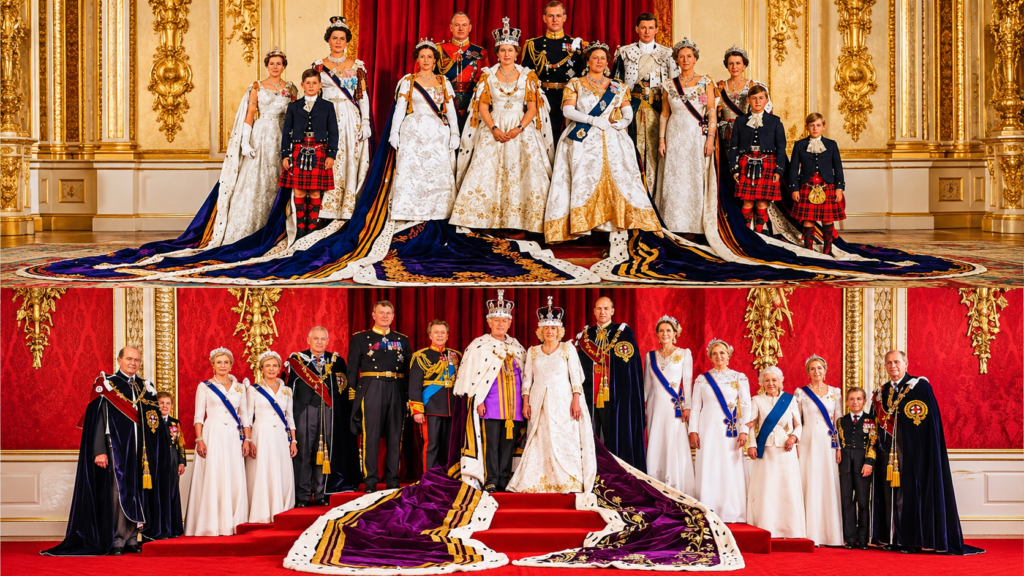
Behind the grandeur of royal palaces and the symbolism of crowns lies a remarkable international network of family relationships. For centuries, marriages, ancestry and diplomacy have connected royal houses, creating relationships that extended far beyond national borders.
Royal families have rarely existed in isolation. Behind their individual histories are generations of marriages, inherited traditions, diplomatic relationships and shared ancestry. What appeared to be separate kingdoms were often connected through an intricate network of family ties, making royal history one of the most fascinating examples of how personal relationships and international affairs intersect.
The concept of royal family alliances offers a different way to understand monarchy. It is not simply a story of crowns, titles and inherited wealth, but one of relationships that helped shape political arrangements, cultural exchanges and the identity of ruling houses across continents.
When Marriage Became an Instrument of Diplomacy
For much of European history, royal marriages were carefully considered political arrangements. A marriage between two ruling houses could strengthen a treaty, reduce tensions, establish an alliance or secure a succession.
Rather than being entirely personal decisions, these unions frequently reflected the strategic priorities of kingdoms. Families considered territory, religion, inheritance and political stability when arranging marriages for their heirs.
The Habsburg dynasty became particularly associated with this approach. Through an extensive network of marriages, the family acquired connections across several European territories. Its history demonstrated how matrimonial alliances could expand a dynasty’s influence without relying exclusively on military conquest.
The principle was not limited to Europe. Across Asia and the Middle East, marriages between ruling families and influential houses also helped establish relationships, strengthen political legitimacy and maintain regional connections.
Bloodlines That Crossed Borders
One of the most fascinating aspects of royal history is the way ancestry crosses modern national boundaries.
European monarchies, in particular, became closely connected through successive generations of intermarriage. The British, Danish, Greek, German, Russian and other royal houses shared numerous historical family connections.
Queen Victoria’s descendants became associated with several European royal dynasties, earning her the historical description of the grandmother of Europe. Her children and grandchildren married into different ruling houses, creating relationships that extended across the continent.
These connections reveal that royal identity has never been entirely confined to geography. A monarch could represent one nation while belonging to a much wider family network.
However, shared ancestry did not necessarily produce political agreement. Royal relatives could find themselves on opposing sides of international conflicts, demonstrating the limits of family relationships when national interests and political circumstances took precedence.
The Palace as a Diplomatic Space
Royal residences were traditionally more than private homes. They were places where diplomatic relationships were established, political visitors received and international agreements discussed.
State banquets, formal receptions and ceremonial visits created opportunities for monarchs and representatives of ruling houses to strengthen relationships. Etiquette, protocol, dress and seating arrangements communicated respect, hierarchy and diplomatic intention.
These traditions continue in modern constitutional monarchies. Although elected governments generally determine national policy, monarchs and royal representatives can contribute to diplomatic engagement through state visits, cultural initiatives and ceremonial occasions.
The palace therefore remains an important symbol of continuity. Its architecture, collections and traditions communicate a country’s history while providing a setting for contemporary international relationships.
Beyond Europe: A Wider Royal Heritage
The story of interconnected monarchies must extend beyond European royal houses.
Across the Middle East, royal families have maintained influential relationships through shared heritage, historical partnerships, marriage connections and regional diplomacy. In countries such as Saudi Arabia, Jordan and Morocco, royal institutions have distinct historical and cultural identities that reflect their respective political traditions.
In Asia, royal heritage also carries a different significance. Thailand’s monarchy, Japan’s imperial institution and the historic royal houses of South Asia demonstrate the variety of ways dynastic traditions have developed.
India offers a particularly rich historical perspective. Before independence, numerous princely states were governed by ruling families whose relationships were shaped by alliances, marriage arrangements, courtly traditions and regional politics. Although their political authority changed following independence and integration into the Indian Union, many former royal families continue to preserve palaces, cultural collections and heritage institutions.
These histories demonstrate that royal connections are not simply European stories. They belong to a much wider international history of governance, cultural exchange and inherited identity.
When Family Relationships Meet Political Reality
The existence of shared bloodlines has never guaranteed peace or cooperation.
History contains numerous examples of relatives whose political responsibilities placed them on opposing sides of conflicts. The First World War, for example, involved monarchies whose rulers were connected through family relationships, yet their countries entered a devastating international conflict.
This distinction is important. Royal relationships could create familiarity and personal connections, but they could not always overcome competing national interests, military commitments or political pressures.
The relationship between family and authority was therefore complicated. A royal individual could simultaneously carry the responsibilities of a monarch, the expectations of a nation and the obligations associated with a family legacy.
This tension remains one of the most interesting dimensions of dynastic history.
The Modern Royal Network
Today, royal families operate in a world fundamentally different from the one in which dynastic marriages once determined international relationships.
Constitutional frameworks, democratic institutions and modern diplomacy have transformed the political responsibilities of many monarchies. Royal marriages are now largely personal decisions rather than instruments of formal state policy.
Nevertheless, international royal relationships remain culturally significant. Weddings, jubilees, funerals, coronations and state occasions bring representatives of royal houses together, preserving ceremonial connections between countries.
Modern royal families also contribute to heritage preservation, charitable foundations, education, cultural exchange and international representation.
Their influence is therefore increasingly expressed through institutional continuity, public engagement and cultural diplomacy rather than territorial expansion.
The Inheritance of More Than a Crown
Royal inheritance extends beyond titles and succession. It includes architectural landmarks, historical documents, works of art, family archives, ceremonial objects and cultural traditions.
Many royal institutions have become custodians of national heritage. Their collections and residences provide insight into the development of art, craftsmanship, architecture and political history.
For some former ruling families, the preservation of historic estates and cultural collections has become an important part of their contemporary identity. Their legacy is measured not only by the authority their ancestors exercised but also by what they have managed to preserve.
This raises a broader question about inherited responsibility: when a family inherits centuries of history, what obligations does it have towards the society and culture associated with that history?
A World Connected by History
The royal world is best understood not as a collection of isolated palaces, but as an interconnected historical network. Marriages connected distant courts, ancestry crossed borders, diplomacy brought ruling houses together and shared traditions preserved relationships across generations.
Yet the significance of these connections has changed. Where family alliances once helped determine the political direction of kingdoms, they now offer a window into cultural identity, historical continuity and international heritage.
The crown may represent an individual nation, but the history behind it often belongs to a much wider world. That is perhaps the most compelling feature of royal families: their stories are simultaneously national, personal and international.