In the lexicon of the ultra-high-net-worth individual (UHNWI), wealth is a baseline, not a destination. Liquid capital, multi-billion-dollar valuations, and vast asset portfolios are merely the raw materials of power. They are transactional, subject to market fluctuations, and ultimately fleeting. True influence is measured by a completely different metric: institutional permanence.
As the global financial center tilts decidedly toward the Gulf, a critical distinction has emerged within the region’s elite. There are those who accumulate assets, and there are those who engineer reality. The latter are the Architects of Legacy, visionaries who understand that a billion dollars is merely a statistic, but a legacy is an epoch.
Redefining the Asset Class: From Net Worth to Permanent Impact
For the global elite operating at the highest frequency, the ultimate luxury is time specifically, the ability to project influence across generations. This requires a profound psychological shift from wealth management to legacy architecture.
“True power is the capacity to translate temporary capital into immortal structures.”
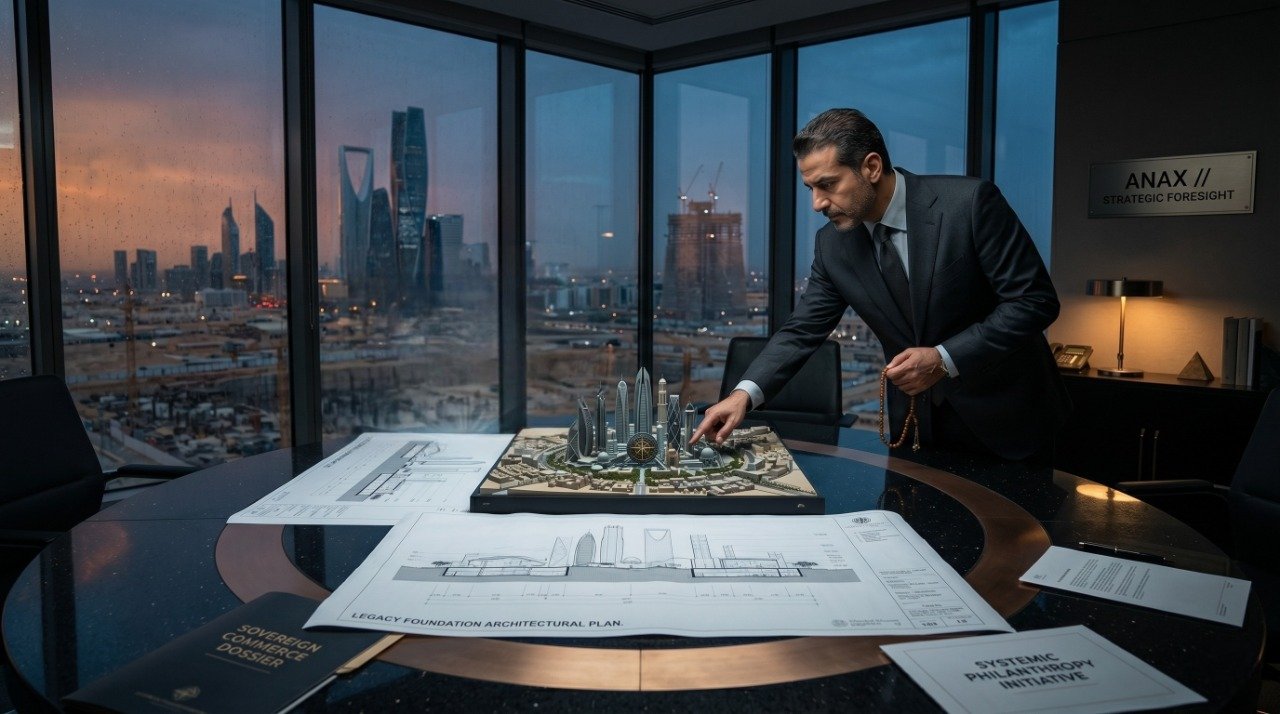
When wealth is channeled into projects that alter the cultural, economic, or physical geography of a region, it ceases to be mere money. It becomes systemic gravity. The modern elite of the Middle East do not look at a blank canvas and calculate the immediate return on investment; they calculate the historical footprint. They view capital not as a scoreboard, but as an energetic force to build platforms that outlast their creators.
The Pillars of Institutional Permanence
To achieve absolute permanence, wealth must be institutionalized across three primary dimensions: culture, strategic commerce, and systemic philanthropy. Without these pillars, wealth eventually dissipates. With them, it becomes historical infrastructure.
- Cultural Architecture: Art, cinema, and heritage preservation are the ultimate keepers of history. By funding global museums, establishing international film foundations, and preserving historical districts, the elite are anchoring their names to the very soul of the region’s identity.
- Sovereign Commerce: This is the transition from running businesses to constructing economic ecosystems. Whether it is pioneering branded ultra-luxury real estate or investing in foundational global logistics supply chains, these leaders create the arenas where the rest of the world must play.
- Systemic Philanthropy: Moving far beyond traditional charity, modern philanthropic leadership across the GCC focuses on strategic venture philanthropy. This involves building self-sustaining ecosystems in global education, scientific research, and human development that act as permanent engines of societal progress.
The Macroeconomic Gravity of the Elite
The structural impact of these twenty visionaries extends far beyond regional borders; they are rewiring the global economic network. When a sovereign leader or a titan of industry in Riyadh, Dubai, or Doha makes a strategic move, the ripple effect is felt across Western boards, Asian supply chains, and international financial markets.
They are building an ecosystem designed to withstand global volatility. By establishing an architecture of privacy, hyper-luxury, and sovereign security, they have created an irresistible gravity well for the world’s intellectual and financial elite. They are not waiting for the future to happen—they are funding it, drafting it, and commanding it.
The Dossier Unlocked
Wealth can be inherited, but legacy must be engineered. It requires an uncompromising clarity of vision, an elite network of strategic partners, and a timeline that spans centuries rather than fiscal quarters.
In our upcoming social release, we unlock the definitive dossier. We move past the numbers on the balance sheet to profile the human architects behind the regional transformation.
These are the minds who possess the blueprint of influence. These are the 20 visionaries engineering the Middle East.