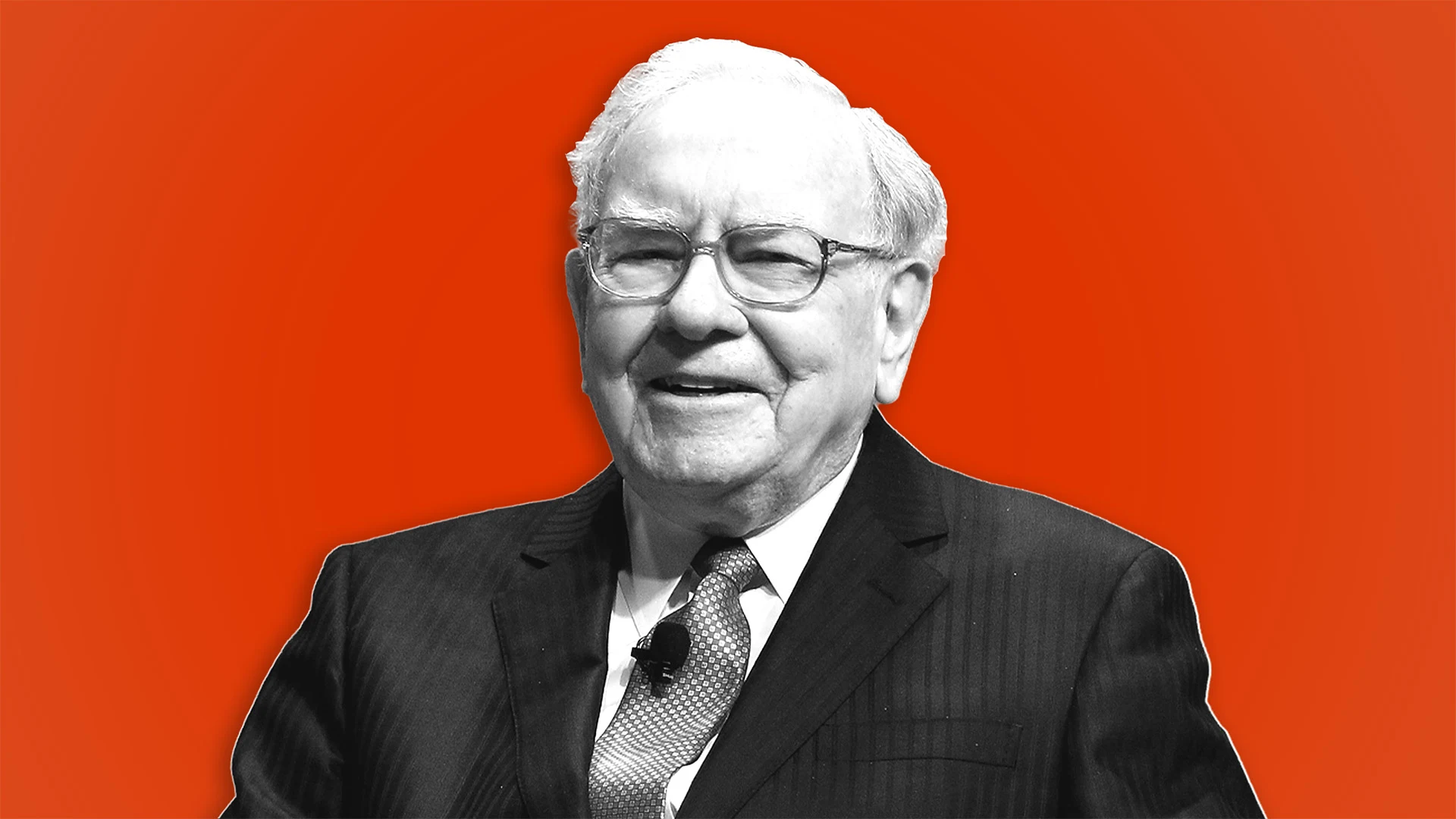
To understand Warren Buffett, you must first discard the myth of the folksy Nebraskan who drinks Cherry Coke and eats McDonald’s for breakfast. That persona, carefully cultivated, entirely genuine, and strategically useful, is the outer layer. Beneath it is one of the most disciplined, psychologically sophisticated capital allocators in the history of modern finance. A man who has compounded wealth at approximately 20% per year for over six decades. A man whose single greatest competitive advantage is not intellect, not information, but patience weaponised into a system.
Berkshire Hathaway, the conglomerate Buffett has built over fifty years, is today valued at over $900 billion. It owns or holds significant stakes in companies spanning insurance, railroads, energy, consumer goods, financial services, and technology. The architecture of that portfolio, the logic that connects Geico to Apple to BNSF Railway, is the most studied and least successfully imitated investment framework in history.
The Education of an Allocator
Warren Edward Buffett was born in Omaha, Nebraska, in 1930. His father, Howard Buffett, was a stockbroker and congressman, a detail that matters more than it might appear. Buffett grew up in a household where capital, markets, and the mechanics of business were not abstractions but dinner table conversation.
He bought his first stock at eleven years old, three shares of Cities Service Preferred at $38 each. He sold them at $40. They subsequently rose to $200. He has cited this experience repeatedly as one of the most important lessons of his investing life: the cost of impatience is not the loss of a small gain, it is the loss of a transformational one.
At nineteen, he read Benjamin Graham’s The Intelligent Investor and described it as “the best book on investing ever written.” Graham’s concept of intrinsic value, the idea that a stock is not a ticker symbol but a fractional ownership of a real business, and that the market’s short-term price and the business’s long-term value are frequently and exploitably different, became the philosophical spine of everything Buffett would build.
He studied under Graham at Columbia Business School, graduated top of his class, and eventually worked at Graham-Newman Corporation before returning to Omaha in 1956 to establish his own investment partnership.
The Buffett Framework: What Everyone Reads and Almost No One Follows
The paradox of Warren Buffett is that his methodology is entirely public. He has explained it, in precise detail, in annual shareholder letters for over five decades. Those letters, available free on the Berkshire Hathaway website, constitute the most comprehensive and honest documentation of an investment philosophy ever produced by a practitioner.
The framework, in its essence:
Buy wonderful businesses at fair prices. Not mediocre businesses at wonderful prices, a refinement Buffett attributes to his late partner Charlie Munger, who helped him evolve beyond the pure Graham approach of buying statistical bargains regardless of business quality.
Think in decades, not quarters. Buffett’s preferred holding period, famously, is “forever.” This is not sentiment. It is the recognition that the compounding of a truly great business over time produces returns that no amount of tactical repositioning can match.
Stay within your circle of competence. One of the most misunderstood principles in investing. Buffett did not invest in technology companies for decades, not because he thought they were bad businesses, but because he did not trust his ability to predict their competitive positions over a ten-year horizon. When he finally invested heavily in Apple in 2016, it was not as a technology bet, it was as a consumer loyalty and ecosystem bet, a domain in which his analytical confidence was high.
Be fearful when others are greedy, and greedy when others are fearful. The most quoted and least practised line in financial history. During the 2008 financial crisis, Buffett deployed billions into Goldman Sachs and General Electric while others were paralysed. During the peak euphoria of the dot-com bubble, he declined to buy a single internet stock and was publicly mocked for it. The subsequent crash vindicated him completely.
The Psychological Architecture of Sovereign Capital
What Buffett has that most investors do not is not superior information, in an era of instantaneous global data, information advantages are increasingly difficult to sustain. What he has is psychological architecture: the internal structure that allows him to hold positions through volatility without being governed by fear, to ignore consensus without being destabilised by social pressure, and to think in decades while the market thinks in days.
He has described his temperament, not his intellect, as his primary competitive advantage. “Success in investing doesn’t correlate with IQ once you’re above a threshold level,” he has said. “What you need is the temperament to control the urges that get other people into trouble.”
This psychological sovereignty, the ability to be genuinely indifferent to short-term noise, is the rarest quality in financial markets and the one most directly responsible for the Buffett record.
His relationship with the late Charlie Munger, his partner at Berkshire for over fifty years until Munger’s death in 2023, was the intellectual scaffolding within which that temperament was refined and stress-tested. Munger brought a multidisciplinary rigour to their partnership, insisting that superior investing required the integration of psychology, history, biology, physics, and mathematics. “I have nothing to add,” Buffett said of Munger’s commentary on multiple occasions, a statement that, from the world’s greatest investor, constitutes the highest possible endorsement.
The Philanthropy of Sovereignty
In 2006, Buffett announced his intention to give away the vast majority of his fortune, ultimately committed at over $100 billion, primarily through the Bill & Melinda Gates Foundation. It was, at the time, the largest act of charitable commitment in American history.
His reasoning was characteristically direct: he was better at compounding capital than at deploying it philanthropically, and the Gates Foundation was better at deploying it than at compounding it. Therefore, the rational allocation was for him to generate and for them to distribute.
This is the Buffett mind applied to altruism: not sentiment, not performance, but logic. The outcome, measured in human lives affected by the health, education, and development programmes the foundation funds, is staggering.
What the Buffett Record Actually Proves
The investment community has spent decades trying to replicate the Buffett framework and consistently failing. Hedge funds with superior data, faster execution, and larger research teams have, in aggregate, underperformed the index he has beaten for sixty years.
The lesson is not that his strategy is secret. It is that his strategy requires a quality, genuine, unperformable patience, that almost no institutional or individual investor can sustain under the pressures of quarterly reporting, client demands, and the social contagion of market sentiment.
What Buffett has built is not merely a portfolio. It is a proof of concept for a particular kind of sovereignty: the sovereignty of the long view in a world governed by the short one.
For Anax, that is the definition of enduring wealth, capital not merely accumulated, but deployed in the service of a philosophy that outlasts any single market cycle, any single business, any single era.
The Oracle of Omaha is not a stock picker. He is, in the deepest sense, a philosopher who chose markets as his medium.
Core Principles from the Buffett Doctrine
- Patience is not passive. In Buffett’s system, waiting is an active, disciplined choice made against the constant pressure to act.
- Quality over cheapness. The evolution from Graham to Munger represents one of the most important refinements in investment philosophy: a truly great business at a fair price outperforms a mediocre business at a bargain price over any meaningful time horizon.
- Temperament is infrastructure. The architecture of your psychology determines the quality of your decisions more than the quality of your information.
- Transparency as strategy. Buffett’s annual letters are an act of radical openness that has built one of the most loyal investor bases in history. Honesty at scale is a moat.
- The circle of competence is sacred. Know what you know. Know what you don’t. The boundary between them is where most wealth is destroyed.
Anax Magazine is a sovereign intelligence publication documenting the individuals, institutions, and ideas that shape global wealth, power, and legacy. Explore more at anaxmagazine.com. To be considered for an editorial feature, contact our editorial team directly.