
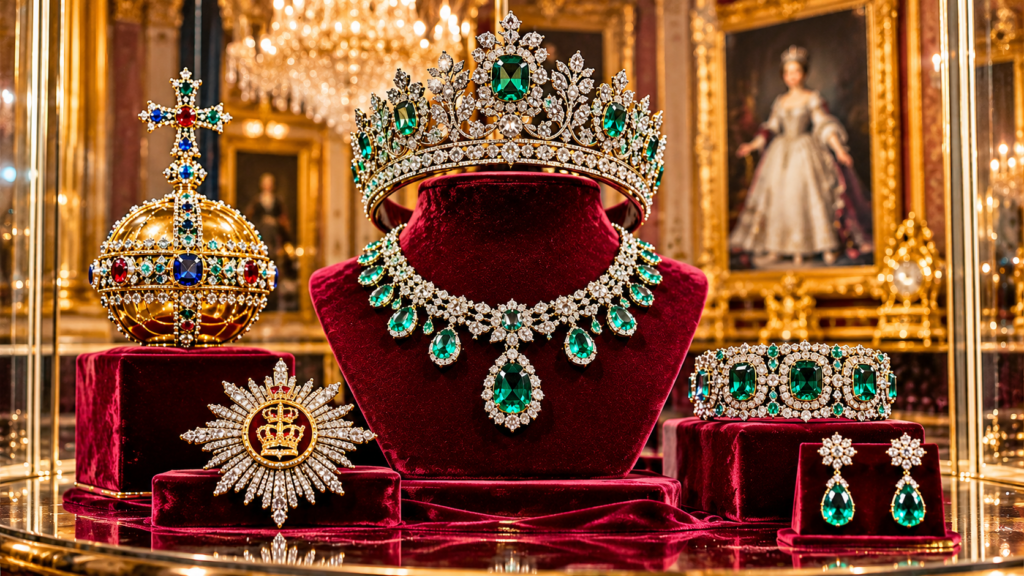
Behind some of the world’s most extraordinary auction pieces lies a history of royal ownership, inherited treasures and centuries of craftsmanship. From magnificent tiaras to historic manuscripts, auctions have become a meeting point for cultural heritage, private wealth and the pursuit of objects that cannot easily be replaced.
An auction is rarely just a transaction. In the world of exceptional objects, it is an encounter between history, rarity, ownership and desire. A piece of jewellery may carry the memory of a royal wedding, a painting may have belonged to a distinguished household, and a ceremonial object may represent an era of political and cultural transformation.
Royal collections occupy a particularly fascinating position in this world. Their significance often extends beyond material value, connecting individual objects to dynasties, historical events and generations of craftsmanship. When such objects enter the auction market, they bring together collectors, institutions, historians and international buyers interested in acquiring a tangible piece of the past.
When Royal Treasures Enter the Market
Royal possessions have always attracted fascination. Jewellery, decorative arts, silverware, furniture and paintings from royal households often possess a combination of historical importance, artistic quality and exceptional provenance.
However, not every object associated with royalty automatically becomes valuable. Its significance depends on several factors, including authenticity, condition, rarity, documentation and the identity of previous owners.
A tiara associated with a royal wedding, for example, may attract attention not only because of its gemstones but also because of the historical event connected to it. Similarly, a piece of furniture from a historic palace may carry importance through its design, maker and documented ownership.
For collectors, the appeal lies in acquiring something that cannot simply be reproduced. Its history forms part of its identity.
The Great Auction Houses
The international auction industry has developed into an influential part of the luxury and cultural economy. Established houses such as Christie’s and Sotheby’s have played significant roles in bringing rare works of art, jewellery, antiques and important private collections to international audiences.
<escape> </escape>
Their auction calendars attract collectors from different continents, with bidding taking place in traditional salerooms and through increasingly sophisticated digital platforms.
Specialist departments assess objects, research their histories, establish estimates and prepare them for sale. For particularly important pieces, the process may involve extensive provenance research and consultation with experts.
The auction house therefore performs a role beyond bringing buyers and sellers together. It helps establish the historical narrative through which an object is presented to the market.
Jewellery: The Crown’s Most Personal Legacy
Among royal possessions, jewellery holds a particularly powerful position. Crowns, tiaras, necklaces, brooches and ceremonial ornaments often combine exceptional gemstones with the work of highly skilled artisans.
Some pieces are closely associated with royal occasions, while others reflect the tastes and traditions of particular dynasties. Their designs may reveal changing artistic movements, international trade connections and the development of jewellery craftsmanship.
Royal jewellery can also carry complicated ownership histories. Some pieces remain within family collections, while others enter private hands through inheritance, estate dispersals or carefully documented sales.
For collectors, the attraction is not limited to diamonds, emeralds or sapphires. The history of who commissioned, wore or preserved a piece can become equally important.
Paintings, Palaces and Private Collections
Royal collections extend far beyond jewellery. Historic paintings, tapestries, sculptures, porcelain, decorative objects and furniture represent centuries of artistic patronage.
Many European royal households historically commissioned works from leading artists and craftspeople. These objects became part of the visual identity of palaces and estates, reflecting the ambitions, interests and cultural preferences of their owners.
When private collections are dispersed, individual objects may enter museums, galleries or new private collections. Their journeys reveal how cultural heritage moves between public institutions and private ownership.
The market for these objects also raises important questions about preservation, historical documentation and the responsibilities of new owners.
Provenance: The Story Behind the Object
In prestigious auctions, provenance can be as important as appearance.
Provenance refers to the documented history of an object’s ownership. It helps establish authenticity, trace its journey through different collections and clarify its historical associations.
An object with a well-documented connection to a royal household may attract considerable interest, particularly when its ownership history is supported by archival records, inventories, correspondence or historical photographs.
Yet provenance requires careful examination. Claims of royal ownership must be verified rather than accepted through attractive descriptions or family stories.
For serious collectors, research is essential. It protects the integrity of a purchase and helps distinguish genuine historical significance from unsupported marketing claims.
The New Generation of Global Collectors
The contemporary auction market brings together an increasingly international group of buyers. Established collectors, family offices, private museums, cultural institutions and younger investors participate in different categories of the market.
Some seek exceptional works of art, while others focus on historic jewellery, rare watches, manuscripts, furniture or decorative objects.
For a growing number of collectors, ownership is also connected to legacy. Acquiring an important historical object can become part of a family’s cultural identity, with collections passed between generations.
Digital bidding has widened access to international sales, although the most significant objects may still attract extensive specialist attention and private negotiations.
The result is a market in which historical knowledge, financial capacity and personal taste intersect.
The Responsibility of Owning History
The movement of historic objects through auctions is not without complexity. Questions surrounding cultural ownership, colonial-era acquisitions, export restrictions and the return of disputed artefacts have become increasingly important.
An object may hold exceptional financial value while also carrying cultural significance for the community or country from which it originated.
Responsible auction practices therefore require attention to ownership documentation, applicable laws and the ethical circumstances surrounding an object’s history.
Collectors and institutions increasingly face a broader question: does acquiring an important object also create a responsibility to preserve, research and respect its cultural significance?
This is particularly relevant when objects have been removed from their original settings or have complicated historical ownership records.
When the Hammer Falls, History Continues
The appeal of royal auctions lies in their ability to bring together different dimensions of luxury. There is craftsmanship, rarity, historical association, financial value and the enduring fascination with royal life.
Yet the most important objects are rarely defined by their auction prices alone. Their stories continue long after the bidding ends, moving between collections, institutions and generations.
A royal jewel may find a new home in a private collection. A historic painting may become part of a museum exhibition. An antique object may be preserved by a family that values its connection to another era.
In this sense, an auction is not necessarily the end of an object’s history. It is another chapter in its journey.
And perhaps that is what makes the royal auction so compelling: the opportunity to own something that carries a story far greater than its material worth.