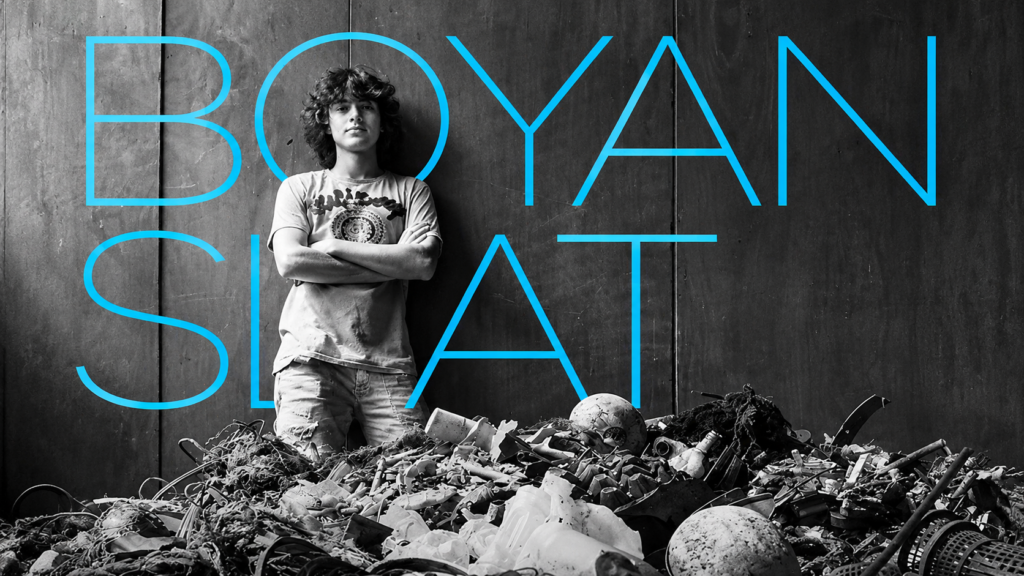
At an age when most people are still deciding what direction their lives might take, Boyan Slat began building a global environmental initiative. His ambition was extraordinary: to develop technology capable of removing plastic from the oceans and preventing more from entering them.
The story of Boyan Slat is not simply about an entrepreneur with an ambitious idea. It is about the relationship between youthful curiosity, scientific experimentation and the determination to confront an environmental problem that crosses every national boundary. Through The Ocean Cleanup, the Dutch inventor has helped bring international attention to a question that has become increasingly difficult to ignore: what can humanity do about the plastic already accumulating in its waters?
His work represents a new kind of environmental leadership, one that brings together engineering, research, entrepreneurship and public participation.
An Observation That Became a Mission
Born in Delft, the Netherlands, in 1994, Slat developed an interest in technology and invention at an early age. His defining encounter with ocean pollution came during a diving holiday in Greece when he was 16. Expecting to experience the beauty of marine life, he was struck instead by the quantity of plastic floating in the water.
The experience stayed with him. Rather than treating the problem as an issue too large for one person to influence, he began investigating why removing plastic from the oceans was so difficult.
What followed was an ambitious school science project. Slat explored the possibility of using natural ocean currents to concentrate floating plastic, rather than relying entirely on vessels travelling across enormous areas of water to collect it.
In 2012, he presented an early version of the idea at TEDxDelft. The presentation attracted international attention and helped transform a student project into a serious initiative. In 2013, at just 18, he founded The Ocean Cleanup as a non-profit organisation.
It was an unusually bold decision: to turn an environmental concern into a long-term engineering and organisational challenge.
The Ocean Cleanup: Engineering Against Pollution
The organisation Slat established works on two connected problems. The first is the plastic already floating in the ocean. The second is the waste travelling through rivers and waterways before reaching the sea.
Its ocean-cleanup systems are designed to concentrate floating debris so that it can be collected and transported for processing. The concept has evolved through multiple rounds of testing, redesign and deployment. Early systems encountered technical difficulties, demonstrating that an idea that appears convincing on paper can behave very differently in the open ocean.
Rather than treating those setbacks as the end of the project, the organisation continued developing its equipment. Its larger systems are intended to improve collection capacity in the Great Pacific Garbage Patch, a vast area of the North Pacific where ocean currents concentrate floating debris.
The river programme approaches the problem from another direction. Interceptor technologies are designed to collect floating waste before it reaches the sea. This matters because removing pollution at its source can reduce the amount of material that eventually enters marine ecosystems.
The broader lesson is that ocean conservation cannot depend on a single machine or a single location. It requires an interconnected system of prevention, collection, waste management and long-term environmental responsibility.
From a Student Project to a Global Organisation
One of the most remarkable aspects of Slat’s journey is the transformation of a relatively small idea into an international operation.
The Ocean Cleanup has developed into a non-profit organisation working with engineers, researchers, operational specialists, governments, supporters and local partners. Its work has expanded across different regions, reflecting the fact that plastic pollution is not confined to one coastline or one economy.
The organisation’s 2024 annual report described a significant expansion in operations, including the interception of approximately 12 million kilograms of waste during that year. It also reported deployments of river-interception solutions in Thailand, Guatemala and Jamaica.
Such figures should be understood in context: the amount collected is only one measure of progress, while the scale of plastic entering the environment remains much larger. Nevertheless, the expansion demonstrates how an idea that began with an individual observation can develop into an international engineering effort.
Slat’s influence also extends beyond the equipment itself. His work has helped make large-scale plastic removal part of the global conversation about environmental innovation.
The Importance of Scientific Responsibility
Ambitious environmental projects must be judged not only by their intentions but also by their evidence, efficiency and ecological consequences.
Ocean-cleanup technology faces difficult questions. Marine environments are complex, and floating debris can exist alongside organisms and natural material. Any collection system must be designed and monitored carefully to avoid causing unintended harm.
Research published in 2024 in Marine Pollution Bulletin, reviewing 102 aquatic plastic-cleanup technologies, highlighted a wider problem: effectiveness data are often inconsistently reported, and independent testing is limited. This makes transparent measurement and comparable evidence essential.
A 2025 study published in Scientific Reports examined the environmental trade-offs of cleaning the North Pacific Garbage Patch and found potential net ecological benefits in its assessment, while also identifying uncertainties that require continued attention.
These findings underline an important principle for Slat’s mission: innovation must remain accountable to science. Environmental progress cannot be measured by impressive machinery or ambitious targets alone. It must be demonstrated through reliable results and careful protection of marine ecosystems.
Why Prevention Matters as Much as Collection
Cleaning existing pollution is only one part of the challenge. Plastic continues to enter rivers and oceans through inadequate waste management, littering, industrial activity and the widespread use of disposable materials.
No cleanup initiative can permanently solve the problem if the flow of new waste continues unchecked.
This is why prevention is central to the wider significance of The Ocean Cleanup’s work. River interception can help reduce the movement of floating waste towards the sea, but it must operate alongside better collection systems on land, responsible manufacturing, effective recycling and changes in consumption.
The responsibility is shared by governments, businesses and individuals. A technology designed to collect waste cannot replace the policies and infrastructure required to prevent that waste from being produced or discarded irresponsibly.
Slat’s project therefore raises a larger question about modern innovation: should technology be used only to make existing systems more efficient, or can it also help society confront the consequences of its previous choices?
A New Definition of Environmental Leadership
Boyan Slat’s journey is significant because it challenges the traditional idea that major environmental initiatives must begin within established institutions.
His work began with an observation, developed through research and became an organisation capable of attracting international attention and resources. It illustrates how individuals can contribute to global challenges when curiosity is combined with technical knowledge, collaboration and persistence.
Yet his story should not be presented as that of one person single-handedly saving the oceans. The project depends on a broad network of scientists, engineers, local communities, operational teams and supporters. Its future success will also depend on transparent reporting, continued research and the willingness to adapt when evidence demands it.
That collective dimension is perhaps the most valuable part of the story. Environmental leadership is not only about having a vision; it is about building the institutions and partnerships capable of testing, improving and sustaining it.
The Future Beyond the Horizon
The oceans are too vast for simple solutions, and plastic pollution is too deeply connected to modern production and consumption to be resolved by one organisation. But the scale of the challenge does not make meaningful action impossible.
Boyan Slat has helped move the conversation from concern towards experimentation and practical engineering. His work demonstrates the possibilities of combining entrepreneurial thinking with environmental purpose, while also reminding the world that ambitious solutions must be measured against scientific evidence.
The ultimate measure of The Ocean Cleanup will not be the attention it attracts or the scale of its machinery. It will be the lasting reduction of plastic entering and remaining in the marine environment.
For a generation confronting increasingly complex environmental challenges, Slat’s journey offers a compelling example of what can happen when an individual refuses to accept that a problem is beyond investigation.
The ocean does not need another promise. It needs solutions that work, systems that prevent pollution and a global commitment to protect the natural world. That is the larger mission behind Boyan Slat’s work.