
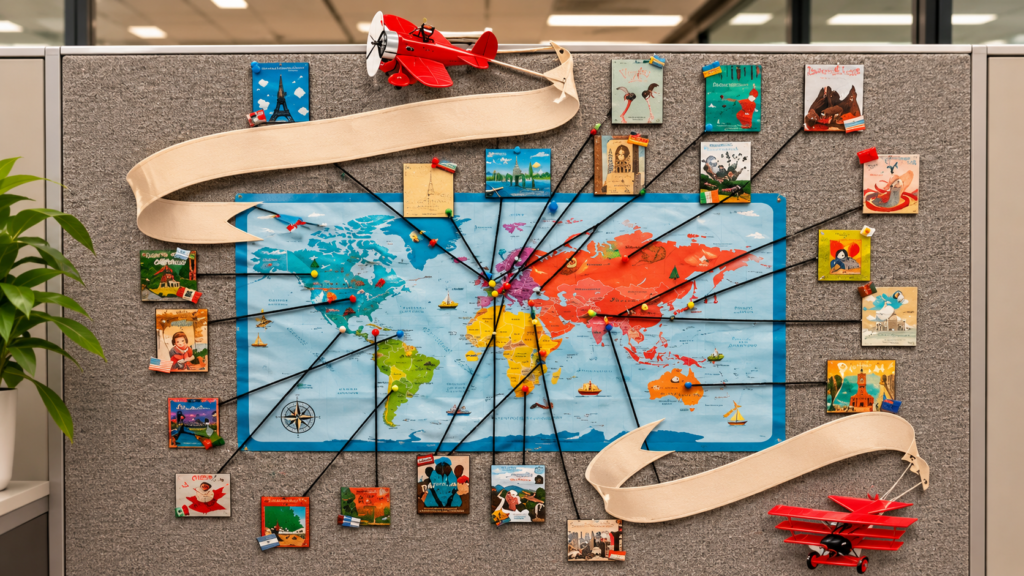
In a world connected by screens and instant communication, stories continue to cross borders in a remarkably human way. Behind every international bestseller is an expanding network of publishers, literary agents, translators, independent voices and readers helping literature travel beyond its place of origin.
The global publishing industry is entering an interesting period of transformation. Books are no longer defined solely by the country in which they are written or the language in which they first appear. A novel published by a small independent house can find readers thousands of kilometres away. An author writing in a regional language can attract international attention through translation. A story that begins as a local cultural experience can eventually become a global publishing phenomenon.
This changing landscape is creating opportunities for publishers, writers and readers alike. It is also challenging the traditional centres of literary influence, giving more markets the opportunity to shape what the world reads.
The Business Behind a Story
A book may begin with a writer, but its international journey involves an entire commercial ecosystem.
Publishers assess manuscripts, invest in editing and production, build marketing strategies and negotiate distribution. Literary agents represent authors and help secure publishing agreements. Rights professionals identify opportunities to introduce books to new markets, while translators make the original work accessible to readers who might otherwise never encounter it.
One of the most important parts of this ecosystem is the sale of international publishing rights.
A publisher in one country may acquire the right to publish a book in another language or territory. The agreement can introduce an unfamiliar author to a completely new readership, while generating additional opportunities for the original writer and publisher.
The Frankfurt Book Fair remains one of the most significant meeting points for this international business. Its 2026 edition brought together publishers, agents and other industry professionals, with discussions extending beyond printed books to adaptations, licensing, audio and other forms of intellectual property.
The modern publishing business is therefore not simply about selling copies. It is also about identifying stories with the potential to travel across cultures and formats.
When Translation Becomes Cultural Influence
Translation is among the most important forces shaping international literature.
A story written in Japanese, Arabic, Hindi, Spanish or Korean can become part of a reader’s life in another country because someone has carefully carried its meaning into a different language.
Yet translation involves much more than replacing words. Humour, cultural references, emotional expression and historical context must be understood and recreated without losing the character of the original work.
This is particularly important for writers working outside the dominant publishing languages. Their stories may offer perspectives that are unfamiliar to international audiences, but the journey to global recognition can be difficult. Translation costs, distribution arrangements and limited access to international literary networks can all become barriers.
For publishers, investing in translated literature requires both commercial judgement and a willingness to discover voices that may not yet have a large international following.
For readers, it offers something equally valuable: the opportunity to encounter the world through experiences beyond their own.
The New Geography of Literary Influence
For decades, international publishing influence was strongly associated with established markets such as the United States, Britain, France and Germany. These markets continue to play important roles, but the global picture is becoming more varied.
India, Brazil, Mexico, South Africa and other markets are contributing to the changing international reading landscape.
Data reported by NielsenIQ BookData for the first half of 2026 showed print-book volume growth in several territories. India recorded an increase of 8.3 per cent, while Brazil recorded growth of 10.5 per cent. The results demonstrate that reading markets do not move in the same direction or at the same pace across the world.
India offers a particularly interesting publishing environment. Its linguistic diversity creates opportunities for literature in English as well as in Hindi, Bengali, Tamil, Malayalam, Marathi and many other languages. Regional writing, contemporary fiction, biographies and non-fiction all contribute to a literary landscape that cannot be understood through a single language or readership.
The opportunity lies in connecting these different audiences with one another. A book that succeeds in one Indian language may have a wider journey ahead if publishers invest in translation, rights development and international distribution.
Independent Publishers and the Power of Discovery
The publishing industry is not shaped only by its largest companies.
Independent publishers often play an important role in introducing new writers, experimental fiction and specialised subjects. Their lists can be more focused, allowing editors to take creative risks that may be difficult for larger commercial organisations.
Some independent books also find their way into major publishing conversations after building an audience through word of mouth or self-publishing.
The international publishing discussions surrounding the 2026 Frankfurt Book Fair reflected this possibility. The success of independently published work, alongside interest in new literary voices, demonstrated that a story does not always need to begin inside a major publishing house to attract wider attention.
For emerging writers, this creates a more varied route into the market. For readers, it means that important discoveries may come from smaller publishers and unfamiliar names rather than only established bestseller lists.
Independent publishing is not automatically easier or more successful. Distribution, marketing, financial sustainability and access to professional networks remain significant challenges. But its presence makes the literary landscape more diverse.
The Digital Reader and the Return of Reading Communities
Digital platforms have changed how books are discovered.
Reading communities now develop across social networks, online book clubs, podcasts and specialist literary platforms. Readers recommend titles, discuss characters, share reviews and introduce authors to audiences that traditional advertising might never reach.
The growth of BookTok is one visible example. In October 2026, TikTok and Media Control announced Europe’s first BookTok Bestseller of the Year, illustrating how online reading communities have become part of the wider publishing conversation.
However, digital discovery does not mean that physical books have lost their appeal.
The international market data for the first half of 2026 showed continued demand for printed books in several territories. Meanwhile, digital audio has become an increasingly important part of the publishing business, offering readers another way to experience literature while travelling, exercising or managing busy schedules.
Print, e-books and audiobooks are increasingly complementary formats rather than necessarily competing alternatives.
The reader is no longer restricted to a single way of experiencing a story.
Beyond Books: Stories as Intellectual Property
A successful book can become the beginning of a much larger creative journey.
Characters, fictional worlds and distinctive storylines may develop into films, television productions, audio series, stage adaptations and licensed products. This has made intellectual-property rights an increasingly important part of publishing strategy.
The relationship between publishing and entertainment is particularly significant. Film and television producers regularly explore literary material for stories with established audiences, while publishers can benefit from the additional visibility created by successful adaptations.
But the process requires careful agreements. Authors and rights holders need to understand what they are licensing, which territories are involved and how different formats are treated.
For the publishing industry, the value of a story may therefore extend well beyond its first edition.
Protecting the Human Voice in an Automated World
Technology is creating new opportunities for publishing, but it is also raising important questions about authorship and trust.
Artificial intelligence is being discussed across editing, translation, audiobook production, marketing and book discovery. These tools may help publishers work more efficiently, but they also raise concerns about copyright, originality, consent and the protection of writers’ work.
The international publishing industry has begun addressing these questions through discussions about rights, licensing and responsible use of technology. The challenge will be to adopt useful innovation without weakening the value of human creativity.
A book is more than information arranged on a page. It reflects an individual’s imagination, experience, research and interpretation of the world. Preserving that contribution must remain central to the future of publishing.
The Future Belongs to Stories That Cross Borders
The next influential literary voice may emerge from a major publishing capital, a regional-language publishing house or an independent author working outside the traditional industry structure.
What matters is whether that voice can reach readers, find the right publishing partners and travel across languages without losing its original identity.
The future of the global publishing industry will depend on its ability to recognise talent beyond familiar markets, invest in translation and build stronger relationships between writers and international audiences.
In an increasingly connected world, literature continues to offer something that technology alone cannot provide: the experience of understanding another person’s world from within.
The most powerful stories do not remain where they begin. They travel, change perspectives and create connections between people who may never meet.
And that may be the most enduring achievement of publishing.