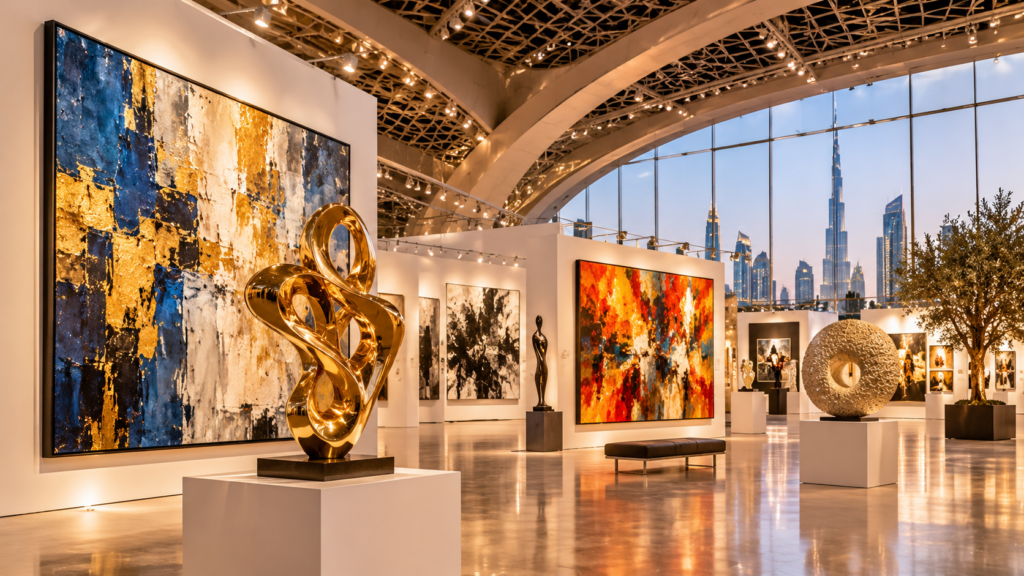
Once recognised primarily for its extraordinary architecture, luxury developments and international business environment, Dubai is increasingly becoming an important destination for the global art world. From international exhibitions and independent artists to influential collectors and cultural institutions, the city is building a creative identity that reaches far beyond its skyline.
The Dubai art market is entering an important phase of international growth. As artists, galleries, collectors and cultural institutions look beyond traditional art capitals, the United Arab Emirates is attracting attention as a place where different creative communities can meet, exchange ideas and establish new relationships.
One of the most visible examples is World Art Dubai 2026, taking place from 19 to 22 November at Dubai World Trade Centre. Its twelfth edition brings together international galleries, independent artists and creative professionals, reflecting the growing interest in Dubai as a destination for contemporary art and collecting.
The significance of this development extends beyond an individual exhibition. It represents a wider transformation in how the international art market is expanding its geographical reach and creating opportunities for artists who may previously have struggled to access established collecting networks.
Dubai’s Changing Cultural Identity
Dubai’s international identity has traditionally been associated with finance, property, tourism, hospitality and luxury retail. However, its cultural development has become an increasingly important part of the city’s ambitions.
Museums, galleries, cultural districts and creative institutions are contributing to a more established artistic environment. The city’s international population also creates an unusual combination of audiences, bringing together collectors, entrepreneurs, designers, artists and cultural professionals from different parts of the world.
This diversity matters because art does not develop in isolation. It requires spaces where creators can meet audiences, where galleries can establish relationships and where collectors can discover work beyond familiar names.
Dubai’s position between Europe, Asia and Africa offers an opportunity to connect different artistic communities. Its international accessibility and business infrastructure also make it an attractive location for events designed to bring together participants from multiple regions.
The city’s cultural ambitions are therefore not simply about attracting prestigious exhibitions. They are about creating an environment in which creativity can become part of a wider international economy.
World Art Dubai and the Culture of Discovery
World Art Dubai provides an important example of this changing landscape. Its programme brings together independent artists and established galleries, creating an environment where different levels of artistic experience and commercial recognition can coexist.
One of its distinguishing features is its emphasis on accessibility. Rather than concentrating exclusively on exceptionally expensive artworks, the event introduces visitors to a broad range of creative work and price points.
This approach is important for the future of the art market.
For a long time, art collecting was perceived as an activity reserved for wealthy families, established institutions and highly experienced buyers. Although significant private collections remain influential, accessible exhibitions and digital discovery platforms have encouraged new audiences to explore art ownership.
A first-time collector may begin with a photograph, a small painting or a limited-edition work before developing a deeper interest in particular artists and movements.
By creating opportunities for discovery, international art fairs can introduce a new generation to the culture of collecting.
The Rise of the Independent Artist
The international art world is changing beyond traditional galleries.
Independent artists increasingly use digital platforms, social networks and direct relationships with collectors to establish their identities. They are no longer entirely dependent on established institutions to introduce their work to international audiences.
However, visibility alone does not guarantee a sustainable artistic career. Artists also need professional representation, exhibition opportunities, informed buyers, commercial relationships and the ability to develop their work over time.
This is where international art fairs become significant.
They provide opportunities for independent creators to present their work alongside galleries and other creative organisations. These platforms can introduce artists to audiences who might not otherwise encounter their work, while helping them establish relationships that extend beyond the duration of an exhibition.
For emerging creators, such connections can become important professional milestones. They can lead to collaborations, gallery representation, commissions and opportunities to participate in exhibitions across different countries.
Art as an International Investment Conversation
Art has occupied an interesting position within the world of wealth and investment for generations.
Exceptional works may carry historical importance, cultural significance and considerable financial value. Certain artists develop strong international reputations, while particular movements and periods become increasingly desirable among collectors.
However, the art market is not a guaranteed investment environment. Prices can fluctuate, demand can change and individual artworks can be difficult to value or resell.
Experienced collectors therefore consider several factors when assessing a piece, including its provenance, authenticity, condition, rarity, artistic importance and exhibition history.
For newer collectors, understanding these elements is essential.
Dubai’s growing exhibition environment creates opportunities to introduce audiences to collecting as a cultural activity rather than presenting every artwork as a financial asset. The distinction matters because meaningful collections are often built through knowledge, curiosity and a genuine appreciation of artistic expression.
The city’s potential lies in bringing together these cultural and commercial dimensions without allowing one to completely overshadow the other.
The Middle East’s Expanding Cultural Influence
Dubai’s emergence should also be understood within the wider development of the Middle East’s cultural landscape.
Across the region, investment in museums, cultural districts, exhibitions and creative institutions is creating new opportunities for international exchange.
Doha has developed a significant museum and cultural programme. Abu Dhabi continues to strengthen its international cultural position through major institutions and exhibition initiatives. Saudi Arabia is also expanding its cultural infrastructure and creative industries.
Together, these developments are contributing to a more diverse international cultural environment.
For artists and collectors, the region is becoming increasingly relevant not only as a destination for luxury consumption, but also as a place where cultural ideas, artistic traditions and new creative industries can develop.
Dubai’s role is particularly interesting because of its international commercial connections and diverse resident population. It can serve as a meeting point for different markets while allowing regional artistic identities to become more visible internationally.
Technology Is Changing How the World Experiences Art
The relationship between art and technology is creating another important dimension of the market.
Digital exhibitions, online galleries, virtual collections, immersive installations and digital artistic practices are changing how people encounter creative work.
Younger audiences are particularly comfortable discovering artists through digital platforms. They can follow an artist’s development, explore exhibitions remotely and learn about artistic movements without necessarily visiting a traditional gallery.
Artificial intelligence and new digital tools are also creating fresh conversations about originality, authorship and the relationship between human creativity and technology.
These developments are not replacing traditional art forms. Instead, they are expanding the ways in which creative work can be produced, presented and understood.
For an internationally connected city such as Dubai, this offers an opportunity to bring together traditional craftsmanship, contemporary experimentation and technology-driven artistic expression.
The challenge will be to ensure that innovation strengthens artistic practice rather than reducing art to a temporary digital attraction.
Building the Next Generation of Collectors
One of the most important aspects of the evolving art market is the participation of younger collectors.
A new generation is approaching art through a wider range of interests. Some are attracted to contemporary painting and photography, while others explore digital art, design, sculpture and experimental installations.
Their motivations can also differ from those of earlier generations. Personal identity, creative independence, social values and the stories behind an artwork can influence purchasing decisions.
For galleries and cultural institutions, engaging this audience requires more than traditional exhibition formats.
Educational programmes, accessible events, artist conversations and interactive experiences can help younger visitors develop a deeper understanding of creative work.
Introducing children and young adults to artistic experiences can also contribute to the long-term development of a more informed collecting community. The future of the art market depends not only on established collectors, but also on those discovering their interest in art today.
The Future of Global Art Capitals
The international art world will continue to be shaped by established centres such as London, Paris and New York. Their museums, auction houses, galleries and historical influence remain important.
However, the future is unlikely to belong exclusively to a small group of traditional capitals.
Cities that can combine cultural institutions, international accessibility, professional networks, independent creative communities and meaningful opportunities for collectors will have the potential to establish stronger positions.
Dubai is building its case through this combination.
Its progress will ultimately depend on the depth and continuity of its cultural infrastructure, the quality of its artistic communities and its ability to support creators beyond major exhibition dates.
An international art capital cannot be built through events alone. It requires sustained investment in education, preservation, artistic independence, critical discussion and opportunities for creative professionals.
A City Creating Space for New Perspectives
Dubai’s growing presence in the art world reflects a larger transformation in how culture and global influence intersect.
The city is creating opportunities for artists from different countries to meet, for collectors to discover unfamiliar work and for younger audiences to participate in an industry that has often appeared difficult to access.
World Art Dubai 2026 provides a timely example of this ambition, but the larger story extends beyond an exhibition. The more important development is the growing network of people, institutions and creative communities that are helping shape the region’s cultural identity.
The next chapter of the international art market may be shaped by cities willing to create connections between cultures rather than compete solely through prestige.
Dubai’s ambition is to become one of those places.
And perhaps its greatest contribution will not be the number of artworks displayed, but the number of artistic voices that find an international audience through it.