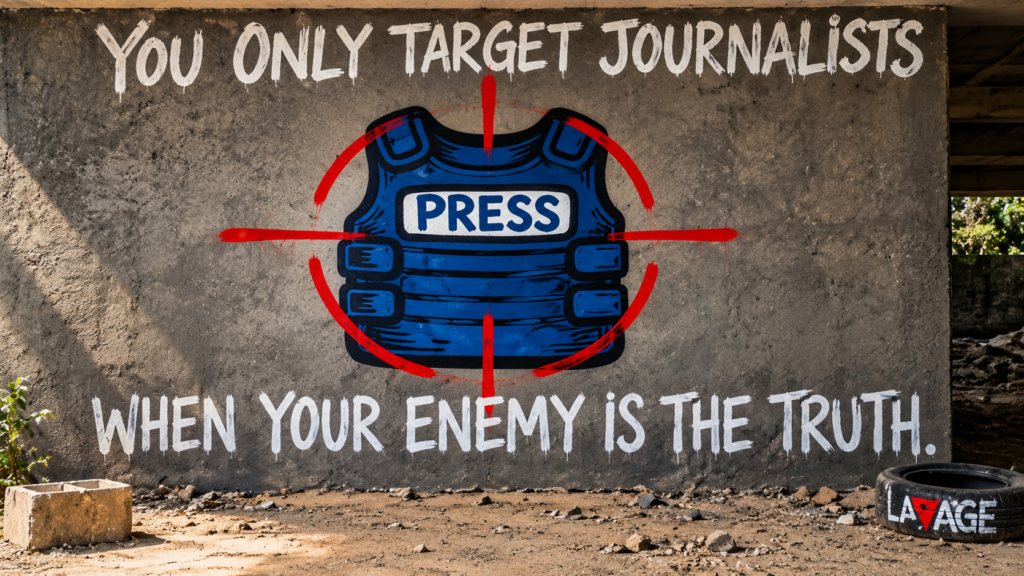
Behind every major international headline is often a journalist working in circumstances that audiences may never fully see. From conflict zones and political investigations to corruption reporting and digital misinformation, journalists occupy a position that is essential to public understanding. Yet the people responsible for documenting events are increasingly exposed to violence, intimidation and legal pressure. A new international report has brought this reality into sharper focus.
Journalist Safety has become one of the most pressing questions facing the international media landscape. The ability to report independently is central to an informed society, but the risks associated with journalism are changing. Armed conflicts, emerging military technologies, digital harassment and failures of legal accountability are creating an increasingly complicated environment for reporters.
The scale of the challenge was highlighted in UNESCO’s Director-General’s Report on the Safety of Journalists and the Danger of Impunity, released on 2 November 2026. The findings reveal that 189 journalists, media workers and social media producers engaged in journalistic activity were killed during 2024 and 2025. This represented a 20 per cent increase compared with the previous reporting period.
The figures raise an important question for governments, international institutions and media organisations: who is responsible for protecting the people who bring information to the world?
The Growing Dangers Behind Global Reporting
Journalism has always involved a degree of risk, particularly when reporting on armed conflicts, organised crime, political instability and corruption.
However, the nature of these risks has evolved considerably. Reporters working in conflict areas must navigate unpredictable security conditions, damaged infrastructure, restricted movement and the possibility of becoming targets themselves.
According to UNESCO, 127 of the 189 journalists killed during 2024 and 2025 lost their lives in countries experiencing armed conflict. This represents more than two-thirds of the recorded total.
The figures demonstrate how closely the safety of journalists is connected to international security and the conduct of modern warfare.
The danger does not end when journalists leave conflict zones. Investigative reporters covering organised crime, political influence and powerful commercial interests can also face intimidation, threats and physical attacks.
For many journalists, the challenge is no longer simply reaching a location and reporting what happened. It is ensuring that they can continue their work without compromising their personal safety.
When Drones Change the Rules of War Reporting
One of the most concerning findings in UNESCO’s latest report involves the use of unmanned aerial vehicles, commonly known as drones.
During the 2024–2025 reporting period, 50 journalists were killed by drone strikes across six conflict zones. These deaths represented approximately 40 per cent of journalists killed in conflict areas during the period.
The development introduces a disturbing dimension to frontline reporting.
Traditional safety measures, including maintaining distance from active fighting and identifying press vehicles, cannot necessarily protect journalists from aerial surveillance and remotely operated weapons.
The presence of clearly identifiable press markings may also offer limited protection when modern military technologies are involved.
This raises difficult questions about the application of international humanitarian law and the protection of civilians in armed conflicts.
International standards recognise journalists operating in conflict zones as civilians, provided they do not directly participate in hostilities. Their professional responsibilities do not remove their entitlement to protection.
The challenge lies in ensuring that these principles are respected in practice, with credible investigations whenever journalists are attacked.
The Problem of Impunity: When Justice Fails
The killing of a journalist is not the only concern. The failure to investigate and prosecute those responsible creates a wider problem for societies.
UNESCO’s November 2026 findings reveal that the global impunity rate for journalist killings increased to 86 per cent, compared with 85 per cent in the previous reporting period.
In practical terms, this means that approximately six out of every seven cases remain unresolved or without adequate judicial accountability.
The increase is particularly significant because it reverses a period of gradual international progress. UNESCO had been monitoring the global impunity rate since 2012, making the latest rise an important warning.
When attacks against journalists go unpunished, the consequences extend beyond individual victims and their families.
Other reporters may become reluctant to investigate sensitive subjects. News organisations may reconsider assignments involving powerful individuals or institutions. Communities can lose access to information about matters that directly affect their lives.
Accountability is therefore not simply a legal responsibility. It is an essential condition for independent journalism.
The Digital Threat Facing Modern Journalists
The risks associated with journalism increasingly extend into the digital environment.
Social media has made it possible for journalists to distribute their work internationally, communicate with audiences and receive information from sources that were previously difficult to reach.
However, the same platforms can expose reporters to coordinated harassment, threats, impersonation, surveillance and attempts to undermine their credibility.
Women journalists face particularly serious challenges.
A 2025 study by UN Women and the International Center for Journalists found that 75 per cent of women journalists surveyed had experienced online violence. The research also identified a concerning relationship between online abuse and subsequent offline violence.
Such attacks can affect professional opportunities, personal wellbeing and the ability to continue reporting independently.
The consequences are not limited to individual journalists. When certain voices are pushed out of public discussion through intimidation, the diversity of information available to society is weakened.
Media organisations therefore need stronger digital security practices, clear reporting mechanisms and institutional support for journalists facing targeted harassment.
The Economic Pressure on Independent Journalism
Safety is not exclusively a matter of physical protection. The financial sustainability of independent journalism is another important part of the discussion.
News organisations operate in an environment shaped by changing advertising models, digital competition, platform dependency and rising operational costs.
Smaller independent publications can find it particularly difficult to finance investigative reporting, international assignments and specialist legal support.
Investigations involving corruption, corporate misconduct or political accountability may require months of research, extensive documentation and significant financial resources.
Without sustainable business models, news organisations may struggle to maintain the independence and depth that such reporting requires.
The international conversation around media freedom must therefore consider the economic conditions that allow independent journalism to survive.
Protecting journalists also means supporting the institutions that give them the resources and professional independence to perform their work.
Why International Institutions Must Act
The protection of journalists requires cooperation between governments, international organisations, judicial institutions, media companies and civil society.
UNESCO plays an important role in monitoring journalist killings, documenting developments in press freedom and encouraging governments to strengthen protective measures.
Its International Programme for the Development of Communication also supports initiatives aimed at improving journalist safety and addressing impunity.
The United Nations has established an international framework recognising the importance of protecting journalists, particularly through Security Council Resolution 2222, adopted in 2015.
However, international declarations must translate into effective national action.
Governments have responsibilities that include investigating attacks, protecting journalists from threats, strengthening legal safeguards and ensuring that perpetrators are held accountable.
Judicial independence is equally important. Investigations must be credible, transparent and capable of addressing not only the individuals directly responsible but also wider chains of responsibility where evidence supports such inquiries.
International cooperation becomes particularly important when attacks involve cross-border networks, digital surveillance or threats originating outside a journalist’s country.
A Global Responsibility Beyond the Newsroom
The protection of journalism is frequently discussed as an issue concerning media professionals. Its consequences, however, reach much further.
Citizens depend on reliable reporting to understand political decisions, economic developments, international conflicts, public institutions and social change.
When journalists are prevented from reporting, the public loses opportunities to examine information, question authority and understand events through independently gathered evidence.
This makes journalist safety a matter of wider public interest.
The latest UNESCO report also provides evidence that improvement is possible. In countries not experiencing armed conflict, the impunity rate for journalist killings has declined to 77 per cent in 2026, compared with 94 per cent in 2012.
This progress demonstrates the importance of effective investigations, legal protections and sustained institutional commitment.
It also shows that the international situation is not uniform. Different countries face different challenges, and solutions must reflect their legal systems, security conditions and institutional capacities.
The Future of Truth Depends on Protection
The world has never had greater access to information, yet the people responsible for gathering and verifying that information continue to face serious threats.
Artificial intelligence, digital platforms and modern communication technologies will continue to transform how journalism operates. But technological progress cannot replace the need for reporters who investigate, question, verify and document events.
The figures published by UNESCO in November 2026 offer a sobering reminder of the human cost associated with this responsibility.
Protecting journalists does not mean protecting a particular publication, political position or editorial viewpoint. It means defending the conditions under which facts can be investigated and made available to the public.
The future of independent journalism will depend not only on the courage of those who report the news, but also on the willingness of institutions to protect them and deliver justice when that protection fails.
Truth requires people willing to pursue it. A society that values truth must also take responsibility for protecting those who bring it into the light.