Deep beneath the Arctic landscape, an extraordinary international initiative is safeguarding something humanity cannot afford to lose: the diversity of the crops that feed the world. As climate pressures, conflict and changing agricultural practices reshape food production, the preservation of seeds is becoming one of the most important responsibilities of our time.
The Global Seed Vault represents an extraordinary commitment to protecting the foundations of future food security. Hidden within the frozen mountains of Norway’s Svalbard archipelago, this remarkable facility holds an international collection of seed samples, preserving agricultural possibilities that may prove essential to generations yet to come.
Its purpose extends far beyond storing seeds. It represents an understanding that the future of agriculture depends not only on technological advancement and large-scale production, but also on preserving the biological diversity developed through centuries of farming, adaptation and human knowledge.
A Vault Built to Protect Humanity’s Agricultural Heritage
Established in 2008, the Svalbard Global Seed Vault was created as a secure backup for seed collections maintained by gene banks around the world. Located in the Arctic, approximately 1,000 kilometres from the North Pole, the facility benefits from its remote location, permafrost conditions and specialised storage infrastructure.
The seeds are maintained at minus 18 degrees Celsius to support long-term preservation. Its collection represents an extraordinary range of agricultural diversity, including varieties of wheat, rice, maize, barley, potatoes and other important crops.
Importantly, the vault does not replace national or regional gene banks. It safeguards duplicate samples of their collections, providing an additional layer of protection if the original material is damaged, lost or becomes inaccessible.
This distinction makes the institution particularly significant. It is not simply a warehouse of agricultural resources; it is an international insurance system designed to protect the genetic foundations of food production.
Why the World’s Traditional Crops Matter
Modern agriculture has transformed how food is cultivated, distributed and consumed. Commercial farming has enabled large-scale production, while improved crop varieties have contributed to agricultural productivity across many regions.
However, the expansion of standardised farming practices has also increased the importance of protecting traditional crop varieties.
For generations, farming communities have developed crops suited to particular climates, soils, rainfall patterns and local conditions. Some varieties have demonstrated resistance to drought, others have adapted to difficult growing environments, while certain traditional crops possess characteristics that may become valuable to future agricultural research.
These varieties are not merely historical agricultural products. They contain genetic characteristics that researchers and plant breeders may need when developing crops capable of responding to emerging challenges.
As temperatures rise and weather patterns become less predictable, the value of preserving this diversity becomes increasingly apparent.
A crop that performs poorly under today’s agricultural conditions may carry characteristics that become essential under tomorrow’s environmental realities.
The International Effort Behind the Arctic Vault
The Global Seed Vault is built on cooperation between countries, scientific institutions and international organisations.
Norway provides the institutional foundation, while the Nordic Genetic Resource Center, known as NordGen, manages its daily operations alongside the Crop Trust and the wider international framework established through the International Treaty on Plant Genetic Resources for Food and Agriculture.
The scale of this cooperation has continued to grow.
On 14 October 2026, gene banks representing 21 institutions deposited 16,676 additional seed samples. This brought the collection beyond 1.4 million safeguarded samples.
The latest deposit included contributions from international research institutions and national collections across several continents. Six CGIAR gene banks collectively contributed nearly 9,000 samples, while Ukraine deposited 773 samples despite the continuing challenges created by war.
Italy also contributed historic wheat and rice varieties through its agricultural research institutions.
These developments demonstrate that preserving agricultural diversity is not the responsibility of one country. It requires a network of institutions working across national borders, scientific disciplines and agricultural traditions.
When Conflict Threatens Agricultural Memory
One of the most compelling aspects of seed preservation is its connection to geopolitical stability.
Agricultural collections are often maintained within national research facilities, universities and specialised institutions. When these facilities face war, natural disasters or institutional disruption, valuable collections can become vulnerable.
Ukraine’s contribution to the October 2026 deposit illustrates this challenge.
Despite the ongoing conflict, its national agricultural research institution successfully secured additional seed samples in Svalbard. These included varieties of buckwheat, barley, millet and other crops that form part of the country’s agricultural heritage.
The effort is particularly meaningful because agricultural preservation is closely connected to national recovery. Protecting the genetic resources of a country helps preserve options for rebuilding agricultural production, supporting farmers and maintaining future research capabilities.
The experience also demonstrates why international backup systems matter. A collection preserved in one location may remain vulnerable to events beyond the control of its researchers. A secure duplicate elsewhere can help protect its long-term continuity.
The Knowledge That Exists Beyond the Seeds
The preservation of agricultural heritage cannot be understood through scientific institutions alone.
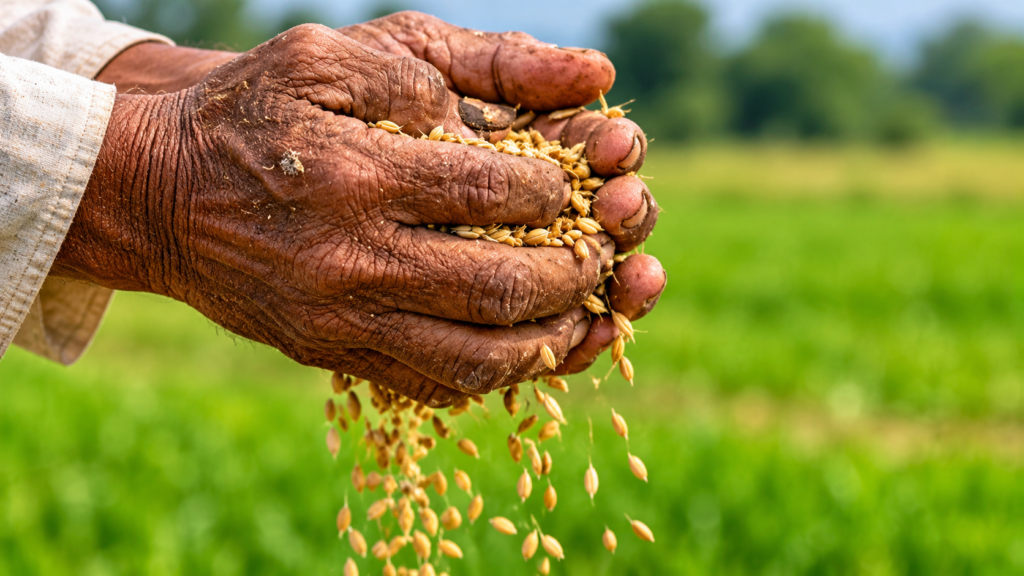
Behind many traditional crop varieties are generations of farmers who have selected, cultivated and maintained plants according to local knowledge. Their understanding of seasonal conditions, soil behaviour, planting practices and crop characteristics has helped shape agricultural diversity over centuries.
Indigenous communities and small farming households have played an important role in maintaining this heritage.
Yet preserving a seed does not automatically preserve the knowledge associated with it. Understanding how a particular variety grows, where it performs best and how communities have traditionally used it requires documentation, research and continued engagement with the people who have maintained these crops.
This is where agricultural preservation must extend beyond storage facilities.
The future of crop diversity depends on recognising the contribution of farming communities, supporting local seed systems and ensuring that traditional knowledge remains connected to modern agricultural research.
Preservation should not turn living agricultural heritage into something that exists only inside scientific institutions.
The Question of Access, Ownership and Responsibility
As the international value of genetic resources increases, questions surrounding access and ownership become increasingly important.
The seeds stored in Svalbard remain the property of the institutions that deposit them. The vault acts as a secure backup rather than an organisation that independently distributes agricultural material.
This arrangement is supported by the wider international framework governing the conservation and exchange of plant genetic resources.
However, the larger conversation extends beyond ownership. Countries and communities that have historically maintained valuable agricultural diversity must have meaningful opportunities to benefit from its conservation and use.
The relationship between scientific research, commercial plant breeding, national interests and farmers’ rights requires continued international attention.
A genuinely sustainable preservation system must recognise that agricultural diversity is a shared foundation for humanity, while respecting the rights and contributions of the communities and institutions that safeguard it.
Beyond Preservation: Preparing Agriculture for Tomorrow
The future of agriculture will be shaped by several interconnected developments, including climate adaptation, scientific research, changing consumer expectations and the need to strengthen food systems.
Preserved crop diversity offers researchers a broader foundation for developing varieties suited to different environmental conditions. It may help identify characteristics associated with heat tolerance, drought resistance, disease resistance and improved agricultural performance.
However, the existence of a seed collection alone cannot guarantee food security. Seeds must remain viable, collections must be regularly maintained, and researchers must be able to access appropriate genetic resources through established international arrangements.
Equally important is investment in the institutions responsible for conservation. Gene banks require skilled researchers, reliable funding, modern infrastructure and long-term institutional support.
The international community must therefore look beyond the impressive scale of seed deposits and consider the strength of the systems that make preservation possible.
Protecting What Future Generations May Need
The Global Seed Vault offers a powerful perspective on the relationship between the past and the future.
Every preserved sample represents an agricultural possibility, a piece of biological diversity and, in many cases, a connection to generations of farming knowledge. Its importance may not always be immediately visible, but the value of preservation becomes clearer when the world faces uncertainty.
The challenge is not simply to produce more food today. It is to ensure that future generations retain the resources, knowledge and scientific opportunities needed to produce food under conditions that may be very different from those of the present.
The world’s agricultural future will depend on innovation, investment and international cooperation. Yet it will also depend on protecting the diversity that already exists.
In the Arctic silence of Svalbard, millions of seeds are being safeguarded against an uncertain future. Their significance lies not in what they represent today, but in what humanity may one day need them to become.