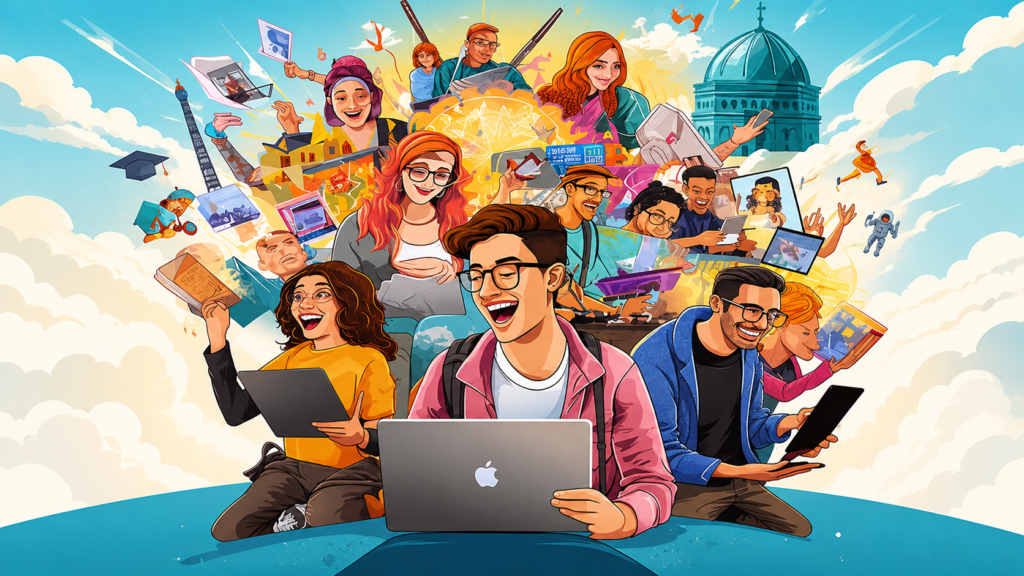
The boundaries between media, entrepreneurship and personal influence are disappearing as independent creators build businesses, communities and intellectual property around their own ideas.
The Creator Economy is changing who gets to shape culture, influence consumer decisions and build media businesses. A generation that once depended on traditional publishers, broadcasters and entertainment companies to reach audiences can now create its own platforms, develop loyal communities and generate revenue directly.
From independent filmmakers and fashion commentators to podcasters, educators, musicians and digital entrepreneurs, creators are becoming an important part of the global media landscape. Their influence is no longer measured only by followers or viral moments. It is increasingly measured by the businesses, intellectual property and communities they build.
From Personal Platforms to Independent Businesses
The creator economy began with individuals sharing ideas, entertainment and expertise through digital platforms. Over time, these activities developed into professional enterprises.
A creator may now operate a production studio, manage a team, negotiate international brand partnerships, sell educational products, publish newsletters and license original content. What appears to audiences as an individual channel can function like a small media company.
This transformation is changing the traditional definition of entrepreneurship. Instead of beginning with a physical product or conventional company, some businesses begin with an audience and develop commercial offerings around its interests.
The model is attracting people across different industries. Designers are building fashion communities, chefs are developing food brands, journalists are creating independent publications and specialists are turning professional knowledge into digital education.
The creator is no longer simply the person appearing on screen. Increasingly, the creator is the founder, publisher, producer and owner of a growing media business.
The Scale of a New Global Industry
The financial scale of the sector is attracting serious attention.
The Paris Creator Week Creator Economy Report 2026 estimates that the global market reached approximately US$217.3 billion in 2026. Its assessment includes advertising, sponsorships, audience payments and merchandise, rather than counting creator earnings as an additional market on top of those transactions.
The report estimates that creators receive US$92.6 billion of this value, while platforms and supporting businesses retain the remainder.
These figures should be understood as estimates based on the report’s methodology. Different research organisations define the creator economy differently, which explains why published market valuations vary considerably.
Nevertheless, the direction is clear: independent digital creativity has developed into a substantial commercial ecosystem involving brands, platforms, agencies, production companies, software providers and audiences.
The industry is also expanding beyond entertainment. Education, professional advice, financial literacy, design, health communication and specialist journalism are becoming important areas of creator-led activity.
The Power of Owning an Audience
One of the most important changes in this industry is the growing emphasis on audience ownership.
Social platforms can provide enormous reach, but creators do not control the algorithms, distribution rules or commercial policies governing those platforms. A change in recommendation systems can affect visibility, while changes to monetisation rules can alter income.
This has encouraged creators to develop direct relationships with their audiences through newsletters, membership programmes, independent websites and private communities.
Epidemic Sound’s 2026 creator research reports that 72 per cent of surveyed creators are building audiences away from their core platforms. The findings reflect a broader movement towards independent communication channels and more durable audience relationships.
For creators, the objective is not necessarily to abandon social media. It is to avoid depending entirely on a single platform.
A creator who builds a newsletter, membership community or independent publication has additional ways to communicate with followers even when platform conditions change.
In this environment, audience trust becomes a valuable business asset.
The New Business Models of Influence
Advertising and sponsorships remain important sources of creator income, but the commercial structure is becoming more diverse.
Some creators receive revenue through subscriptions and memberships. Others develop merchandise, launch products, offer paid courses or license their original work to companies and media organisations.
Podcasting has also created opportunities for advertising partnerships, premium subscriptions and live events. Independent writers can build paid newsletters, while video creators may develop production studios and distribution agreements.
This diversity matters because relying on a single income source can make a creator’s business vulnerable to changes in advertising demand or platform policies.
The most resilient businesses increasingly combine several revenue streams while maintaining a recognisable creative identity.
For brands, this has changed the meaning of influence. A creator’s value is not determined only by the size of an audience. Credibility, specialist knowledge, engagement and the relationship between the creator and their community can be equally important.
A smaller creator with a highly engaged specialist audience may offer a brand a more relevant partnership than a much larger account with limited audience connection.
India and the Next Generation of Digital Entrepreneurs
India is an important part of the global creator economy.
Its large digital audience, expanding smartphone access, multilingual communities and growing digital payments ecosystem provide opportunities for creators across entertainment, education, fashion, food, technology and regional culture.
The opportunity is particularly interesting because digital creators can reach audiences beyond major metropolitan centres. Regional-language content can connect communities that were historically underserved by national media distribution.
Creators working in Hindi, Tamil, Telugu, Bengali, Marathi and other languages are building distinct audiences and commercial opportunities.
The next stage may involve more structured creator businesses: professional production teams, talent management, licensing arrangements, brand partnerships and original intellectual property.
However, the challenges remain substantial. Income can be unpredictable, platform dependence can be risky, and creators need to understand contracts, taxes, copyright and disclosure requirements.
Building a sustainable business requires more than visibility. It requires professional management and a clear understanding of the rights attached to the content being created.
Intellectual Property: The Asset Behind the Influence
As creators become entrepreneurs, ownership of intellectual property is becoming increasingly important.
A successful series, original character, visual identity, educational programme or distinctive format may have commercial value beyond its original platform.
Creators who retain appropriate rights can potentially license their work, develop products, negotiate distribution arrangements and expand into other media formats.
However, the ownership of digital content can become complicated when brands, agencies, production companies and platforms are involved.
Contracts should clearly establish who owns the work, how it can be reused, how long permissions last and whether commercial rights can be transferred.
Artificial intelligence adds another dimension. Creators are increasingly using AI tools for research, editing, translation and production, while also confronting questions about imitation, copyright, voice replication and the use of their work in training datasets.
The creator’s identity and original creative contribution may become more important as the volume of automated content increases.
The Cost of Becoming a Media Company
The creator economy often appears accessible because the initial barriers to publishing online are relatively low. But building a professional operation is considerably more demanding.
Successful creators may need editors, researchers, designers, accountants, lawyers, producers and commercial managers. They must manage deadlines, protect their reputation, maintain audience trust and negotiate business relationships.
There is also the pressure of constant visibility. The expectation to publish regularly can turn creative work into an exhausting cycle, particularly when income depends on maintaining engagement.
The next generation of creators will therefore need to think carefully about the difference between building an audience and building a sustainable organisation.
A strong media business should not depend entirely on the founder’s continuous personal availability. It needs systems, intellectual property, a clear commercial strategy and the ability to develop beyond individual popularity.
The Future Belongs to Those Who Build Beyond Virality
The creator economy is entering a more mature phase. The early excitement surrounding follower counts and viral content is gradually giving way to questions about ownership, profitability, professional standards and long-term value.
Creators are beginning to think like founders. Brands are learning to work with independent media businesses. Audiences are becoming more selective about the people and publications they support.
The most influential creators of the future may not necessarily be those with the largest online following. They may be those who build trusted communities, distinctive intellectual property and organisations capable of operating across multiple platforms.
The shift represents something larger than a change in entertainment or advertising. It is a redistribution of media power.
For a new generation, the opportunity is no longer limited to being featured by an established institution. It is increasingly possible to build an institution of their own.
The next media empires may begin with a camera, a newsletter, a podcast or a single compelling idea. Their lasting influence, however, will depend on what they build beyond the screen.