
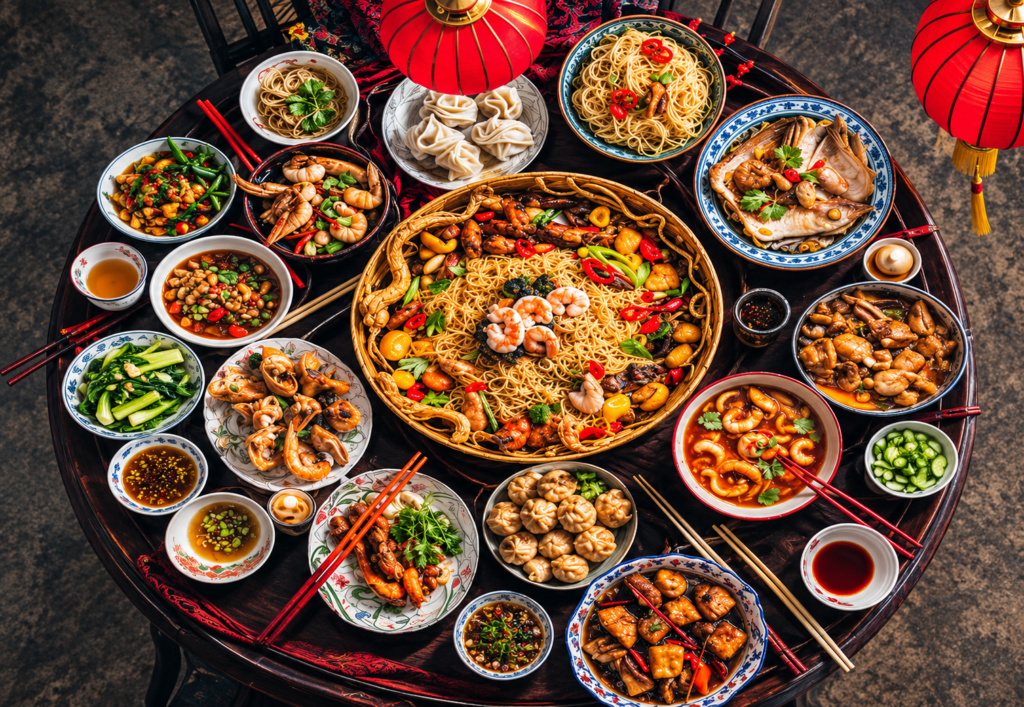
Beyond ingredients and recipes, the world’s culinary traditions tell stories of migration, history, geography and identity. Every dish carries a connection to the people and generations that shaped it.
Food is among the most enduring expressions of human civilisation. Long before global communication and modern transportation connected societies, food travelled through trade routes, migration, exploration and cultural exchange. Ingredients crossed oceans, cooking techniques evolved between communities, and recipes became part of the identities of entire regions.
Today, culinary traditions represent far more than national cuisines. They preserve collective memories, reflect historical relationships and demonstrate how societies adapt while maintaining their cultural character.
From the elaborate regional kitchens of India to the disciplined artistry of Japan, the Mediterranean’s ancient food traditions and the diverse culinary heritage of Latin America, food remains one of the most recognisable expressions of cultural identity.
India: A Culinary Landscape of Extraordinary Diversity
India’s culinary identity cannot be reduced to a single cuisine. Its food traditions are shaped by geography, climate, religion, agriculture, migration and centuries of cultural exchange.
In the north, Mughlai influences are reflected in dishes such as biryani, kebabs and slow-cooked preparations. Kashmir has developed distinctive culinary traditions, including the elaborate Wazwan feast, where multiple preparations form part of an important social and cultural occasion.
Western India offers another dimension. Gujarat is known for its distinctive vegetarian preparations and balance of sweet, savoury and spicy flavours, while Rajasthan’s culinary heritage reflects adaptations to its arid climate and historical patterns of food preservation.
Southern India presents an equally rich landscape. Tamil Nadu, Kerala, Karnataka, Andhra Pradesh and Telangana each possess distinct culinary identities, shaped by rice, lentils, coconut, regional spices and local agricultural traditions.
Bengal’s relationship with freshwater fish, rice and sweets illustrates how geography influences food culture. The northeastern states offer further diversity through fermented foods, indigenous ingredients and distinctive cooking techniques.
Indian cuisine is therefore not one culinary tradition, but an extensive collection of regional identities that together form a remarkable gastronomic civilisation.
Japan: The Philosophy of Seasonality
Japanese cuisine reflects a relationship between food, nature, craftsmanship and presentation.
The traditional philosophy of washoku places importance on seasonal ingredients, balance, visual harmony and respect for the natural qualities of food. In December 2013, UNESCO recognised traditional Japanese dietary cultures under the Intangible Cultural Heritage framework.
One of the most refined expressions of this culinary philosophy is kaiseki, a multi-course dining tradition in which ingredients, presentation and seasonality are carefully considered.
Japanese culinary culture also extends to everyday traditions such as sushi, miso, soba and regional noodle preparations. These foods reflect a broader understanding of balance, technique and the relationship between people and their environment.
Its influence has extended internationally, with Japanese culinary techniques and aesthetics becoming important references in contemporary gastronomy.
Italy: The Identity of Regional Cooking
Italian cuisine demonstrates how regional traditions can become internationally recognised without losing their local identities.
The country’s food culture is deeply connected to agricultural landscapes, family traditions and local ingredients. Northern Italy has developed culinary traditions around rice, butter, cheeses and rich sauces, while central and southern regions are recognised for olive oil, tomatoes, seafood, wheat and handmade pasta.
Naples is closely associated with the development of modern pizza traditions. Emilia-Romagna is celebrated for pasta varieties, including tortellini and tagliatelle, while Sicily reflects centuries of Mediterranean, Arab and European cultural exchange.
Italian food is also closely connected to social life. Meals frequently function as occasions for family gatherings, celebrations and the transmission of culinary knowledge between generations.
Its international popularity has not erased the importance of regional identity. Rather, it has demonstrated how a local culinary tradition can become a global cultural reference.
Mexico: A Heritage Built on Ancient Ingredients
Mexican cuisine carries a history extending back to pre-Columbian civilisations.
Corn, beans and chilli peppers remain central to many traditional preparations. The agricultural and culinary knowledge associated with these ingredients reflects generations of adaptation, cultivation and community practice.
Traditional techniques such as nixtamalisation, in which maize is treated with an alkaline solution, demonstrate the scientific and cultural knowledge embedded in historic food preparation.
Mole, tamales, tortillas and regional preparations represent the diversity of Mexican culinary identity. Spanish influences, indigenous knowledge and subsequent cultural exchanges have contributed to the country’s complex gastronomic landscape.
UNESCO recognised traditional Mexican cuisine as an Intangible Cultural Heritage of Humanity in 2010, acknowledging the broader cultural system surrounding its cultivation, preparation and consumption.
The Middle East: Ancient Routes and Shared Culinary Traditions
The Middle East occupies an important position in the history of international food exchange.
For centuries, commercial and cultural routes connected the region with Europe, Africa and Asia. Spices, grains, dried fruits, nuts and cooking techniques travelled through these networks, influencing local cuisines and creating shared culinary traditions.
Lebanese, Turkish, Persian and other regional cuisines demonstrate different interpretations of hospitality, ingredients and preparation.
Dishes such as mezze, pilaf, kebabs and various forms of flatbread illustrate the importance of communal eating. However, the region’s culinary identity is far more diverse than a collection of familiar dishes. Local agricultural practices, historical trade and family traditions continue to shape its gastronomic character.
Food remains an important expression of hospitality and cultural continuity throughout the region.
How Migration Changed the World’s Food
Modern cuisine is the result of centuries of movement and cultural interaction.
Migration introduced ingredients and cooking traditions to new societies, while trade transformed local food systems. The movement of tomatoes, potatoes, chillies, maize and other crops between continents changed agricultural practices and culinary identities around the world.
The introduction of chilli peppers into India, for example, fundamentally influenced many regional cuisines, even though the ingredient originated in the Americas.
Similarly, international migration helped establish new culinary communities in cities such as London, New York, Singapore and Dubai.
These communities did not simply reproduce their traditional food cultures. They adapted recipes to new ingredients, audiences and environments, creating evolving forms of cuisine.
The result is a global culinary landscape in which authenticity and innovation frequently exist together.
The Challenge of Preserving Culinary Heritage
As global lifestyles become faster and food production becomes increasingly industrialised, traditional culinary knowledge faces new challenges.
Family recipes may disappear when younger generations lose opportunities to learn from older relatives. Traditional ingredients can become difficult to source, while local agricultural practices may be displaced by commercial production.
At the same time, convenience foods and standardised restaurant formats can reduce the visibility of regional culinary traditions.
Preservation requires more than recording recipes. It involves supporting traditional farmers, recognising culinary artisans, maintaining local markets and encouraging younger generations to understand the cultural significance of food.
International cultural recognition can also play an important role. UNESCO’s Intangible Cultural Heritage programme has helped bring attention to food traditions as living expressions of community knowledge rather than simply collections of dishes.
The Future of Global Culinary Culture
The future of food will be shaped by an interesting relationship between heritage and innovation.
Contemporary chefs are rediscovering indigenous ingredients, traditional preservation techniques and regional recipes while incorporating modern culinary science. Restaurants are increasingly exploring the stories behind their ingredients, and consumers are showing interest in provenance, sustainability and cultural authenticity.
Technology will also influence food production, distribution and preparation. However, the preservation of culinary heritage will continue to depend on human knowledge, local communities and the willingness to pass traditions forward.
The world’s great culinary civilisations remind us that culture is not preserved exclusively in monuments, museums or written histories. It also survives in kitchens, markets, agricultural landscapes and family gatherings.
A recipe can carry the memory of a migration, a celebration, a region or an entire generation. And while ingredients and techniques may evolve, the cultural meaning behind food can endure.
Ultimately, the world’s culinary heritage is one of humanity’s most accessible forms of history. It allows people to experience different civilisations not simply through what they see or read, but through what they taste, prepare and share.