Formula One is no longer simply a championship decided by speed, engineering and driver performance. It has become a global commercial powerhouse, where luxury brands, international investors, entertainment companies and ambitious cities compete for a place in one of the world’s most valuable sporting ecosystems.
The Formula One business has entered an extraordinary period of commercial expansion. What was once primarily a European motorsport competition has developed into an international entertainment and investment industry, connecting automotive innovation, luxury, media, tourism and global finance.
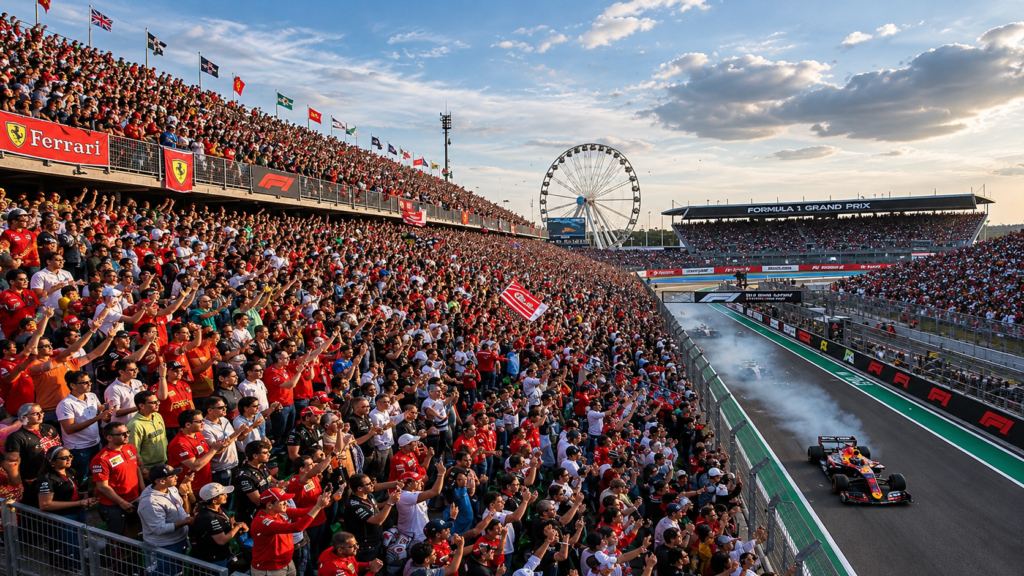
A Grand Prix weekend is now much more than a sporting event. It is an international business gathering, a hospitality destination, a media spectacle and an opportunity for brands to reach audiences across continents.
The cars may determine the results on Sunday, but the business behind the championship operates throughout the year.
From Motor Racing to a Global Commercial Enterprise
Formula One’s transformation has been driven by its ability to expand beyond traditional motorsport audiences.
The championship operates through a sophisticated commercial structure involving race-hosting agreements, broadcasting arrangements, sponsorship partnerships and licensing opportunities.
According to Liberty Media’s 2025 financial results, Formula One generated approximately USD 3.9 billion in annual revenue, representing a 14 per cent increase over the previous year. Its operating income also increased substantially.
These figures illustrate the scale of the modern championship. Formula One is not simply selling access to a racing competition. It is developing a global entertainment property with several interconnected revenue streams.
Its commercial rights, international calendar and established audience make it particularly attractive to companies seeking long-term global visibility.
The Business of Hosting a Grand Prix
For international cities, securing a Formula One race has become a significant economic and reputational ambition.
Destinations such as Singapore, Monaco, Abu Dhabi, Miami and Las Vegas have developed distinctive identities around their Grand Prix events.
Each location offers something different. Monaco is associated with heritage, exclusivity and established motorsport prestige. Singapore combines night racing with an international financial and tourism environment. Abu Dhabi has positioned its Grand Prix within a broader luxury hospitality and entertainment experience. Las Vegas has integrated racing into its wider entertainment economy.
Hosting a race requires considerable planning and investment. Infrastructure, circuit preparation, transportation, security, hospitality and international promotion all contribute to the undertaking.
However, the potential returns extend beyond ticket sales.
A major Grand Prix can attract international visitors, support hotels and restaurants, create opportunities for local businesses and generate worldwide media exposure.
For some destinations, the event becomes part of a larger strategy to strengthen their international identity.
The commercial question is therefore not simply how much a city spends to host a race, but how effectively it converts that investment into long-term tourism, business relationships and international recognition.
Luxury Brands and the Power of Association
Formula One has become an increasingly attractive platform for luxury businesses.
Its audience includes affluent consumers, international travellers, technology enthusiasts, business leaders and younger audiences discovering the sport through digital entertainment.
This combination creates opportunities for brands operating in watches, fashion, automotive design, hospitality, finance and premium consumer products.
Luxury watchmakers have historically maintained strong connections with motorsport, where precision, engineering and performance provide natural points of association.
Fashion houses and lifestyle brands are also increasingly exploring the commercial possibilities of racing culture.
The partnership between Formula One and luxury businesses is not limited to advertising displayed around a circuit. It extends into exclusive hospitality, limited-edition products, private experiences and international brand events.
For these companies, the appeal lies in participating in a cultural environment associated with ambition, technical excellence and exclusivity.
The Paddock Club is an important example of this commercial ecosystem. It offers premium hospitality experiences that place business networking, entertainment and access alongside the racing itself.
Formula One has consequently become a meeting point for sporting prestige and international luxury.
Media Rights: The Race for Global Attention
Broadcasting is among the most important foundations of Formula One’s commercial model.
International media agreements allow the championship to reach audiences across television, streaming platforms and digital services.
The growth of digital entertainment has changed how younger audiences experience motorsport. Short-form videos, behind-the-scenes content, driver interviews and social media storytelling have introduced the sport to people who may never have previously watched a complete Grand Prix.
Formula One’s official 2025 season figures reported a record combined attendance of approximately 6.7 million spectators. Its social media platforms also recorded more than 2.3 billion engagements.
The audience is increasingly international and digitally connected.
The success of Drive to Survive, the Netflix documentary series, has also demonstrated the commercial importance of storytelling. By introducing viewers to drivers, rivalries, teams and personalities, it has helped make the sport more accessible to audiences beyond traditional motorsport communities.
The 2025 release of F1 The Movie extended that relationship between racing and entertainment, introducing the championship’s atmosphere to an even wider cinematic audience.
The business opportunity is clear: modern sports properties must compete not only for live viewers but also for attention across multiple entertainment platforms.
Team Ownership and the Value of Competition
Behind every race is a network of teams operating as highly specialised businesses.
Formula One teams combine engineering, research, manufacturing, sponsorship management, commercial partnerships and international marketing.
Their value is influenced by sporting performance, brand recognition, commercial agreements, ownership structures and the wider financial environment of the championship.
The introduction of financial regulations and the cost cap has also changed the economic conversation. Teams must balance technological development with greater financial discipline.
This has helped strengthen the perception of Formula One as an industry with more structured long-term commercial opportunities.
Investment interest has expanded beyond traditional motorsport ownership. International business groups, financial investors and established sporting organisations increasingly recognise the value of owning or participating in a Formula One team.
However, team ownership is not simply a route to immediate financial returns. It requires sustained investment, technical expertise and the ability to compete in an environment where sporting success remains uncertain.
The Middle East and the New Geography of Motorsport
The international expansion of Formula One has created opportunities for destinations that want to establish themselves as major sporting and entertainment centres.
The Middle East has become particularly important to the championship’s global calendar.
Bahrain, Saudi Arabia, Qatar and Abu Dhabi have each developed a presence in international motorsport, using major racing events to strengthen their tourism and international business profiles.
The region’s involvement reflects a wider investment in entertainment, hospitality, infrastructure and global sporting partnerships.
For destinations such as Abu Dhabi, the Grand Prix is connected to a much larger visitor economy. The event complements hotels, restaurants, entertainment attractions and premium experiences.
This approach demonstrates how a sporting event can become part of a broader international destination strategy.
At the same time, established European circuits remain central to Formula One’s heritage and identity. The championship’s future depends on balancing its historical foundations with opportunities in expanding international markets.
Technology, Sustainability and the Next Commercial Era
Formula One’s future will also depend on its ability to remain technologically relevant.
The championship has long served as a high-profile environment for engineering innovation, materials research, aerodynamics and advanced powertrain development.
The 2026 regulations introduced a new generation of technical requirements, including a greater electrical contribution to hybrid power units and the use of advanced sustainable fuels.
These changes create new opportunities for automotive manufacturers, technology suppliers and engineering businesses.
Sustainability is also becoming increasingly important to the championship’s long-term strategy. Reducing operational emissions, improving logistics and developing more efficient technologies will influence how the sport is managed in the coming years.
The challenge is to maintain the excitement and identity of Formula One while adapting to changing technological and environmental expectations.
The Business Beyond the Finish Line
Formula One’s commercial strength comes from its ability to connect several industries within one international platform.
A Grand Prix can bring together automotive manufacturers, luxury watchmakers, financial institutions, technology companies, tourism authorities, hospitality groups and entertainment businesses.
Few sporting properties offer such a concentrated meeting point between these sectors.
Yet continued growth will require careful management. Hosting costs, environmental responsibilities, competition for media attention and the expectations of younger audiences will all influence the championship’s future.
The most successful destinations and businesses will be those that create value beyond a single race weekend.
Formula One’s evolution demonstrates a larger transformation in global sport. The most influential sporting institutions are increasingly those that understand how to build communities, develop commercial partnerships and create experiences beyond competition.
The chequered flag may mark the end of a race, but for the global business surrounding Formula One, the real competition never stops.