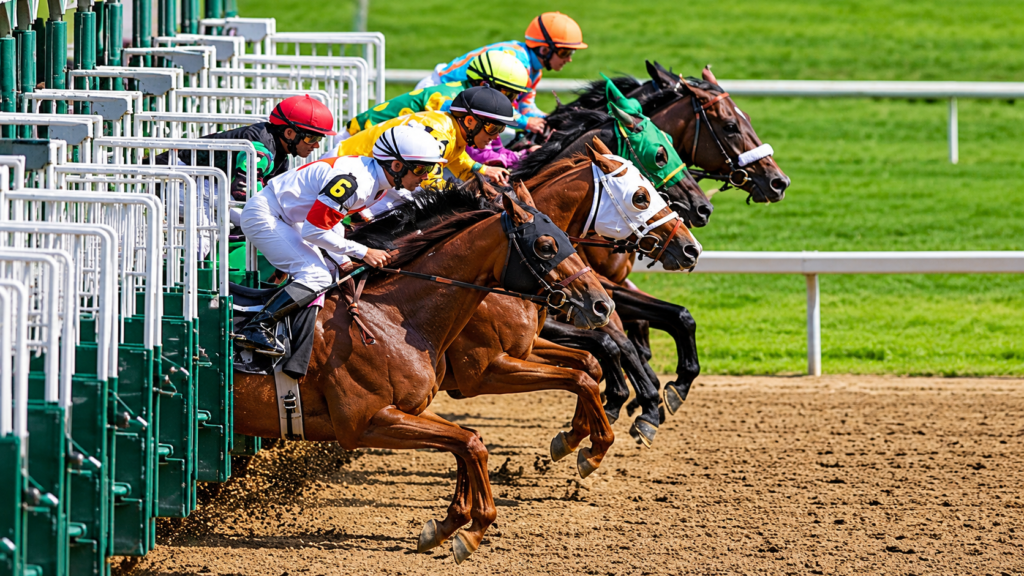
From royal traditions and historic racecourses to legendary thoroughbreds and international competitions, horse racing remains one of the world’s most enduring sporting institutions.
The heritage of horse racing is a story of speed, discipline, tradition and human fascination with the horse. Across centuries, horses have represented power, wealth, military strength and cultural identity. What began as a practical demonstration of equestrian ability gradually developed into an internationally recognised sporting institution, bringing together royal households, breeding establishments, sporting authorities, collectors and passionate audiences.
Today, horse racing occupies a distinctive position in global culture. Its influence extends beyond the racecourse, connecting centuries-old traditions with modern sporting entertainment, advanced breeding science and international competition.
The Origins of a Timeless Sporting Tradition
The relationship between humans and horses stretches back thousands of years. Ancient civilisations, including those of Greece, Rome, Persia and Central Asia, incorporated horses into military campaigns, transportation, ceremonies and competitive events.
Organised racing developed in different forms across these societies. Chariot competitions in ancient Greece and Rome demonstrated the importance of speed and horsemanship, while mounted contests became part of sporting and military traditions throughout Asia and the Middle East.
Over time, racing evolved from informal competition into a structured sport. The development of specialised racecourses, recognised rules and organised breeding programmes transformed it into an institution with its own customs and governing bodies.
The modern thoroughbred racing tradition became particularly influential in Britain, where breeding, race organisation and sporting patronage established many of the foundations followed internationally today.
Britain: Where Modern Thoroughbred Racing Found Its Identity
Britain holds a particularly important position in the history of modern horse racing. During the seventeenth and eighteenth centuries, racing gained increasing royal and aristocratic support, helping establish the foundations of organised thoroughbred competition.
The involvement of influential breeders and racing patrons encouraged the development of carefully managed bloodlines. Three foundation stallions — the Darley Arabian, Godolphin Arabian and Byerley Turk — became central to the ancestry of the modern Thoroughbred breed.
British racing institutions gradually established a distinctive calendar of prestigious events. Royal Ascot became one of the most recognised fixtures, combining elite competition with formal dress, ceremonial traditions and royal association.
Other historic events, including the Epsom Derby and the Grand National, developed their own identities. Together, they demonstrate how horse racing became deeply embedded in British sporting and cultural life.
The Arabian Horse: A Legacy of Strength and Endurance
The heritage of horse racing cannot be fully understood without recognising the historical importance of the Arabian horse.
Originating in the Arabian Peninsula, Arabian horses became renowned for their endurance, intelligence, distinctive appearance and ability to thrive in challenging environments. Their significance extended far beyond racing, influencing horse breeding across continents.
Arabian horses played an important role in the development of modern Thoroughbred bloodlines. Their contribution helped shape a breed recognised for its speed, athleticism and competitive ability.
In the contemporary racing world, Arabian horse racing also maintains a distinct international presence. Major competitions celebrate the breed’s qualities and preserve traditions that connect modern equestrian sport with its historical origins.
The Arabian horse represents more than a sporting animal; it is an enduring symbol of cultural heritage and a remarkable relationship between people and horses.
Europe’s Historic Racecourses and Sporting Institutions
Across Europe, horse racing has developed into a collection of distinctive national traditions.
France is home to Longchamp, one of the most celebrated racecourses in international flat racing. Its prestigious Prix de l’Arc de Triomphe attracts exceptional horses, trainers and jockeys from around the world.
Ireland has developed a particularly strong reputation for thoroughbred breeding and racing. Its equestrian culture is supported by internationally respected breeding establishments, trainers and racing institutions.
In Italy, historic venues such as San Siro in Milan reflect the country’s long-standing relationship with equestrian sport. Meanwhile, Germany and other European racing nations maintain their own established competitions and breeding traditions.
These institutions demonstrate how a shared sporting discipline can develop different cultural identities while remaining connected through international competition.
India: An Equestrian Tradition With Colonial and Royal Roots
India occupies an interesting position in the international history of horse racing. Horses have held considerable cultural, military and ceremonial importance across the subcontinent for centuries.
Indian kingdoms maintained distinguished cavalry traditions, while horses were associated with royal processions, military strength and prestige. These historical relationships helped establish a broader equestrian culture that extended beyond organised racing.
Modern organised horse racing developed significantly during the colonial period. The Royal Calcutta Turf Club, established in 1847, became an important institution in the country’s racing history.
Today, racecourses in Mumbai, Kolkata, Bengaluru, Chennai, Hyderabad and Pune contribute to India’s established racing calendar. The Indian Derby remains among the country’s most recognised thoroughbred racing events.
Indian racing continues to bring together breeding establishments, owners, trainers, jockeys and spectators, preserving an important part of the country’s sporting heritage.
The Middle East: A New Centre of International Racing Prestige
The Middle East has become one of the most influential regions in contemporary international horse racing.
Dubai, in particular, has transformed its position within the sport through the development of world-class racing infrastructure and international competitions. Meydan Racecourse, home of the Dubai World Cup, has become a prominent destination on the global racing calendar.
The Dubai World Cup, inaugurated in 1996, brought together international competitors and established a major platform for elite thoroughbred racing.
Saudi Arabia has also strengthened its presence through the Saudi Cup, which has developed into one of the most financially significant events in international horse racing.
Beyond the spectacle of major race days, the region’s involvement reflects a deeper historical relationship with horses, particularly the Arabian breed. Modern investment and international participation have connected that heritage with contemporary sporting ambition.
The Thoroughbred: Science, Breeding and Sporting Excellence
At the centre of modern horse racing is the Thoroughbred, a breed developed through generations of selective breeding.
Producing a successful racehorse requires an extraordinary combination of genetics, nutrition, veterinary care, conditioning and training. Breeders carefully evaluate bloodlines, while trainers develop programmes that prepare horses for the physical and psychological demands of competition.
The breeding industry has consequently become a major international enterprise. Countries such as Britain, Ireland, France, the United States, Australia and Japan have established important thoroughbred breeding and racing industries.
Behind every successful horse is an extensive network of professionals, including veterinarians, farriers, stable staff, jockeys, trainers and breeding specialists.
Their combined expertise demonstrates that racing is not simply about speed. It is also about knowledge, preparation, responsibility and long-term investment in equine excellence.
Tradition Meets the Modern Racing World
Although horse racing retains many of its historical customs, the sport continues to evolve.
Modern racecourses increasingly use advanced timing systems, data analysis, veterinary technology and improved track management. International broadcasting has also made major competitions accessible to audiences far beyond their traditional locations.
However, the future of racing depends on more than technological development. Equine welfare, responsible breeding, veterinary oversight and appropriate retirement programmes are essential to maintaining the sport’s credibility.
The treatment of racehorses throughout their lives has become an increasingly important international discussion. Racing organisations and participants have a responsibility to support welfare standards that protect horses during training, competition and life after racing.
Preserving the sport’s heritage must therefore involve protecting the animals at its centre.
A Legacy That Continues Beyond the Finish Line
The enduring appeal of horse racing lies in its ability to connect different generations and cultures. From the historic traditions of Britain and the Arabian Peninsula to the established racing communities of India, Europe, Australia and Japan, the sport has developed a truly international identity.
Its racecourses preserve architectural and cultural histories, its breeding traditions represent generations of knowledge, and its competitions continue to bring together people from different parts of the world.
The heritage of horse racing is ultimately about more than winning trophies or recording exceptional times. It represents an evolving relationship between humans, animals, sporting institutions and cultural traditions.
As the international racing world moves forward, its greatest achievement may be its ability to preserve the values that have sustained it for centuries while embracing a more responsible and modern future.
The finish line may mark the end of a race, but the legacy of the horse remains far greater than the competition itself.