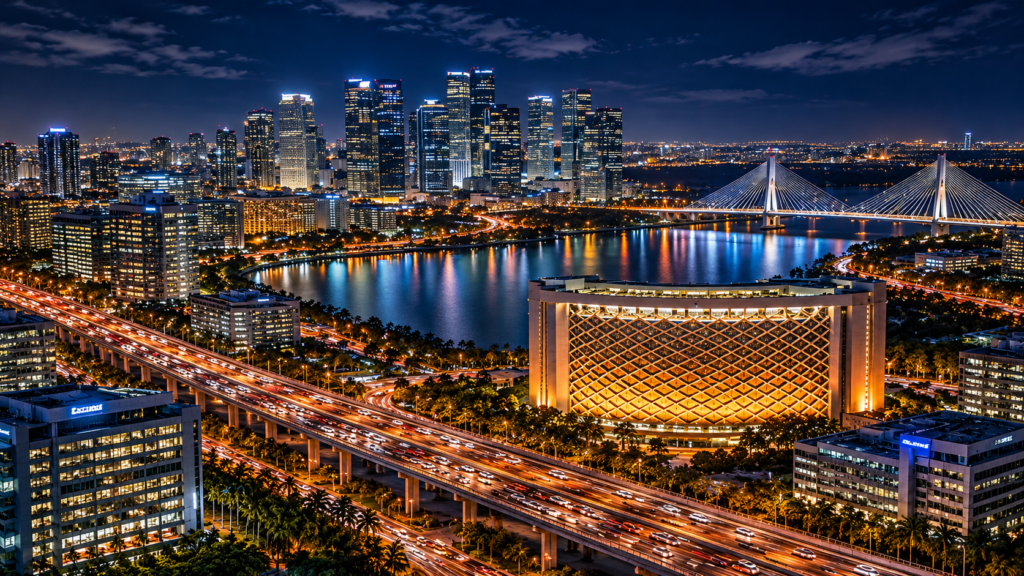
From late-night cultural districts to round-the-clock commerce, cities are discovering that their future is not shaped only by what happens during the day.
The Night-Time Economy is becoming an increasingly important part of the global urban landscape. Once associated mainly with restaurants, bars and entertainment, the hours after sunset now represent a much wider economic ecosystem involving retail, culture, transport, tourism, hospitality, technology and public services.
Across the world, city authorities are reconsidering how their streets, businesses and public spaces function after dark. The objective is no longer simply to create nightlife. It is to build cities that remain active, accessible, safe and economically productive beyond conventional working hours.
The Rise of the 24-Hour City
For generations, urban development was largely designed around daytime activity. Offices opened in the morning, commercial districts became quieter in the evening, and public transport services gradually reduced as the night progressed.
That traditional rhythm is changing.
Global cities increasingly recognise that evening and overnight activity contributes to employment, tourism, cultural participation and local business growth. The World Cities Culture Forum reports that 97 per cent of surveyed cities are working to support their night-time economies, demonstrating how seriously urban authorities are beginning to approach the subject.
The shift is visible in cities such as London, Berlin, Melbourne, Tokyo and New York, where entertainment districts, late-night retail, cultural venues and transport systems contribute to a more extended urban economy.
The modern city is no longer defined only by its business hours. It is increasingly defined by how effectively it operates throughout the day and night.
Bangkok, Berlin and the New Global Nightlife Map
The geography of nightlife is changing, with cities competing to attract visitors, creative communities and international attention.
In August 2026, Time Out placed Bangkok at the top of its global nightlife ranking, followed by Berlin, New York, Melbourne and São Paulo. The ranking drew on responses from more than 24,000 residents across 150 cities, alongside assessments from international editors and city experts.
What makes this development interesting is the changing definition of nightlife itself.
It is no longer exclusively about famous nightclubs or expensive entertainment venues. Street food, neighbourhood bars, live performances, independent cultural spaces, late-night cafés and social experiences are becoming equally important to a city’s identity.
Asian cities have particularly distinctive after-dark cultures. Bangkok combines street food, hospitality and entertainment, while Tokyo offers everything from intimate jazz venues to late-night dining districts. Seoul has developed a strong relationship between youth culture, fashion, entertainment and evening commerce.
European cities bring another dimension through music venues, independent cultural spaces and established nightlife districts. Meanwhile, Latin American cities demonstrate how public celebrations, restaurants and street culture can shape the character of an entire urban neighbourhood.
These cities are not simply selling entertainment. They are creating experiences that influence how the world understands their identity.
The Business Behind the Night
The night-time economy extends far beyond consumer entertainment.
It supports a network of businesses and workers, including restaurants, hotels, delivery services, event organisers, security companies, transport operators, retailers, performers and independent entrepreneurs.
A July 2026 report examining Australia’s night-time economy highlighted how local governments are increasingly investing in after-dark business activity, cultural programming, public spaces and accessibility. The report also identified the importance of partnerships between businesses, local authorities and cultural organisations.
The economic opportunity is significant because cities can make greater use of existing commercial spaces and infrastructure. A district that becomes quiet after conventional office hours can support a different collection of businesses in the evening.
Hotels can attract late-arriving travellers. Restaurants can extend their service hours. Cultural venues can organise evening programmes. Retail districts can develop specialised experiences for consumers who prefer shopping outside conventional hours.
For entrepreneurs, the night creates a different customer environment. It also creates new demands for staffing, logistics, digital payments, security and customer experience.
The result is a commercial ecosystem that requires its own planning and investment strategy.
Culture Is Becoming the Centre of the Night
One of the most interesting developments is the growing importance of cultural programming.
Night-time activity is increasingly being shaped by museums, galleries, music venues, theatres, festivals and independent creative spaces. Instead of treating culture as something that belongs primarily to daytime visitors, cities are using evening programmes to expand participation.
Light festivals, late-night exhibitions, outdoor performances and cultural celebrations are attracting audiences who want experiences beyond conventional opening hours.
The World Cities Culture Forum’s research on night-time culture highlights how cities are expanding their understanding of the night to include creative communities, cultural venues and inclusive public experiences.
This is particularly important for younger audiences. Gen Z consumers are increasingly interested in experiences that offer discovery, community and personal expression rather than simply traditional entertainment.
For cities, culture can become a powerful economic asset. A successful cultural district attracts visitors, supports local businesses and creates a recognisable identity that can distinguish one destination from another.
The Importance of Safety and Accessibility
A successful night-time economy cannot depend on entertainment alone. It must also address the conditions that allow people to participate comfortably.
Transport availability, street lighting, public safety, accessible public facilities and responsible business practices are essential to the development of a sustainable after-dark environment.
Safety is particularly important for women, late-shift workers, international visitors and people who depend on public transport. A city may have excellent entertainment venues, but its night-time economy will remain limited if people cannot travel home safely.
Governments are therefore exploring better late-night transport coordination, improved public spaces, clearer licensing systems and cooperation between businesses and local authorities.
The challenge is to create an environment that balances commercial activity with residents’ needs. Noise, overcrowding, waste management and pressure on residential neighbourhoods must also be considered.
The future of nightlife will depend not only on how much activity cities can attract, but on how responsibly they manage it.
India’s Opportunity After Dark
India has enormous potential to develop a more structured night-time economy.
Cities such as Mumbai, Bengaluru, Delhi, Hyderabad and Goa already possess strong hospitality, entertainment, retail and cultural sectors. Their young populations, expanding consumer markets and growing interest in experiences provide opportunities for businesses operating beyond conventional hours.
Bengaluru’s technology and creative communities, Mumbai’s entertainment industry and Goa’s tourism economy offer different foundations for after-dark development.
However, progress requires more than extending business hours. Reliable transport, public safety, appropriate licensing, infrastructure and coordination between municipal authorities and businesses will determine whether these opportunities can develop sustainably.
India also has the potential to create distinctive night-time experiences around food, performing arts, festivals, independent retail and regional cultural traditions.
Rather than simply replicating international nightlife models, Indian cities could develop after-dark identities that reflect their own cultural and commercial strengths.
The Next Competition Between Global Cities
The future of the night-time economy will increasingly involve technology and urban planning.
Digital payments, intelligent transport systems, real-time crowd management and data-driven public services can help cities understand how people move and spend after sunset.
City authorities are also beginning to consider night-time activity as a separate planning priority, with dedicated strategies and coordination between departments that traditionally operate independently.
This creates opportunities for investors, hospitality groups, cultural organisations, technology companies and property developers.
But the most successful cities will not necessarily be those with the largest entertainment districts. They will be those capable of combining economic opportunity with safety, cultural identity, accessibility and quality of life.
The global competition for visitors and talent is no longer restricted to office districts, shopping streets or luxury developments. It is extending into the hours when cities reveal another side of their character.
When the Sun Sets, the City Begins Again
The transformation of the night-time economy represents a broader change in how modern societies understand urban life.
The hours after sunset are no longer being treated as an extension of the daytime economy. They are increasingly recognised as a distinct environment with its own businesses, cultural institutions, workforce and public responsibilities.
For global cities, the opportunity lies in creating an after-dark experience that is commercially successful without becoming inaccessible or exclusive.
The next generation of influential cities may be judged not only by their skylines, financial districts and cultural landmarks, but also by the quality of life they offer when the working day ends.
Because a truly global city does not stop functioning when the sun goes down. It simply begins another chapter.